
Church & Bangalore Parish History in a Glance |
🌿 STECI formation - Chronological Flow
The Christian heritage of Keralam begins with the arrival of St. Thomas the Apostle in AD 52 and unfolds through centuries of reform, revival, and denominational growth leading to the formation of the St. Thomas Evangelical Church of India (STECI) in 1961.
Apostolic Beginnings (AD 52)
- Tradition holds that St. Thomas the Apostle arrived at Muziris (Kodungallur) in AD 52.
- He founded the Ezharappallikal (Seven and a Half Churches), including sites at Kodungallur, Kollam, Niranam, Nilackal, Kokkamangalam, Kottakkavu, and Palayur.
- His mission engaged Jewish settlers and Brahmin families, giving the community high social standing.
- The community becomes known as Nasranis (St. Thomas Christians).
- St. Thomas was later martyred at Mylapore (Chennai) around AD 72.
Early Growth & Syriac Links (AD 345–1498)
- Thomas of Cana arrived with 72 Syriac Christian families
- Strengthens ties with the Church of the East (Persian/Nestorian tradition).
- 5th–13th centuries: Kerala Christians maintain East Syrian liturgy and trade links.
- Royal charters like the Tharisa Palli copper plates (849 AD) granted privileges, showing their prestige in Kerala society.
- Travelers like Marco Polo noted their presence by the 13th century.
Portuguese Domination (1498–1653)
- 1498: Vasco da Gama arrives in Calicut, Portuguese influence begins.
- The Synod of Diamper (1599) forced Latin practices, destroyed Syriac texts, and imposed Roman authority.
- Resistance grew under the Archdeacon, the traditional leader of the Nasranis.
The Great Oath (1653)
- At Mattancherry’s Leaning Cross, thousands swore the Koonan Kurishu Satyam: rejecting Portuguese and Roman control.
- Archdeacon Thomas was consecrated as Mor Thoma I, later regularized by bishops from the Syriac Orthodox Church of Antioch.
- This shifted the Malankara Church from East Syriac to West Syriac tradition.
Protestant Influence
- 1706: Arrival of Protestant missionaries (Ziegenbalg at Tranquebar).
- 19th century: CMS (Church Missionary Society) works with Syrian Christians, encouraging reform.
Reform & Division (1836–1930)
- 1836:Abraham Malpan’s reforms led to the Mar Thoma Syrian Church, blending Syriac liturgy with Protestant theology.
- 1889:The Mulamthuruthy Synod (1876) reaffirmed loyalty to Antioch for the Jacobite faction.
- In 1930, Archbishop Mar Ivanios led a group into communion with Rome, forming the Syro-Malankara Catholic Church.
Evangelical Movement & STECI
- 1929–1952: Reformist groups (like Pathyopadesa Samithi) emerge within Mar Thoma Church to defend evangelical doctrine.
- 1961:Formation of St. Thomas Evangelical Church of India (STECI) at Thiruvalla.
- Emphasis: Sola Scriptura, evangelical witness, missionary zeal.
- Governance: Episcopal polity with Presiding Bishop and Synod.
Modern Era
- 1961–Present: STECI expands across Kerala, India, and diaspora communities in the Gulf, Singapore, North America, and Europe.
- Today: 350+ congregations, 100,000+ members, and 400+ missionaries worldwide.
From Apostolic roots (AD 52) → Catholic & Orthodox splits (1599, 1653) → Protestant reform (1836) → Evangelical witness (1961).
🌿സെൻറ് തോമസ് ഇവാൻജലിക്കൽ ചർച്ച് ഓഫ് ഇൻഡ്യാ - സഭാചരിത്രം
(1985 -ൽ സഭാ പ്രസിദ്ധീകരണ സമിതി പ്രസിദ്ധീകരിച്ചത്)
വിഷയാനു ക്രമണിക
- മുഖവുര — റൈറ്റ് റവ. റ്റി. സി. ചെറിയാൻ (പ്രിസൈഡിംഗ് ബിഷപ്പ്)
- ഒരു പ്രസ്താവന — റവ. പി. റ്റി. തോമസ് (കൺവീനർ, പ്രസിദ്ധീകരണ സമിതി)
- അവതാരിക — പി. കെ. വറുഗീസ് (ഗ്രന്ഥകർത്താവ്)
- അദ്ധ്യായം 1: കേരളത്തിലെ ക്രൈസ്തവ സഭകൾ
- അദ്ധ്യായം 2: കേരള ക്രൈസ്തവരും ആഗ്ലേയ ബന്ധവും
- അദ്ധ്യായം 3: മലങ്കര സഭയിലെ നവീകരണം
- അദ്ധ്യായം 4: മാർത്തോമ്മാ സഭയിലെ നവീകരണ വിരുദ്ധ സംരംഭങ്ങൾ
- അദ്ധ്യായം 5: മാർത്തോമ്മാ സഭയിലെ എപ്പിസ്കോപ്പൽ ഇലക്ഷനും അനന്തര സംഭവങ്ങളും
- അദ്ധ്യായം 6: സെൻറ് തോമസ് ഇവാൻജലിക്കൽ സഭാ രൂപീകരണം
- അദ്ധ്യായം 7: സെൻറ് തോമസ് ഇവാൻജലിക്കൽ സഭയും പ്രവർത്തനങ്ങളും
മുഖവുര
1961 ജനുവരി 26-ാം തീയതി രൂപീകരിക്കപ്പെട്ട നമ്മുടെ സഭയായ സെൻറ് തോമസ് ഇവാൻജലിക്കൽ ചർച്ച് ഓഫ് ഇൻഡ്യ, 1986-ൽ രജതജൂബിലി കൊണ്ടാടുവാൻ ഒരുങ്ങുന്ന ഈ സന്ദർഭത്തിൽ സഭയുടെ ചരിത്രം എഴുതി പ്രസിദ്ധീകരിക്കുക എന്നത് അതിപ്രാധാന്യമർഹിക്കുന്ന ഒരു ചുമതലയും ഒഴിച്ചുകൂടാൻ പാടില്ലാത്ത ആവശ്യവുമാകുന്നു.
ഇന്ന് അനേകരും വർത്തമാന-ഭാവികാലങ്ങളിൽ മാത്രം തൽപരരായി കഴിയുന്നു. എന്നാൽ ഭൂതകാലം അവഗണിച്ചാൽ ഭാവി വ്യക്തമായി കാണാൻ കഴികയില്ല (you cannot see the future without the past) എന്ന തത്വം അവർ മനസ്സിലാക്കിയിട്ടില്ല. പഴയതില്ലെങ്കിൽ പുതിയതില്ല; ഭൂതകാലമില്ലെങ്കിൽ ഭാവികാലമില്ല. ഭൂത-വർത്തമാന-ഭാവികാലങ്ങളെ ബന്ധിപ്പിക്കുന്നതിന് സഹായകമാണ് ചരിത്രം.
ഏതൊരു പ്രസ്ഥാനത്തിന്റെയും ചരിത്രപ്രസിദ്ധീകരണം എല്ലാവർക്കും വിശിഷ്യ അതിലെ അംഗങ്ങൾക്ക് പ്രയോജനകരമാണ്. മുതിർന്ന തലമുറയ്ക്കും, ഇളം തലമുറയ്ക്കും, വരും തലമുറയ്ക്കും ചരിത്രഗ്രന്ഥം അപരിത്യാജ്യമാണ്. മറവിയുള്ള മനുഷ്യന് ഓർമിക്കുവാൻ സംഭവങ്ങൾ രേഖപ്പെടുത്തേണ്ടത് ആവശ്യമാണ്. മുൻകാല സംഭവങ്ങൾ എന്തെന്ന് ഇളം തലമുറയ്ക്കും വരും തലമുറയ്ക്കും ജ്ഞാനവും ഭാവി പ്രവർത്തനങ്ങൾക്ക് ആവേശവും രൂപവും പകരുവാൻ ചരിത്ര പ്രസിദ്ധീകരണം അനുപേഷണീയമാണ്.
നമ്മുടെ സഭയിലെ അനേക വിശ്വാസികളുടെ ചരിത്രഗ്രന്ഥപ്രസിദ്ധീകരണം എന്ന ചിരകാലാഭിലാഷം സാക്ഷാൽകരിക്കപ്പെടുകയാണ് എന്നതോർത്ത് ദൈവത്തെ സ്തുതിക്കുന്നു. ഈ ഗ്രന്ഥം രചിക്കുന്നതിൽ ത്യാഗപൂർവ്വം ശ്രദ്ധ പതിപ്പിച്ച അഡ്വ. പി. കെ. വർഗീസിനെ ഞാൻ അഭിനന്ദിക്കുകയും അദ്ദേഹത്തോടുള്ള കൃതജ്ഞത രേഖപ്പെടുത്തുകയും ചെയ്യുന്നു. ഈ ലഘുഗ്രന്ഥം നമ്മുടെ സഭാ ചരിത്രത്തിലെ ഒരു നാഴികക്കല്ലാണ്. കേരളത്തിൽ നിരവധി സഭാവിഭാഗങ്ങൾ ഉള്ളപ്പോൾ എന്തുകൊണ്ട് ഇവാൻജലിക്കൽ സഭ ഉടലെടുത്തു എന്ന ചോദ്യത്തിന് വ്യക്തമായ മറുപടി ഈ ലഘുഗ്രന്ഥം നൽകുന്നുണ്ട്. സെൻറ് തോമസ് ഇവാൻജലിക്കൽ സഭയുടെ ആവിർഭാവം ആദിമുതലുള്ള ഭാരത ക്രൈസ്തവ സഭയുടെ ചരിത്രത്തോടു ബന്ധപ്പെട്ടിരിക്കുന്നതിനാൽ ഒന്നാം നൂറ്റാണ്ട് മുതലുള്ള ഭാരത സഭാചരിത്രത്തിലേക്ക് ഗ്രന്ഥകാരൻ വിരൽ ചൂണ്ടുന്നു. നമ്മുടെ സഭാരൂപീകരണത്തിനുള്ള സാഹചര്യം, സഭയുടെ പ്രാരംഭം, സഭയുടെ രൂപീകരണോദ്ദേശം, ലക്ഷ്യം, സഭയുടെ ഇതപര്യന്തമുള്ള വളർച്ച, അതിനുപിൻപിലെ ത്യാഗം, സഭ അഭിമുഖീകരിക്കുന്ന പ്രശ്നങ്ങൾ, സ്ഥാപനങ്ങൾ, ഇടവകകൾ മുതലായ കാര്യങ്ങളെക്കുറിച്ചുള്ള സംക്ഷിപ്ത രൂപം 7 അദ്ധ്യായങ്ങൾ ഉള്ള ഈ ലഘുഗ്രന്ഥത്തിൽ നിന്നും ലഭിക്കുന്നു. ലഭിച്ച ദർശനത്തിനനുസരണമായി മുൻപോട്ടു പോകുവാനും സഭയുടെ വളർച്ചയ്ക്കും ഭാസുരമായ ഭാവിഭൂവിക്കും ലക്ഷ്യപ്രാപ്തിയിലേക്കുള്ള പ്രയാണത്തിനും എന്തു വിലപ്പെട്ട സംഭാവനകൾ നൽകി ശുഷ്ക്കാന്തിയോടെ പ്രവർത്തിക്കാനും ഈ പുസ്തകം പ്രേരകമാകുമെന്ന് ഞാൻ പ്രത്യാശിക്കുന്നു. ഈ ഗ്രന്ഥത്തിന്റെ കോപ്പികൾ എല്ലാ സഭാംഗങ്ങളും വാങ്ങി, വായിച്ച്, പഠിച്ച് അതിൽ നിന്നും ലഭ്യമാകുന്ന ആവേശവും ഉത്തേജനവും ഉൾക്കൊണ്ട് ദൈവാശ്രയത്തോടും സഹിഷ്ണതയോടും ത്യാഗത്തോടും, ഉണർവോടും സഭയുടെ ഔന്നത്വത്തിനായി പ്രവർത്തിക്കണമെന്ന് ആഹ്വാനം ചെയ്തുകൊള്ളുന്നു. ഗ്രന്ഥകാരനേയും അനുവാചകരേയും നമ്മുടെ സഭയേയും ദൈവം അനുഗ്രഹിക്കട്ടെ.
തിരുവല്ല,
6-9-1985
റൈറ്റ്. റവ. റ്റി. സി. ചെറിയാൻ
പ്രിസൈഡിംഗ് ബിഷപ്പ്
ഒരു പ്രസ്താവന
സഭാംഗങ്ങളിൽ അനേകർ നമ്മുടെ സഭയുടെ ഒരു ചരിത്രം വേണമെന്ന് പല സന്ദർഭങ്ങളിൽ ആവശ്യപ്പെട്ടിരുന്നു. 1983-ൽ കൂടിയ അനൗദ്യോഗിക പ്രതിനിധി സഭയിൽ ഈ വിഷയം ഉന്നയിക്കുകയും ഒരു ചരിത്രം പ്രസിദ്ധപ്പെടുത്തണമെന്നും ആ ചരിത്രം അഡ്വക്കേറ്റ് ശ്രീമാൻ പി. കെ. വറുഗീസ് എഴുതണമെന്നും പ്രസ്തുത സമ്മേളനം തീരുമാനിച്ചു.
അതുപ്രകാരം ശ്രീമാൻ വറുഗീസ് ഒരു സംക്ഷിപ്ത ചരിത്രം എഴുതി തന്നു. പ്രസ്തുത കയ്യെഴുത്തു പ്രതി പരിശോധിച്ച് പ്രസിദ്ധപ്പെടുത്തുന്നതിനു റവ. റ്റി. സി. ജോർജ്ജ്, റവ. എം. ഐ. തോമസ്, റവ. എ. എം. മാത്യു, റവ. എ. എം. ഏബ്രഹാം, ശ്രീ എൻ. ഐ. തോമസ്, ശ്രീ റ്റി. ജെ. ഫിലിപ്പ്, റവ. പി. റ്റി. തോമസ് (കൺവീനർ) എന്നിവർ ഉൾപ്പെട്ട ഒരു പ്രസിദ്ധീകരണ സമിതിയെ ബഹുമാനപ്പെട്ട കൗൺസിൽ നിയമിക്കുകയുണ്ടായി. പ്രസ്തുത കമ്മിറ്റി രണ്ടു പ്രാവശ്യം കൂടുകയും കൈയെഴുത്തു കോപ്പി പരിശോധിക്കയും ചില ഭേദഗതികൾ വരുത്തണമെന്ന് നിർദ്ദേശിക്കയും ചെയ്തു. അതനുസരിച്ച് ശ്രീമാൻ വറുഗീസ് ഭേദഗതി വരുത്തുകയും ചെയ്തു.
സഭയെ സംബന്ധിച്ച് ഈ ചരിത്രം ഒരു സംക്ഷിപ്ത വിവരണം മാത്രമാണ്. ഇതിനു പ്രൗഢമായ ഒരു മുഖവുര എഴുതി തന്ന വന്ദ്യ പ്രിസൈഡിംഗു ബിഷപ്പ് റൈറ്റ് റവ. റ്റി. സി. ചെറിയാനോടും ഗ്രന്ഥകർത്താവിനോടും, ഇതിന്റെ മുദ്രണം ഭംഗിയായി നിർവഹിച്ചു തന്ന നോബിൾ പ്രിന്റേഴ്സിനോടും പ്രസിദ്ധീകരണ സമിതിയ്ക്കുള്ള അപാരമായ കൃതജ്ഞത രേഖപ്പെടുത്തിക്കൊള്ളുന്നു. സെൻറ് തോമസ് ഇവാൻജലിക്കൽ സഭയിലുള്ള എല്ലാ അംഗങ്ങളും ഈ പുസ്തകം വാങ്ങി വായിച്ച് സഭയുടെ പുരോഗതിയ്ക്കു വേണ്ടി നിരന്തരം പ്രാർത്ഥിക്കയും പ്രയത്നിക്കയും ചെയ്യണമെന്ന് സവിനയം അഭ്യർത്ഥിക്കുന്നു.
തിരുവല്ലാ,
10-8-1985
പ്രസിദ്ധീകരണ സമിതിക്കുവേണ്ടി,
റവ. പി. റ്റി. തോമസ് (കൺവീനർ)
അവതാരിക
സെൻറ് തോമസ് ഇവാൻജലിക്കൽ ചർച്ച് ഓഫ് ഇൻഡ്യയുടെ ഒരു സംക്ഷിപ്ത ചരിത്രം രചിക്കുന്നതിന് ഞാൻ ഉദ്യുക്തനായത് സഭയുടെ അനൗദ്യോഗിക പ്രതിനിധി സഭയുടെ ആവശ്യപ്രകാരമാണ്. സഭയെ സംബന്ധിക്കുന്ന അതിപ്രധാനങ്ങളായ രൂപീകരണ വിവരങ്ങൾ മാത്രമേ ഈ ചരിത്രത്തിൽ ഉൾക്കൊള്ളിച്ചിട്ടുള്ളു. എന്നാൽ മലങ്കര സഭാചരിത്രത്തിലെ എടുത്തു കാട്ടാവുന്ന നാഴികക്കല്ലുകളായി സ്ഥാനം പിടിച്ചിട്ടുള്ള നവീകരണ സംരംഭങ്ങളുടെ വിജയപ്രദമായ പര്യവസാനത്തിന് സ്വജീവൻ പോലും തൃണവൽഗണിച്ച് മുൻപോട്ടിറങ്ങിയ ചിരസ്മരണീയരായ പലരെക്കുറിച്ചും പ്രതിപാദിക്കേണ്ടത് എത്രയും ആവശ്യമായിട്ടുള്ളതാണ്. വിസ്താരഭയം കൊണ്ടും ഇപ്പോഴത്തെ കടലാസ് വിലയുടെയും അച്ചടിക്കൂലിയുടെയും വർദ്ധമാനമായ നിരക്ക് കൊണ്ടും പുസ്തക വില കൂടിപോകുമോ എന്നുള്ള സംശയം കൊണ്ടും അതിന് ഒരുമ്പെടാതെ ഇരുന്നിട്ടുള്ളതാണ്. എന്നാൽ ചരിത്രപരമായ ഒരു പശ്ചാത്തലം പ്രകാശനം ചെയ്യുന്നത് അനുയോജ്യമാണെന്ന് തോന്നുന്നതിനാൽ ചില പ്രത്യേക വിവരങ്ങൾ ഈ അവതാരികയിൽ പ്രതിപാദിച്ചുകൊള്ളുന്നു.
19-ാം ശതാബ്ദത്തിന്റെ പ്രാരംഭത്തിൽ തിരുക്കൊച്ചി സംസ്ഥാനങ്ങളിൽ ബ്രിട്ടീഷ് റസിഡൻറുമാരായിരുന്ന മെക്കാളിയും മൺറോയും പുത്തൻകൂർ നസ്രാണികളായി ഇവിടെയുണ്ടായിരുന്ന ക്രിസ്ത്യാനികളെ അതിയായി സ്നേഹിച്ചു. വഡ്ഢിപ്പണം എന്നറിയപ്പെടുന്ന ഒരു നിക്ഷേപ സംഖ്യ നസ്രാണികൾക്ക് നൽകിയത് മെക്കാളിയായിരുന്നു. നസ്രാണികളോടുള്ള സ്നേഹത്തിൽ മൺറോ മെക്കാളിയെ അതിശയിച്ചു. ഒരു ഗവൺമെൻറുദ്യോഗസ്ഥൻ മാത്രമല്ല ഒരു പ്രബുദ്ധനായ മിഷ്യനറിയും കൂടെയായിരുന്നു തിരുവിതാംകൂർ ദിവാൻജി ഉദ്യോഗം കൂടി വഹിച്ചിരുന്ന റസിഡൻറ് മൺറോ. നസ്രാണികളെ സാമൂഹ്യമായും ആത്മീകമായും ഉയർത്തുന്നതിന് എന്തെല്ലാം ചെയ്വാൻ കഴിയുമെന്ന് അദ്ദേഹം ചിന്തിച്ചു തുടങ്ങി.
അദ്ദേഹം അതിനായി ഇംഗ്ലണ്ടിലെ സി. എം. എസ്സുമായി എഴുത്തുകുത്തുകൾ നടത്തി. മലങ്കര സഭയെക്കുറിച്ച് കർണ്ണൽ മൺറോ എഴുതിയ അനേകം എഴുത്തുകൾ അച്ചടിച്ചിട്ടുണ്ട്. അതിലെല്ലാം കേരളത്തിലെ നസ്രാണികൾ പലവിധമായ മൗഢ്യങ്ങളിലും അനാചാരങ്ങളിലും മുഴുകിയിരിക്കുന്നവരെങ്കിലും അവരിൽ അതിശ്രേഷ്ഠമായ അനേക ഗുണങ്ങളുണ്ടെന്നും അവരിൽ പുത്തൻകൂർ നസ്രാണികൾ പ്രകാശത്തെ സ്വീകരിക്കുവാൻ മനസ്സുള്ളവരാണെന്നും അവരുടെ ഇടയിൽ മിഷ്യനറിമാരെ അയച്ച് സുവിശേഷ വേല ചെയ്യിക്കുന്ന പക്ഷം അവർ ഈ മഹാരാജ്യത്ത് ഒരു വലിയ അനുഗ്രഹമായി തീരുമെന്നും ചൂണ്ടിക്കാണിച്ചിരുന്നു. ഇതിന്റെ ഫലമായി സി. എം. എസ്സിൽ നിന്നും മിഷ്യനറിമാരെ കേരളത്തിലേക്കയച്ചു. മിഷ്യനറിമാർ കോട്ടയം കേന്ദ്രമാക്കി പ്രവർത്തിപ്പാൻ തുടങ്ങി. സെമിനാരിയിൽ ശെമ്മാശന്മാരെ പഠിപ്പിക്കയും പള്ളികൾ തോറും സഞ്ചരിച്ച് പ്രസംഗിക്കുകയും ചെയ്തുകൊണ്ടിരുന്നു.
ക്രിസ്ത്യാനികളെ സാമൂഹ്യമായി ഉയർത്തുന്നതിന് കർണ്ണൽ മൺറോ ശക്തമായി പ്രവർത്തിച്ചു. തിരുവിതാംകൂർ സർക്കാരിനേക്കൊണ്ട് സെമിനാരിക്ക് ധനസഹായം ചെയ്യിച്ചു. തിരുവിതാംകൂറിൽ എട്ട് ജില്ലാ കോടതികളും ഒരു അപ്പീൽ കോടതിയും ഉണ്ടാക്കി. അതിലെല്ലാം ഓരോ നസ്രാണി ജഡ്ജിമാരേയെങ്കിലും നിയമിക്കേണ്ടതാണെന്ന് നിബന്ധന ഉണ്ടാക്കി. ഇങ്ങനെ ഇരുനൂറിൽ പരം നസ്രാണികളെ ഗവൺമെന്റിന്റെ ഓരോ ഉദ്യോഗങ്ങളിൽ അദ്ദേഹം നിയമിച്ചു. ഗവൺമെൻറുദ്യോഗങ്ങളിൽ പൊതുവെ നിയമനം ലഭ്യമല്ലാതിരുന്ന നസ്രാണികൾക്ക് ഇത് എന്തുമാത്രം സഹായകമായി എന്ന് എടുത്തു പറയേണ്ടതില്ലല്ലോ. അന്ന് ഗവൺമെൻറുദ്യോഗങ്ങൾ ഇന്നത്തേപ്പോലെ അധികം ഉണ്ടായിരുന്നില്ല എന്ന് നാം ഓർക്കണം. ഇങ്ങനെ നിയമിക്കപ്പെട്ട ക്രിസ്ത്യാനികൾ ഇതരന്മാരെ അപേക്ഷിച്ച് ഉത്തമന്മാരും സത്യസന്ധന്മാരും എന്ന പ്രശസ്തി സമ്പാദിച്ചു. ഗവൺമെൻറുദ്യോഗസ്ഥന്മാർ നസ്രാണികൾക്കെതിരെ പ്രയോഗിച്ചുകൊണ്ടിരുന്ന അനേക ഞെരുക്കങ്ങളിൽ നിന്നും കർണ്ണൽ മൺറോ അവരെ രക്ഷിച്ചു. ഹിന്ദുക്കളിൽ നിന്നും പലവിധ പീഢകൾ അക്കാലത്ത് നസ്രാണികൾ അനുഭവിച്ചുകൊണ്ടിരുന്നു.
നസ്രാണി പരിഷയെ അത്യന്തം കഷ്ടപ്പെടുത്തുന്നതും നിർദ്ധനരാക്കുന്നതുമായ ഒരു നികുതി 'പുരുഷാന്തര' നികുതി എന്ന പേരിൽ അന്ന് നടപ്പിലുണ്ടായിരുന്നു. ഒരു ക്രിസ്ത്യാനി മരിക്കുമ്പോൾ അദ്ദേഹം ശേഷിപ്പിക്കുന്ന വസ്തുവിന്റെ വില തിട്ടപ്പെടുത്തി അതിൽ മൂന്നിലൊന്ന് പണമായിട്ട് സർക്കാരിന് കെട്ടിക്കൊടുത്ത ശേഷമേ അവകാശികൾ വസ്തുക്കൾ കൈവശമെടുക്കാവു എന്നുള്ളതാണ് ഈ നികുതി സംബന്ധിച്ചുള്ള നിയമം. വസ്തുതുവിന്റെ വില നിശ്ചയിക്കേണ്ടത് സർക്കാരുദ്യോഗസ്ഥനായ കാര്യക്കാരനാണ്. ഈ നികുതി പിരിവിന്റെ ഒരു വീതം കാര്യക്കാരന് കിട്ടാനുള്ളതാണ്. അതുകൊണ്ട് സകല ന്യായത്തേയും അതിക്രമിച്ച വില വസ്തുവിന് കാര്യക്കാർ നിശ്ചയിക്കും എന്നുള്ളതിന് സംശയമില്ലല്ലോ. മരിച്ചവന്റെ അവകാശികൾക്ക് അത് സമ്മതിക്കാതിരിക്കുവാൻ യാതൊരു ഗത്യന്തരവുമില്ല. അവകാശി തന്റെ അവകാശത്തിന്റെ പകുതിയോ മൂന്നിൽ രണ്ട് പങ്കോ സർക്കാരുദ്യോഗസ്ഥന്മാർക്ക് വിട്ടുകൊടുക്കേണ്ടതായിട്ടാണ് പത്തൊമ്പാം ശതകത്തിന്റെ ആരംഭത്തിൽ ഇരുന്നതെന്ന് ദിവാൻ നാണുപിള്ള എഴുതിയിട്ടുള്ള (ട്രാവൻകൂർ ലാൻഡ് റവന്യൂ മാനുവൽ വാല്യം 4, പുറം 201-ൽ) പറഞ്ഞിരിക്കുന്നു. പിതാവിന്റെ മരണ സമയത്ത് പണമായി കയ്യിലില്ലാത്ത അവകാശി വസ്തു ഈടിന്മേൽ കടം വാങ്ങിക്കുകയല്ലാതെ മറെറാരു ഗതിയുമില്ലല്ലോ. അയ്യായിരമോ ഏഴായിരമോ രൂപാ കടം വാങ്ങി കെട്ടിവെച്ചിട്ട് പതിനായിരം രൂപാ വിലവരുന്ന ഈ സ്വത്ത് ഈ മകന് എത്ര നാളാണ് സ്വന്തമായി അനുഭവിക്കാൻ സാധിക്കുക. കടം തിരിച്ച് കൊടുക്കുവാൻ ഈടുവസ്തു വില്ക്കേണ്ടി വരുമെന്നും ഉള്ളത് തീർച്ചയാണല്ലോ. മൺറോ ദിവാനായ ഉടനേ ക്രിസ്ത്യാനിയുടെ സമ്പൽ വ്യവസ്ഥയുടെ നാരായ വേരറുക്കുന്ന ഈ നികുതി സമ്പ്രദായം പാടേ റദ്ദാക്കി. ഇങ്ങനെ പലവിധ പീഢകൾ അനുഭവിച്ച് കഷ്ടപ്പെട്ടുകൊണ്ടിരുന്ന ഈ ജനത്തെ മൺറോ ഉദ്ധരിച്ചു.
മിഷ്യനറിമാരുടെ പ്രയത്ന ഫലമായി വേദപുസ്തകം പരിഭാഷപ്പെടുത്തി, ബയിലി സായ്പിന്റെ നേതൃത്വത്തിൽ അച്ചടിച്ചു വിതരണം ചെയ്തു. ഇങ്ങനെ ആത്മീകമായും സാമുദായികമായും പലവിധ നന്മകൾ മൺറോ സായ്പിന്റെയും മിഷ്യനറിമാരുടെയും പ്രയത്നത്താൽ നസ്രാണികൾക്കുണ്ടായി. നസ്രാണികൾ സ്വന്തമായി വിദ്യാഭ്യാസ സ്ഥാപനങ്ങളുമുണ്ടാക്കി. വേദപുസ്തക പാരായണത്തിനും പഠനത്തിനും വിദ്യാഭ്യാസം ലഭിക്കേണ്ടത് അത്യന്താപേക്ഷിതമാണല്ലോ. പുലിക്കോട്ട് മാർ ദിവാന്നാത്യോസ് ഒന്നാമൻ മിഷ്യനറിമാരുമായി സഹകരിച്ച് പ്രവർത്തിക്കുകയും വേദപുസ്തക വിശ്വാസത്തിന് അനുയോജ്യമല്ലാതെ സഭയിൽ നുഴഞ്ഞുകയറിയിരുന്ന ആചാരങ്ങളും ഉപദേശങ്ങളും നിർമ്മൂലനം ചെയ്യാൻ മനസ്സുള്ളവനുമായി കാണപ്പെട്ടു. അദ്ദേഹം 1816 നവമ്പർ 24-ാം തീയതി ദേഹവിയോഗം ചെയ്തു. പുലിക്കോട് മെത്രാച്ചന്റെ മരണ ശേഷം തോഴിയൂർ പള്ളിയുടെ പീലക്സിനോസ് മെത്രാനെ ഇവിടുത്തെ മെത്രാനായി സ്വീകരിച്ചു. ഇദ്ദേഹം ഒരു സത്യ ഭക്തനും പ്രാർത്ഥനയിലും ഏകാന്തവാസത്തിലും സദാ വ്യാപൃതനും ശരീരപ്രകാരം ബലഹീനനും ആയിരുന്നു. അതിനാൽ പുന്നത്ര മാർ ദിവന്നാസ്യോസിനെ സഭാ ഭരണം ഏൽപ്പിച്ച ശേഷം തോഴിയൂരേക്ക് മടങ്ങി പോയി. പുന്നത്ര മാർ ദിവന്നാസ്യോസ് മിഷ്യനറിമാരോട് വളരെ കാര്യമായി സഹകരിച്ചു. സഭയിൽ നിലവിലിരുന്ന വിശ്വാസവും ആചാരങ്ങളും സംബന്ധിച്ച് ഒരു നവീകരണം ഉണ്ടാകേണ്ടത് വളരെ ആവശ്യമാണെന്ന് അദ്ദേഹം ഉറപ്പായി വിശ്വസിക്കുകയും തദനുസരണമായി പ്രവർത്തിക്കുകയും ചെയ്തു. ഇദ്ദേഹത്തിന്റെ കാലത്തു കോട്ടയം സെമിനാരിയിൽ ശെമ്മാശന്മാരുടെ പഠിത്തം ഭംഗിയായി നടന്നു. ശെമ്മാശന്മാരും കുട്ടികളും വളരെയുണ്ടായിരുന്നു. ഇംഗ്ലീഷ്, മലയാളം, സംസ്കൃതം, സുറിയാനി, എബ്രായ മുതലായ ഭാഷകൾ അഭ്യസിപ്പിക്കുന്നതിനായി മിഷ്യനറി സായ്പന്മാരിൽ രണ്ടുപേരും, രണ്ട് സുറിയാനി മല്പാന്മാരും മറ്റ് ഏതാനും അധ്യാപകരും സെമിനാരിയിൽ ഈ കാലത്ത് ഉണ്ടായിരുന്നു. സുറിയാനി മല്പാന്മാരായി വടക്കൻ ദിക്കിൽ നിന്നും കോനാട്ടു മല്പാനെയും തെക്കൻ ദിക്കിൽ നിന്നും മാരാമൺ ഇടവക പട്ടക്കാരനായിരുന്ന പാലക്കുന്നത്ത് ഏബ്രഹാം മല്പാനേയുമായിരുന്നു നിയമിക്കപ്പെട്ടിരുന്നത്. മിഷ്യനറിയായിരുന്ന ഫെൻ സായ്പിനായിരുന്നു സെമിനാരിയിലെ പഠിത്തകാര്യങ്ങളുടെ ചുമതല. മറ്റ് രണ്ട് മിഷ്യനറിമാർ സുറിയാനിക്കാരുടെ ഇടയിൽ സഞ്ചരിച്ച് സുവിശേഷം ഘോഷിക്കുകയും വിദ്യാഭിവൃദ്ധിക്കായി യത്നിക്കുകയും ചെയ്തു. മെത്രാപ്പോലീത്തായുടെ സ്വാധീന ശക്തി കൊണ്ട് അക്കാലത്ത് കാര്യപ്രാപ്തിയും യോഗ്യതയുമുള്ള സുറിയാനിക്കാരിൽ പലർക്കും മുതൽപിടി, തഹശീൽ, ജഡ്ജി മുതലായ ഉദ്യോഗങ്ങൾ ലഭിച്ചു. ഈ അവസരം സുറിയാനിക്കാരുടെ സൗഭാഗ്യ സൂര്യൻ ഉച്ച സ്ഥാനത്തെ പ്രാപിച്ചിരുന്ന കാലഘട്ടമാണെന്ന് പറയാം.
ഹൃദയ പരമാർത്ഥിയും പ്രകൃത്യാ ഭക്തനുമായിരുന്ന പാലക്കുന്നത്ത് ഏബ്രഹാം മല്പാനാകട്ടേ മിഷ്യനറിമാരോടുള്ള സംസർഗ്ഗം കൊണ്ടും തിരുവചന പരിശോധന കൊണ്ടും തനിക്ക് തെളിഞ്ഞുകിട്ടിയ സുവിശേഷ വെളിച്ചത്തെ അതിയായി സ്നേഹിക്കുകയും അതിനെ മുറുകെ പിടിക്കുകയും അന്ധകാരത്തിന്റെ നിഷ്ഫല ക്രിയകളെ വെറുക്കുകയും തനിക്ക് ലഭിച്ച അനുഗ്രഹം മറ്റുള്ളവർക്കും അനുഭവപ്പെടുന്നതിനായി വാഞ്ചിക്കുകയും അതിനായി തന്റെ സ്വാധീന ശക്തിയെ വിനിയോഗിക്കുകയും ചെയ്തു. അസാമാന്യമായ ജീവിത വിശുദ്ധികൊണ്ട് സർവ്വ ജനങ്ങളാലും, വൈദീക ഗണങ്ങളാലും, ആദരിക്കപ്പെട്ടിരുന്ന പ്രഗത്ഭനായ ഒരു ദൈവഭക്തനായിരുന്നു പാലക്കുന്നത്ത് ഏബ്രഹാം മല്പാൻ.
ഏബ്രഹാം മല്പാനും കൈതയിൽ ഗീവർഗീസ് മല്പാനും, എരുത്തിക്കൽ മർക്കോസ് കത്തനാരും, അടങ്ങപ്പുറത്ത് യൗസേഫ് കത്തനാരും മറ്റുമായി പന്ത്രണ്ട് പട്ടക്കാർ കൂടി ആലോചിച്ച് പള്ളിക്രമം പരിഷ്കരിച്ചു. മരിച്ചവർക്ക് വേണ്ടിയുള്ള പ്രാർത്ഥനയും പരിശുദ്ധന്മാരോടുള്ള അപേക്ഷയും പള്ളിക്രമത്തിൽ നിന്നും നീക്കി. വേദപുസ്തകവും തക്സായും അനുസരിച്ച് കുർബാന രണ്ടായി കൊടുക്കണമെന്ന് നിശ്ചയിച്ചു. കുർബാന മലയാളത്തിൽ പൊരുൾ തിരിച്ച് ചൊല്ലേണമെന്നും തീർച്ചപ്പെടുത്തി. മഹാശയനായ പുന്നത്ര മാർ ദിവന്നാസ്യോസ് ഇതിനെല്ലാം അനുകൂലിയും സഹായിയുമായിരുന്നു.
അനന്തരം എല്ലാ രംഗങ്ങളിലും സുറിയാനി ക്രിസ്ത്യാനികൾക്ക് ക്ഷയം സംഭവിച്ചു. സുറിയാനിക്കാർക്ക് വലിയ സഹായി ആയിരുന്ന കർണ്ണൽ മൺറോ 1819-ൽ റസിഡൻറുദ്യോഗം ഒഴിഞ്ഞു പോയി. മിഷ്യനറിമാരോട് സഹകരിച്ച് സുറിയാനി സഭയേയും ജനങ്ങളേയും ഉയർത്തണമെന്ന് ആഗ്രഹിച്ച് പ്രവർത്തിച്ചുകൊണ്ടിരുന്ന പുന്നത്ര മാർ ദിവന്നാസ്യോസ് 1825-ൽ പരലോക പ്രാപ്തനായി. തൽ സ്ഥാനത്ത് മെത്രാനായി വന്നത് ചേപ്പാട്ട് മാർ ദിവന്നാസ്യോസ് ആയിരുന്നു. ഇദ്ദേഹം നവീകരണത്തോടു വിരക്തിയും അബ്രഹാം മല്പാനോടും നവീകരണ കാംക്ഷികളായ പട്ടക്കാരോടും, മിഷ്യനറിമാരോടും വിരോധിയും ആയിരുന്നു. പണ സമ്പാദനം തന്റെ സ്ഥാനമുപയോഗിച്ച് നേടാമെന്ന് കണ്ടപ്പോൾ ആയതിനെ അനുകൂലമായി ഉപയോഗിപ്പാൻ അദ്ദേഹം തീരുമാനിച്ചു. ഈ സാഹചര്യത്തിലാണ് ദൂരദൃഷ്ടിയോട് കൂടെ അബ്രഹാം മല്പാന്റെ പുത്രന്മാരിൽ ഒരാളായ പാലക്കുന്നത്ത് തോമസ് കശ്ശീശായെ മാത്യൂസ് അത്താനാസ്യോസ് 1043 ഇടവത്തിൽ മെത്രാൻ പട്ടം കൊടുത്ത് സഭാ ഭരണത്തിൽ തന്നെ സഹായിപ്പാൻ നിയോഗിച്ചത്. ഇദ്ദേഹമാണ് പില്ക്കാലത്ത് പ്രശസ്തനായി തീർന്ന മാർത്തോമ്മാ മെത്രാൻ തോമസ് മാർ അത്താനാസ്യോസ്.
സഭയിലെ ഭൂരിപക്ഷത്തിന്റെ അഭിപ്രായ ഗതിക്ക് എതിരായി നിൽക്കുന്നത് ബുദ്ധി അല്ലെന്ന് മാത്യൂസ് അത്താനാസ്യോസിന് തോന്നിയതു കൊണ്ടായിരിക്കാം അദ്ദേഹം പ്രാരംഭ ദശയിൽ പഴയ തക്സാ വെച്ച് കുർബ്ബാന ചൊല്ലിപ്പോന്നത്. എന്നാൽ തന്റെ പിതൃസഹോദരന്റെ ശുചീകരണ പ്രസ്ഥാനവുമായി അടുത്ത ബന്ധം പുലർത്തുന്നതിന് അദ്ദേഹം ഒടുവിൽ തീരുമാനിക്കുകയും നവീകരിച്ച തക്സാവെച്ച് കുർബ്ബാന ചൊല്ലുകയും വേദപുസ്തക പഠനം, സണ്ടേസ്കൂളുകൾ, സുവിശേഷ പ്രസംഗങ്ങൾ മുതലായവയെ കാര്യമായി പ്രോത്സാഹിപ്പിക്കുകയും ചെയ്തു. 1875-ൽ പത്രോസ് മൂന്നാമൻ പാത്രിയർക്കീസ് മലങ്കരയിൽ എത്തി. അദ്ദേഹം മുളന്തുരുത്തിയിൽ ഒരു സുന്നഹദോസ് വിളിച്ചു കൂട്ടി മലങ്കര സഭയെ ഏഴ് ഭദ്രാസന ഇടവകകളായി തിരിച്ച് പാത്രിയർക്കീസിന്റെ നേരിട്ടുള്ള ഉത്തരവാദിത്വത്തിൽ മെത്രാന്മാരെ നിയമിച്ച് സ്വന്തം അധികാരാവകാശങ്ങൾക്ക് ഉറപ്പു വരുത്തി. ഈ സംഭവ വികാസങ്ങളുടെ മദ്ധ്യേ മാത്യൂസ് മാർ അത്താനാസ്യോസിന് ലഭിച്ചിരുന്ന തിരുവെഴുത്ത് വിളംബരം സർക്കാർ അസ്ഥിരപ്പെടുത്തി. മാർ മാത്യൂസ് അത്താനാസ്യോസ് പട്ടമേറ്റു വന്നപ്പോൾ അബ്രഹാം മല്പാൻ ഗുണദോഷിച്ചത് അദ്ദേഹം മലങ്കര മെത്രാൻ ആകാതെ ശുചീകരണ പ്രസ്ഥാനം നടപ്പിൽ വന്നിട്ടുളള മലങ്കരയിലെ ഇടവകകൾക്ക് മെത്രാനായിരുന്നാൽ മതി എന്നായിരുന്നു. അന്ന് മാരാമണ്ണ്, കോഴഞ്ചേരി, മല്ലപ്പള്ളി എന്നിങ്ങനെ ചുരുക്കം ചില ഇടവകകൾ നവീകരണം സ്വീകരിച്ചിരുന്നു. ഒടുവിലായപ്പോൾ എന്റെ അച്ഛന്റെ (ഏബ്രഹാം മല്പാൻ) ഗുണദോഷം ഞാൻ അംഗീകരിക്കേണ്ടതായിരുന്നു എന്നദ്ദേഹം ദുഃഖ പൂർവ്വം പറഞ്ഞതായി മാർ അത്താനാസ്യോസിനെപ്പറ്റി രേഖപ്പെടുത്തിയിരിക്കുന്നു. എന്തായാലും മലങ്കര സുറിയാനി സഭയിലെ എത്രയും പ്രതാപശാലിയും മഹാനുമായ മെത്രാപ്പോലീത്തായി മാർ അത്താനാസ്യോസിനെ പരിഗണിക്കാവുന്നതാണ്. മാർ മാത്യൂസ് അത്താനാസ്യോസ് 1877-നൊത്ത 1052 കർക്കടകം 2-ാം തീയതി കാലം ചെയ്ത് മാരാമൺ പള്ളിയിൽ കബറടങ്ങി.
1877 മുതൽ 1898 വരെ സഭാ ഭരണം നിർവ്വഹിച്ച തോമസ് മാർ അത്താനാസ്യോസിന്റെ കാലത്ത് സഭയിലെ ശുചീകരണ പ്രസ്ഥാനം ശക്തിയായി പ്രചരിക്കുകയുണ്ടായി. ഇദ്ദേഹത്തിന്റെ കാലത്താണ് മാർ മാത്യൂസ് അത്താനാസ്യോസിന്റെ കൈവശത്തിലിരുന്നതും അചിരേണ തന്റെ കൈവശത്തിൽ വന്നു ചേർന്നതുമായ പഴയ സെമിനാരിയും മറ്റ് സ്വത്തുക്കളും വിട്ട് കിട്ടുന്നതിനായി 1879-ൽ പുലിക്കോട്ട് മാർ ദിവന്നാസ്യോസ് (രണ്ടാമൻ) ആലപ്പുഴ ജില്ലാകോർട്ടിൽ അന്യായം ഫയൽ ചെയ്തത്. സെമിനാരി കേസ്സ് എന്നറിയപ്പെടുന്ന ഈ വ്യവഹാരം രാജകീയ അപ്പീൽ കോടതി 1889-ൽ അവസാനമായി വാദം കേൾക്കുകയും മൂന്ന് ജഡ്ജിമാർ ഉൾപ്പെട്ട ഫുൾ ബഞ്ചിൽ രണ്ട് ജഡ്ജിമാർ വാദിക്കനുകൂലമായും അവരിലെ യൂറോപ്പ്യൻ ജഡ്ജി പ്രതിക്ക് അനുകൂലമായും വിധി പ്രസ്താവിക്കുകയും ചെയ്തു. തിരുവിതാംകൂർ സർക്കാരിൽ നിന്നും ഉണ്ടായ ഒരു പ്രഖ്യാപനത്തിൽ (1876 മാർച്ച് 4) പള്ളികൾ സഭാ വസ്തുക്കൾ മുതലായവ സംബന്ധിച്ചുണ്ടാകുന്ന തർക്കങ്ങൾ കോടതിയിൽ വിചാരണ ചെയ്ത് തീരുമാനിക്കാവുന്നതാണ് എന്ന് വ്യവസ്ഥപ്പെടുത്തിയിട്ടുളളതിന്റെ അടിസ്ഥാനത്തിലാണ് ഈ കേസ്സ് ഫയൽ ചെയ്തതും വിചാരണ വന്നതും. ഈ വിധിപ്രകാരം പള്ളികളും സ്വത്തുക്കളും ശുചീകരണ പ്രസ്ഥാനത്തിൽ ഉറച്ചു നിന്ന തോമസ് അത്താനാസ്യോസിനും അനുയായികൾക്കും നഷ്ടമായി- അവയെല്ലാം വിട്ട് ഇറങ്ങിപ്പോകേണ്ടി വന്നു. ശുചീകരണ പ്രസ്ഥാനത്തിന്റെ അനുഭാവികളായിരുന്ന വേദപുസ്തക വിശ്വാസികൾക്ക് ഇതൊരു വലിയ പരീക്ഷണ ഘട്ടമായിരുന്നു. തങ്ങൾ വളരെ ക്ലേശിച്ചും ത്യാഗമനുഭവിച്ചും സമ്പാദിച്ച എല്ലാവറേറയും ഉപേക്ഷിക്കേണ്ട ഗതികേട് ആണ് അവർക്കുണ്ടായത്. എന്നാൽ ഈ അഗ്നി പരീക്ഷണത്തിൽ വേദപുസ്തക വിശ്വാസികൾ വിജയിച്ചു. അങ്ങനെ മലങ്കര പുത്തൻകൂർ നസ്രാണികൾ രണ്ടായി. മാർത്തോമ്മാ സഭയും യാക്കോബായ സഭയും എന്ന് രണ്ട് സഭകളായി രൂപം കൊണ്ടു.
മലങ്കര സഭയിൽ ചില ആചാരങ്ങളും കൂദാശകളും കർമ്മാനുഷ്ഠാനങ്ങളും പട്ടക്കാരും ഉണ്ടായിരുന്നുവെന്നല്ലാതെ വേദപുസ്തക പഠനവും സുവിശേഷ ഘോഷണവും ഉണ്ടായിരുന്നില്ല. സി. എം. എസ്സ് മിഷ്യനറിമാർ കേരളത്തിലെത്തി സുവിശേഷ ഘോഷണം നിർവ്വഹിച്ചതിനേ തുടർന്നാണ് ഇവിടെ ആത്മീക ചൈതന്യം ഉൽഭൂതമായത്. തുടർന്ന് വലിയ ആത്മീക ഉണർവുണ്ടാകയും സാമാന്യ ജനങ്ങൾ മാനസാന്തരത്തിന്റെ അനുഭവത്തിലേക്ക് വരികയും ചെയ്തു. 1888-ൽ ബാറിംഗ് ഗോൾഡ് മുതലായവരും 1889-ൽ ലക്ഷ്മണ റാവുവും 1894-ൽ റവ. വോക്കറും മലയാളത്ത് പ്രസംഗങ്ങൾ നടത്തി. ഇങ്ങനെ ആത്മീക ജീവൻ പ്രാപിച്ചവരാണ് മാർത്തോമ്മാ സഭാംഗങ്ങളായത്. മല്പാനച്ചന്റെ ഇളയ പുത്രൻ അതേ ആത്മാവിലുളള പരിശുദ്ധനും പ്രാർത്ഥനാ മനുഷ്യനുമായിരുന്ന തീത്തൂസ് ഒന്നാമൻ 1069-ൽ മെത്രാനായി അഭിഷിക്തനായി. അദ്ദേഹം തന്റെ ജ്യേഷ്ഠ സഹോദരനായ തോമസ് അത്താനാസ്യോസിന്റെ അനന്തര ഗാമിയായി സഭാ ഭരണം കയ്യേറ്റു. ഒരാണ്ട് കഴിയുന്നതിനകം 1070-ൽ ഒരു വമ്പിച്ച ആത്മീക ഉണർവുണ്ടായി. രാജ്യത്തെ ആകപ്പാടെ ഇളക്കി മറിച്ചു. ആയിരങ്ങൾ തങ്ങളുടെ പാപ വഴികളെ വിട്ടു തിരിഞ്ഞു. 1012-ലേ നവീകരണ തത്വങ്ങൾ അനുഭവത്തിലും ജീവിതത്തിലും പ്രത്യക്ഷപ്പെട്ടു തുടങ്ങി. സത്യത്തിന്റെയും നീതിയുടെയും പന്ഥാവ് വിട്ട് മലിനമായ മാർഗ്ഗത്തിലൂടെ സഭയേ കെട്ടി പണിവാൻ ശ്രമിക്കുന്ന സമ്പ്രദായം ഒരിക്കലും സഭയിൽ സാദ്ധ്യമല്ലെന്ന് വന്നു. ആത്മീകമായ ഒരു വായു മണ്ഡലം സഭയിൽ ആവിർഭവിച്ചു. ഓരോരുത്തർ അവരവരുടെ വ്യക്ത്യപരമായ സംഗതികളിലും പൊതുവായ കാര്യങ്ങളിലും ഉത്തമപ്രമാണങ്ങൾ വിട്ട് വ്യതിചലിച്ചു കൂടാ എന്ന സ്ഥിതി വന്നു. ഈ ആത്മീകാന്തരീക്ഷം മാർത്തോമ്മാ സഭയിൽ തുടർന്നു നിന്നു. അനവധി ഉപദേശിമാരുണ്ടായി. ഏബ്രഹാം മാർത്തോമ്മായുടെ അവസാന കാലത്തോളം സുവിശേഷ ചൈതന്യം സഭയിൽ അങ്ങോളം ഇങ്ങോളം വ്യാപിച്ചിരുന്നു. പുഞ്ചമണ്ണിൽ മാമ്മനുപദേശി, മൂത്താമ്പാക്കൽ കൊച്ചൂഞ്ഞുപദേശി മുതലായ ഉണർവു പ്രസംഗകർ സഭയേ കാലാകാലങ്ങളിൽ ഉണർത്തി ചൈതന്യ നിർഭരമാക്കിയിരുന്നു. എന്നാൽ സഭ ആരാധനാ വിധേയമാണെന്നും സുവിശേഷ ഘോഷണം മാത്രമല്ല അതിന്റെ ലക്ഷ്യമെന്നും ആചാരങ്ങളും കൂദാശകളും അനുഗ്രഹ മുഖാന്തരമാണെന്നും അവ കൂടാതെ സഭയ്ക്കു നിലനില്പില്ലെന്നും അനുശാസിക്കുന്ന ഒരു നേതൃവലയത്തിൽ വിലയിച്ചതാണ് മാർത്തോമ്മാ സഭയ്ക്ക് പറ്റിയ വലിയ അധഃപതനം.
നസ്രാണി വർഗ്ഗത്തിന് അത്യന്തം ദോഷം ചെയ്തത് ഉദയമ്പേരൂരിലേയും മാവേലിക്കരയിലേയും സുന്നാദോസുകളാണെന്നും, ഗുണം ചെയ്തത് കൂനൻ കുരിശ് സത്യവും, സി. എം. എസ്സ് മിഷ്യനറിമാരുടെ ആഗമനവും 1012-ലേ നവീകരണവുമാണെന്ന് നിഷ്പക്ഷ ബുദ്ധികൾ സമ്മതിക്കും. മാർത്തോമ്മാ സഭ നവീകരണം കൊണ്ട് പുതിയ സഭയായി തീർന്നുപോയെന്ന് പറഞ്ഞുവന്ന കാലമുണ്ടായിരുന്നു. എന്നാൽ ആ വാദം ശരിയല്ല.
കേരളത്തിലെ പഴയ സഭയുടെ പേര് മാർത്തോമ്മാ സഭ എന്നായിരുന്നു. ഇവിടെ നെസ്തോറിയൻ പാത്രിയർക്കീസ് അയച്ച മേല്പട്ടക്കാരും പാപ്പായുടെ ആധിപത്യത്തിൽ ഇരുന്ന കാലത്ത് റോമ്മാ മേല്പട്ടക്കാരും കൂനംകുരിശ് സത്യത്തിന് ശേഷം യാക്കോബായ പാത്രിയർക്കീസ് അഭിഷേകം ചെയ്ത മേല്പട്ടക്കാരും സഭാ കാര്യങ്ങൾ നിർവ്വഹിച്ചിട്ടുണ്ട്. റോമാ ബന്ധത്തിൽ ഇരുന്ന കാലത്ത് ഈ സഭയിൽ വിശ്വാസപരമായും ആരാധനാപരമായും വേദപുസ്തകോചിതമല്ലാത്ത പല ഉപദേശങ്ങളും കടന്നുകൂടി. ഈ വകകളെ ഇല്ലായ്മ ചെയ്യുന്നതിനും ഇവിടെ നടപ്പിലില്ലാതിരുന്ന സുവിശേഷ പ്രഘോഷണം ഊർജ്ജിതപ്പെടുത്തുന്നതിനുമായിരുന്നു നവീകരണം നടപ്പിലാക്കിയത്.
ഈ നവീകരണം കൊണ്ട് ഇടക്കാലത്ത് നുഴഞ്ഞുകയറിയ അബദ്ധോപദേശങ്ങൾ ഉന്മൂലനം ചെയ്തത് പഴയതും പുതിയതും നിയമങ്ങളടങ്ങിയ വിശുദ്ധ വേദപുസ്തകത്തിലെ 66 പുസ്തകങ്ങൾ സർവ്വവിധ വിശ്വാസ വിഷയങ്ങൾക്കും ആധാരമായി സ്വീകരിക്കുകയാണ് നവീകരണം കൊണ്ട് സാധിച്ചത്. മരിച്ചവർക്കു വേണ്ടി പ്രാർത്ഥിക്കുക, വിശുദ്ധന്മാരോട് അപേക്ഷിക്കുക, വിശുദ്ധ കുർബാനയിലെ അപ്പ വീഞ്ഞുകൾ ക്രിസ്തുവിന്റെ ശരീര രക്തങ്ങളായി രൂപാന്തരപ്പെടുക എന്നീ കാര്യങ്ങൾ വേദാനുസരണമല്ലാത്തതിനാൽ നീക്കിക്കളഞ്ഞതാണ് നവീകരണം കൈവരുത്തിയ പ്രധാന വ്യതിയാനം. ഇങ്ങനെ ചെയ്തതുകൊണ്ട് സഭയെ ആദിമ നൂറ്റാണ്ടുകളിലെ വിശ്വാസോപദേശാചാരങ്ങളിലേക്ക് കടത്തിക്കൊണ്ട് പോകയാണ് ചെയ്തത്. ഇത് തീർച്ചയായും പൂർവ്വീകരണമാണ്. അല്ലാതെ ഒരു പുതിയ സഭയായിത്തീർന്നതല്ല. പഴയ സഭയേ വീണ്ടെടുത്തത് മാത്രമാണ്.
അതിന്റെ ഫലം മാർത്തോമ്മാ സഭ അനുഭവിച്ചു കൊണ്ടിരുന്നു. അതിൽ നിന്നും വ്യതിയാനം വരുത്തുവാനും സഭാ നേതാക്കൾ പരിശ്രമം ചെയ്യുകയും അത് സഭാഗാത്രത്തെ ആപൽക്കരമായി ബാധിക്കുകയും സഭയുടെ ആത്മീക ചൈതന്യം നഷ്ട്ടപ്പെടുകയും ചെയ്തപോഴാണ് മാർത്തോമ്മാ സഭാംഗങ്ങളായ ചില പട്ടക്കാരും അത്മായരും സഭ വിട്ടിറങ്ങി സെൻറ് തോമസ് ഇവാൻജലിക്കൽ സഭയായി രൂപം കൊണ്ടത്. ഈ സഭയുടെ ലക്ഷ്യം വ്യക്തികളുടെ ജീവിത വിശുദ്ധിയും ഭാരതത്തിന്റെ സുവിശേഷീകരണവും അത്രേ. ഈ മഹൽ സാധ്യതയ്ക്ക് ദൈവം നമ്മേ വിളിച്ച് വേർ തിരിച്ചിരിക്കുന്നു. നമുക്ക് വിശ്വാസത്തോടും പ്രാർത്ഥനയോടും കർത്തവ്യ ബോധത്തോടും കൂടെ മുൻപോട്ട് പോകാം. അതിന് ദൈവം നമ്മെ അനുഗ്രഹിക്കട്ടെ.
ഈ ഗ്രന്ഥം ചമയ്ക്കാൻ ദൈവം കൃപ ചെയ്തുകൊണ്ട് സ്തോത്രം. ഇത് സഭയുടെ വിശ്വാസപരമായ നിലനില്പിനും പുരോഗതിക്കും സർവ്വശക്തനായ ദൈവം ഇതിനെ ഉപയോഗിക്കട്ടെ എന്ന് ആത്മാർത്ഥമായി പ്രാർത്ഥിക്കുന്നു.
ഈ ഗ്രന്ഥത്തിന് പ്രൗഢമായ ഒരു മുഖവുര എഴുതിത്തന്ന പ്രിസൈഡിംഗ് ബിഷപ്പ് റൈററ്. റവ. റ്റി. സി. ചെറിയാനോടും ഈ പുസ്തകത്തിന്റെ അച്ചടിയിൽ അതീവമായ ശ്രദ്ധ ചെലുത്തിയും പ്രൂഫും മറ്റും ശരിപ്പെടുത്തിയും വളരെ അദ്ധ്വാനിച്ച റവ. പി. റ്റി. തോമസിനോടും ഇതിന്റെ കയ്യെഴുത്തുപ്രതി പരിശോധിച്ച് പ്രസിദ്ധീകരണാനുമതി നൽകിയ കമ്മറ്റി അംഗങ്ങൾക്കും എനിക്കുള അകമഴിഞ്ഞ കൃതജ്ഞത രേഖപ്പെടുത്തിക്കൊള്ളുന്നു.
എറണാകുളം,
10-8-1985
പി. കെ. വറുഗീസ്
ഗ്രന്ഥകർത്താവ്
അദ്ധ്യായം 1:
കേരളത്തിലെ ക്രൈസ്തവ സഭകൾ
സെൻറ് തോമസ് ഇവാൻജലിക്കൽ ചർച്ച് ഓഫ് ഇൻഡ്യയുടെ രേഖാമൂലമായ ആവിർഭാവം 1961 ജനുവരി 26-ാം തീയതിയാണ്. എന്നാൽ ചരിപരമായ ഒരു പശ്ചാത്തലം സഭാ രൂപവൽക്കരണത്തിന് പിന്നിലുണ്ട്. ആവക കാര്യങ്ങൾ വിവരിക്കുന്നതിന് മുമ്പ് കേരള ക്രൈസ്തവ സഭയുടെ ഉത്ഭവവും വളർച്ചയും പ്രതിപാദന വിഷയമാക്കേണ്ടത് ഈ ചരിത്രത്തിന്റെ പൂർണ്ണതയ്ക്ക് അത്യന്താപേക്ഷിതമാണെന്ന് തോന്നുന്നു.
മശിഹാ സ്വർഗ്ഗാരോഹണം ചെയ്ത് ചില വർഷം കഴിഞ്ഞശേഷം ഏ. ഡി. 35-ൽ മാർത്തോമ്മാശ്ലീഹാ യഹൂദ്യയിൽ നിന്നും പുറപ്പെട്ട് പേർഷ്യാ, മിദിയ, കർമ്മീനിയാ, വടക്കേ ഇൻഡ്യാ മുതലായ പ്രദേശങ്ങളിൽ സുവിശേഷം അറിയിച്ചശേഷം ഏ. ഡി. 52-ൽ മലയാളത്ത് എത്തിച്ചേർന്നു എന്നാണ് പാരമ്പര്യം പറയുന്നത്. ശ്ലീഹാ രക്ഷിതാവായ യേശുമശിഹായേ അറിയിച്ചതിൽ മലയാളത്തുള്ള പല ഗ്രാമക്കാരും അനുസരിച്ച് മശിഹായിൽ വിശ്വസിച്ച് സ്നാനം ഏറ്റു. മാല്യംകര, പാലൂർ, കോട്ടക്കായൽ, ഗോക്കമംഗലം, നിരണം, ചായൽ, കൊല്ലം ഈ ഏഴ് സ്ഥലങ്ങളിൽ അദ്ദേഹം പള്ളികൾ സ്ഥാപിച്ചു എന്നും പകലോമറ്റം, ശങ്കരപുരി എന്നീ രണ്ട് തറവാടുകളിൽ നിന്നും പട്ടക്കാരേ നിശ്ചയിച്ചു എന്നും ആണ് മലയാളത്തുളള ക്രിസ്ത്യാനികൾ വിശ്വസിക്കുന്നത്. അദ്ദേഹം ഏകദേശം മുപ്പത് സംവൽസരത്തിലധികം മലങ്കരയുളള തന്റെ ആട്ടിൻകൂട്ടത്തെ മേയിച്ച് അവരെ സത്യവിശ്വാസത്തിൽ ഉറപ്പിച്ചശേഷം വീണ്ടും പാണ്ടിനാട്ടിന് പോകയും അവിടെ മയിലാപ്പൂരിനടുത്ത് ചിന്നമലയിൽവെച്ച് ഒരു എബ്രാൻ ശൂലം ചാണ്ടി അദ്ദേഹത്തെ വധിച്ചു എന്നും അത് ക്രൈസ്തവം 90-ൽ ആയിരുന്നെന്നും സഭാ ചരിത്രത്തിൽ കാണുന്നു.
കേരളത്തിലെ ക്രിസ്തീയ സഭയിൽ സഭാ ഭരണത്തിന് ആദ്യകാലങ്ങളിൽ എപ്പിസ്കോപ്പാമാരെ വാഴിച്ചിരുന്നില്ല. പകലോമറ്റം, ശങ്കരപുരി എന്നീ തറവാടുകളിൽ നിന്നും തെരഞ്ഞെടുത്ത പട്ടക്കാർ (ക്രിസ്താബ്ദം 200-ാം വർഷം വരെ തങ്ങളുടെ വൈദീക കർമ്മങ്ങൾ നടത്തി വന്നു എന്നും അതിന് ശേഷം പെൺകെട്ട്, മാമോദീസാ മുതലായ അടിയന്തിരങ്ങൾ മൂപ്പന്മാർ നടത്തി വന്നു എന്നും ഇട്ടൂപ്പ് റൈട്ടരുടെ സഭാചരിത്രം 84-ാം പുറത്ത് പറഞ്ഞിരിക്കുന്നു. ഇങ്ങിനെയിരിക്കെ ഏ. ഡി. 345-ൽ ക്നായി തൊമ്മന്റെ നേതൃത്വത്തിൽ സിറിയായിൽ നിന്നും സ്ത്രീകളും കുഞ്ഞുങ്ങളും ഉൾപ്പടെ നാനൂറ്റി ചില്വാനം ക്രിസ്ത്യാനികൾ കപ്പൽ വഴി കൊടുങ്ങല്ലൂരിൽ വന്നിറങ്ങി. അവരുടെ ആഗമനം മലയാളക്രിസ്ത്യാനികളെ എത്രമാത്രം ആഹ്ളാദിപ്പിച്ചു എന്ന് പറഞ്ഞറിയിക്കേണ്ടതില്ലല്ലോ- കേരളത്തിലെ ഗ്രാമങ്ങളിൽ ചിതറിപ്പാർത്തിരുന്ന ക്രിസ്ത്യാനികൾ ഇവരെ ആദരിച്ച് സ്വീകരിച്ചു. കാലക്രമേണ മലയാള ക്രിസ്ത്യാനികളും സിറിയരും തമ്മിൽ യോജിക്കുകയും അവരെ സുറിയാനി ക്രിസ്ത്യാനികളെന്ന് പില്ക്കാലത്ത് അറിയപ്പെടുകയും ചെയ്തു. ഈ ക്നായിതൊമ്മനാണ് അന്നത്തെ നാടുവാഴിയായ ചേരമാൻ പെരുമാളിൽ നിന്നും സുറിയാനിക്കാർക്ക് 72 പദവികൾ കല്പിച്ചുകൊടുക്കുന്നതിന് കാരണക്കാരനായത്. സുറിയാനിക്കാർക്ക് സവർണ്ണഹിന്ദുക്കളുടെ പരിഗണനയിൽ ഉന്നതമായ സാമുദായിക നിലവാരം നൽകി കൊടുത്തത് ഈ പദവികളാണ്. കനായിതൊമ്മന്റെ കാലശേഷം പകലോമറ്റത്ത് അർക്കദിയോക്കന്മാർ (Arch deacons) വേദതലവന്മാരായി കാര്യങ്ങൾ അന്വേഷിച്ചുപോന്നു.
ഈ കാലങ്ങളിൽ പേർഷ്യാ, അലക്സസന്തീയം മുതലായ ദിക്കുകളിൽ നിന്നും വേദതലവന്മാര് ഈ മലയാളത്ത് വന്ന് ഉപദേശിച്ചിരുന്നു എന്നല്ലാതെ സഭാ ഭരണം എങ്ങനെ നിർവ്വഹിക്കപ്പെട്ടു എന്നുള്ള സൂക്ഷ്മ വിവരങ്ങൾ ഒന്നും അറിഞ്ഞുകൂടാ. എന്നാൽ ഏ. ഡി. 825-ൽ നെസ്റ്റോറിയൻ പാത്രീയർക്കീസിനാൽ ബാബിലോണിൽ നിന്നും അയക്കപ്പെട്ട മാർ ശാബോർ എന്നും മാർ അഫ്രോത്ത് എന്നും പേരായ രണ്ട് എപ്പിസ്കോപ്പാമാർ കൊല്ലത്ത് വന്നിറങ്ങി എന്നും അന്നു മുതൽക്ക് കേരളീയ ക്രിസ്ത്യാനികൾക്കു നെസ്റ്റോറിയൻ ബന്ധം ഉണ്ടായി എന്നും വിചാരിക്കാവുന്നതാണ്. ഈ ബന്ധം പോർട്ടുഗീസ് ആഗമനം ഉണ്ടായ ഏ. ഡി. 1500 വരെ നിർബാധം തുടർന്നുകൊണ്ടിരുന്നു.
അന്ന് ഇവിടെയുണ്ടായിരുന്ന ക്രിസ്ത്യാനികൾ വേദതലവന്മാരെ കീഴ്വഴങ്ങിയും ആത്മരക്ഷയ്ക്ക് വേണ്ടുന്ന വഴികളെ പാലിച്ച് വേദന്യായപ്രകാരം നടന്നു വന്നതല്ലാതെ മൂഢഭക്തികൾ ഒന്നും തന്നേ ആ കാലങ്ങളിൽ അവർക്ക് അറിയപ്പെട്ടിരുന്നില്ല.
എന്നാൽ ഏ. ഡി. 1498-ൽ പോർട്ടുഗലിൽ നിന്നും വാസ്കോടിഗാമ കോഴിക്കോട്ടെത്തി. ഇൻഡ്യയുമായുള്ള കച്ചവടത്തിന് കടലിൽക്കൂടെ ഒരു മാർഗ്ഗം കണ്ടുപിടിക്കുകയായിരുന്നു ഗാമയുടെ യാത്രോദ്ദേശം. ഗാമ കേരളത്തിൽ വന്നപ്പോൾ ഇവിടെ ഒരു കൂട്ടം ക്രിസ്ത്യാനികൾ നിവസിക്കുന്നുണ്ടെന്ന് മനസ്സിലാക്കി. അദ്ദേഹം പോർട്ടുഗലിൽ തിരിച്ചെത്തി, അവിടെനിന്നും കബ്രാൾ എന്ന കപ്പിത്താന്റെ നേത്യത്വത്തിൽ 12 കപ്പലുകളേയും ഭടൻമാരേയും അയയ്ക്കുകയും അവർ കൊച്ചിയിൽ വന്ന് കോട്ടകെട്ടി താമസമുറപ്പിക്കുകയും ചെയ്തു. 'സത്യസഭ'യുടെ ക്രമവും വണക്കവും അനുസരിച്ച് നടന്നു വരുന്ന സുറിയാനി ക്രിസ്ത്യാനികളെക്കൂടി കത്തോലിക്കാവിശ്വാസത്തിൽ ചേർക്കുന്നതിന് വേണ്ടി പറുങ്കികൾ ശ്രമിക്കുകയും ആദ്യം നയവഞ്ചന പ്രയോഗിക്കയും ആയത് സാധിക്കയില്ലെന്ന് നിശ്ചയം വന്നപ്പോൾ ബലത്താൽ ഉപദ്രവം തുടങ്ങുകയും കുറേകാലത്തേക്ക് പരദേശത്തു നിന്നും പട്ടക്കാരുടെ വരവ് മുടക്കുകയും വന്നവരിൽ ചിലരേ പിടിച്ച് കപ്പലിൽ കയറ്റി റോമയ്ക്ക് അയയ്ക്കുകയും, ചിലരെ കൊല്ലുകയും, ചിലരെ കഠിനമായി ദണ്ഡിപ്പിക്കുകയും ചെയ്തു. ഇത് കേരള ക്രിസ്ത്യാനികളുടെ പീഡകാലമായിരുന്നു. അന്നത്തെ സമുദ്രാധിപത്യം പറുങ്കികൾക്കായിരുന്നു. ഏതു വിധേനയും കേരള ക്രിസ്ത്യാനികളെ അവരുടെ നിർമ്മല വിശ്വാസത്തിൽ നിന്നും തിരിച്ച് റോമാ വിശ്വാസത്തിലേക്കും പാപ്പായുടെ കീഴ്വരുതിയിലും ആക്കണമെന്ന് പറുങ്കികൾ നിശ്ചയിച്ചു. ആ കാര്യസാദ്ധ്യത്തിന് ഏ. ഡി. 1598 മകരം 26-ാം ഗോവാ ഗവർണ്ണറും ആർച്ച് ബിഷപ്പും ആയ മെനേസിസ് കൊച്ചിയിലെത്തി. ഇദ്ദേഹത്തിന്റെ ആഗമനം റോമിലെ 8-ാമത്തെ ക്ലെമന്ത് മാർ പാപ്പായുടെ പ്രത്യേക ആജ്ഞ അനുസരിച്ചായിരുന്നു. ഇവിടെയുള്ള പുരാതന സുറിയാനിക്കാരെ നയം കൊണ്ട് വശീകരിച്ച് റോമാ വഴക്കത്തിൽ ചേർക്കുവാൻ സാധിക്കുന്നില്ലെങ്കിൽ ബലത്താലോ, ഞെരുക്കത്താലോ അവരെ ചേർക്കുവാൻ മതിയായ ബൂളകളും പോർട്ടുഗൽ രാജാവിന്റെ കല്പനയും ആർച്ച് ബിഷപ്പ് മെനേസിസിന് മാർ പാപ്പാ അയച്ചുകൊടുത്തിരുന്നു.
കേരള ക്രിസ്ത്യാനികളെ റോമാനുകത്തിലമർത്തുവാൻ അദ്ദേഹം ചതുരുപായങ്ങളും പ്രയോഗിച്ചു. കൊച്ചി രാജാവിനെ വശത്താക്കുന്നതിന് 40,000 കുരിശിട്ട സ്വർണ്ണക്കാശ് മെനേസിസ് കോഴ കൊടുത്തു. വടക്കുംകൂർ രാജ്യം ഭരിച്ചിരുന്ന റാണിയേയും അദ്ദേഹം കോഴ കൊടുത്ത് വശത്താക്കി. ആക്കൂട്ടത്തിലാണ് ഏ. ഡി. 1599-ന് കൊല്ലവർഷം 774 മിഥുനം 21-ാം നു- ഉദയമ്പേരൂർ പള്ളിയിൽ കൊച്ചീത്തമ്പുരാന്റെ സഹായത്തോടും സൈന്യബലത്തോടും കൂടി പ്രവേശിച്ച് നസ്രാണികളുടെ വേദത്തലവനായ അർക്കദിയോക്കാനേയും പട്ടക്കാരേയും വരുത്തി സുന്നാദോസ് നടത്തിയത്. പുരാതീനമായി ഇവിടെ ഉണ്ടായിരുന്ന വേദകഥകളും താളിയോലയിൽ എഴുതപ്പെട്ടിരുന്ന വേദാചാര നടപടികളും സുറിയാനിക്കാർക്കിടയിലുണ്ടായിരുന്നവ ശേഖരിച്ച് ആർച്ച് ബിഷപ്പ് മെനേസിസ് ഈ സുന്നാദോസിൽ വെച്ച് തീകൂട്ടി അതിലിട്ട് ചുട്ട് എരിച്ചു കളയുകയാണുണ്ടായത്. ഈ പുസ്തകങ്ങളുടെ പൊടിപോലും ശേഷിപ്പിച്ചാൽ ഇവിടുത്തെ ക്രിസ്ത്യാനികൾ അവരുടെ നിർമ്മല വിശ്വാസം പിടിച്ച് നിൽക്കുമെന്നുള്ള ധാരണയാണ് മെനേസിനെ ഈ കടുംകൈയ്ക്ക് പ്രേരിപ്പിച്ചത്. നിലവിലുണ്ടായിരുന്ന പള്ളി ക്രമങ്ങളും ആരാധന പുസ്തകങ്ങളും അഗ്നിക്കിരയാക്കിയശേഷം മെനേസിസ് ആചാരങ്ങൾക്കും പള്ളി നടപടികൾക്കുമായി ചില നിബന്ധനകൾ രൂപവൽക്കരിച്ചു. ഉദയംപേരൂർ സുന്നാദോസിലേ ഡിക്രി എന്ന് ഇതിനെ പേർ പറഞ്ഞു വരുന്നു. ഇതിന്റെ പകർപ്പ് ബ്രിട്ടീഷ് മ്യൂസിയത്തിലും പോർട്ടുഗലിലും ഇന്നും സൂക്ഷിക്കപ്പെട്ടിട്ടുള്ളതായിട്ടാണ് അറിയുന്നത്.
മെനേസിസ് പറുങ്കി മെത്രാനും അയാൾക്ക് ശേഷം റോമാ ബിഷപ്പന്മാരും വൈദീകരും കേരളീയ ക്രൈസ്തവരുടെ പള്ളികളിൽ സ്വന്തമെന്നതുപോലെ കയറിയിറങ്ങി റോമാ ദുരുപദേശങ്ങൾ പഠിപ്പിക്കുകയും ജനങ്ങൾക്ക് അവകളിൽ കീഴ്വഴക്കം ഉണ്ടാക്കിത്തീർക്കുകയും ചെയ്തു. കേരളാധിപന്മാരായി അന്ന് ഭരിച്ചിരുന്ന കൊച്ചി രാജാവിന്റെയും വടക്കുംക്കൂർ റാണിയുടെയും പിൻബലം പോർട്ടുഗീസ് ഗവർണ്ണർക്കും അദ്ദേഹം ഉൾപ്പെട്ടു നിന്ന റോമാ സഭയ്ക്കും ഉണ്ടായിരുന്നു എന്നോർക്കണം. കേരള കൈകസ്തവരായ സുറിയാനി ക്രിസ്ത്യാനികളുടെ പള്ളികളിലും മറ്റും റോമാ വൈദീകർ നിർബാധം പ്രവേശിച്ച് ഒരു 54 വർഷക്കാലത്തേക്ക് റോമാ വിശ്വാസാചാര പ്രകാരം കുർബ്ബാന അനുഷ്ഠിക്കുകയും കർമ്മങ്ങൾ നടത്തുകയും ചെയ്തു പോന്നു.
അങ്ങനെ വേദപുസ്തകത്തിലില്ലാത്തതും റോമാ മതം അനുശാസിച്ചിരുന്നതുമായ ദുരുപദേശങ്ങൾ കേരള ക്രൈസ്തവർക്കിടയിൽ കടത്തി വിട്ടവ താഴെ പറയുന്നവയാണ്. മുൻപ് ഇവയൊന്നും മലങ്കര സഭയിൽ ഉണ്ടായിരുന്നില്ല:
- പട്ടക്കാരുടെ മുമ്പിൽ ജനങ്ങൾ മുട്ടുകുത്തി നിന്ന് ദോഷങ്ങൾ ഏറ്റുപറഞ്ഞ് കുമ്പസാരിച്ച് കുർബ്ബാന കൈക്കൊളളണം.
- രാജ സേവയ്ക്ക് മന്ത്രികളേയും ശേഷം സേവകരേയും ആശ്രയിക്കുന്നതിൽ വെച്ച് അനുഭവം സിദ്ധിക്കുന്നതുപോലെ പുണ്യവാന്മാരേ നാം ആചരിക്കേണം.
- പുണ്യവാന്മാരുടെ രൂപങ്ങൾ പള്ളികളിലും വീടുകളിലും വെച്ച് നമസ്ക്കരിക്കുകയും ആരാധിക്കുകയും വേണം.
- ബസ്പുർക്കാനാ എന്ന് ഒരു ഇടം ഉണ്ട്. അവിടെ കിടന്ന് യാതന അനുഭവിക്കുന്ന മരിച്ചു പോയവർക്ക് വേണ്ടി ജീവിച്ചിരിക്കുന്നവർ പ്രാർത്ഥിച്ചപേക്ഷിക്കുകയും കുർബ്ബാന ചൊല്ലിക്കുകയും ചെയ്യണം. അങ്ങനെ ചെയ്താൽ ആ ആത്മാക്കൾക്ക് തണുപ്പ് കിട്ടി അവർ സ്വർഗ്ഗത്തിൽ പ്രവേശിക്കാൻ വഴിയുണ്ട്.
- സുറിയാനിക്കാരുടെ ഇടയിൽ അന്നുവരെ നടപ്പുണ്ടായിരുന്ന മാമോദീസാ, കുമ്പസാരിച്ച് കുർബ്ബാന കൈക്കൊൾക, പട്ടം കൊട, പെൺകെട്ട് എന്നീ നാലു കൂദാശകൾ മാത്രം പോരാ, മുൻപിലത്തെ ഉപ്രീശ്മ , ഒടുക്കത്തെ ഉപ്രീശ്മ , കുർബാന വാഴ്ത്തൽ ഇവ മൂന്നും കൂടി ചേർത്ത് ഏഴാക്കി കൂദാശ ആചരിക്കേണം.
- നന്മനിറഞ്ഞ മറിയത്തോട് അപേക്ഷിക്കണം 'ശുദ്ധമാന മറിയമേ, തമ്പുരാന്റെ അമ്മേ! ഞങ്ങൾ ദോഷക്കാർക്കു വേണ്ടി എപ്പോഴും ഞങ്ങളുടെ മരിപ്പ് നേരത്തും തമ്പുരാനോട് അപേക്ഷിച്ചുകൊളളണം ആമേൻ.'.
- സുറിയാനിക്കാരായ പട്ടക്കാർ പെണ്ണുകെട്ടി വരിക നടപ്പായിരുന്നു. മേലിൽ അവർ വിവാഹം ചെയ്തു കൂടാ എന്നും വിവാഹം ചെയ്തവർ തന്നെയും അവരുടെ ഭാര്യമാരേ പിരിഞ്ഞിരിക്കേണ്ടതാണെന്നും ഉദയമ്പേരൂർ സുന്നാദോസ് നിശ്ചയിച്ചു. പട്ടക്കാരുടെ ഇടയിൽ പല ദുർമ്മാർഗ്ഗങ്ങളും ഉണ്ടാകുവാൻ ഇത് കാരണമാക്കി.
അങ്ങനെയിരിക്കെ ക്രിസ്തുവർഷം 1653-ൽ അന്താക്യയുടെ മാർ ഇഗ്നാത്യോസ് പാത്രീയർക്കീസ് മലയാളത്തുളള സുറിയാനിക്കാരുടെ ഇടയിൽ വന്നു ചേരുവാനായിട്ട് മദ്രാസ് പട്ടണത്തിൽ വന്നിറങ്ങി. മയിലാപ്പൂരിലെ മാർത്തോമ്മാ ശ്ലീഹായുടെ നാമത്തിൽ ഉളള പള്ളിയിൽ അദ്ദേഹം പ്രാർത്ഥനയ്ക്കായി പോയി. ഇദ്ദേഹത്തെ മലങ്കരയ്ക്കയച്ചാൽ തൽക്കാലം നടന്ന് വരുന്ന റോമാ മര്യാദകൾ ഇല്ലാതെയാകുമെന്നും സുറിയാനി ക്രമങ്ങൾ നടപ്പാകുമെന്നും ഭയപ്പെട്ട പറുങ്കികൾ പാത്രിയർക്കീസിന്റെ യാത്രയ്ക്ക് തടസ്സമുണ്ടാക്കി. ആ സമയം മാർത്തോമ്മാ ശ്ലീഹായുടെ കബറിൽ കുമ്പിടുവാൻ ചെന്നിരുന്ന ചെങ്ങന്നൂർ ഇട്ടി ശെമ്മാശും കുറവിലങ്ങാട്ട് കിഴക്കേടത്ത് കുര്യൻ ശെമ്മാശും പാത്രിയർക്കീസ് ബാവായേ കണ്ടു. അവർ പാത്രിയർക്കീസിനോട് റോമാക്കാർ നിമിത്തം മലയാള ക്രൈസ്തവർക്കുണ്ടായിരിക്കുന്ന ഞെരുക്കങ്ങളേയും കുഴപ്പങ്ങളെയും പറ്റി പറഞ്ഞു. പാത്രിയർക്കീസ് വളരെ ദുഃഖിച്ചു. ഉദയമ്പേരൂർ സുന്നാദോസ് കാലത്തുണ്ടായിരുന്ന ഗീവർഗീസ്, അർക്കദിയാക്കോൻ മരിച്ചു. അദ്ദേഹത്തിന്റെ പിൻഗാമിയായി വന്നത് ധീരനായ തോമ്മസ് അർക്കദിയോക്കാനായിരുന്നു. അദ്ദേഹത്തെ എപ്പിസ്കോപ്പാ എന്ന സ്ഥാനത്തിൽ വാഴിച്ച് കൊള്ളത്തക്കവണ്ണം സ്താത്തിക്കോൻ എഴുതി പാത്രിയർക്കീസ് ഈ ശെമ്മാശന്മാരേ ഏൽപ്പിച്ച് രഹസ്യമായി അവരെ മലയാളത്തിലേക്കയച്ചു.
പറുങ്കികൾ പാത്രിയർക്കീസ് ബാവായെ കപ്പൽ കയറ്റി റോമയ്ക്ക് അയക്കുന്നതിന് വേണ്ടി വലിയ ബന്ധവസ്സോടുകൂടി മദ്രാസിൽ നിന്നും കരമാർഗ്ഗം കൊച്ചിയിലേക്ക് അയച്ചു. വന്ന് ചേർന്നയുടനെ അദ്ദേഹത്തേ അവർ കൊച്ചി കോട്ടയിലുള്ള തുറുങ്കിലടച്ചു. ഈ വിവരം അറിഞ്ഞ അർക്കദിയോക്കോനും പട്ടക്കാരും ജനങ്ങളും കൂടി എണ്ണത്തിൽ 25000 പേർ വരുന്ന ഒരു കൂട്ടം ആളുകൾ പാത്രിയർക്കീസ് ബാവായേ വിടുവിച്ച് കൊണ്ടു വരുന്നതിനായി കൊച്ചിക്കോട്ടയിലേക്ക് തിരിച്ചു.
ബാവായേ വിട്ടുതരണമെന്ന് അവർ കൊച്ചിയിലെ പോർട്ടുഗീസ് ഗവർണ്ണരോട് ആവശ്യപ്പെട്ടു. അദ്ദേഹം സമ്മതിച്ചില്ല. ബലത്താൽ ബാവായേ വിടുവിച്ചു കൊണ്ടു പോരുന്നതിന് ജനം കോട്ടയോടടുത്തു. പക്ഷേ പറുങ്കികൾ കോട്ട ബന്ധവസ്സ് ചെയ്കയും പീരങ്കികൾ ഉപയോഗിക്കുവാൻ സജ്ജീകരണങ്ങൾ ചെയ്കയും ചെയ്തു. കോട്ടയോടടുക്കുന്നത് ബുദ്ധിയല്ലെന്ന് തോന്നിയ ജനാവലി ഒന്നടങ്കം മട്ടാഞ്ചേരി പള്ളിയിൽ കൂടി. ഇനിമേൽ റോമാക്കാരുമായി യാതൊരു ബന്ധവും പാടില്ലെന്ന് അവർ തീരുമാനിച്ചു. പ്രതിജ്ഞാ ബദ്ധരായ ജനാവലിയും നേതാക്കളും മട്ടാഞ്ചേരി പള്ളിമുറ്റത്ത് സ്ഥാപിച്ചിരുന്ന കുരിശിൽ തൊട്ട് സത്യവാചകം ചൊല്ലുവാൻ നിശ്ചയിച്ചു. ഒരേ സമയത്ത് എല്ലാവർക്കും കുരിശിൽ തൊടാൻ സാദ്ധ്യമല്ലാതിരുന്നതുകൊണ്ട് കുരിശിൽ നിന്നും കയറിനാൽ ആലാത്തുകൾ കെട്ടി ആ ആലാത്തുകളിൽ തൊട്ട് എല്ലാവരും ചേർന്ന് സത്യവാചകം ചൊല്ലി. ആ സത്യ വാചകം ഇപ്രകാരമായിരുന്നു: 'സൂര്യനും ചന്ദ്രനും നക്ഷത്രങ്ങളും ഉള്ളിടത്തോളം ഞങ്ങളും ഞങ്ങളുടെ സന്താനങ്ങളും റോമാനുകത്തിൽ നിന്നും ഒഴിഞ്ഞിരിക്കും. ഇത് സത്യം സത്യം' എന്നായിരുന്നു.
അന്ന് അവിടെ സ്ഥാപിച്ചിരുന്ന കടഞ്ഞെടുത്ത കൽകുരിശിന്റെ സൂച്യാകാരമായ ഒരു തുണ്ടം അതുറപ്പിച്ചിരുന്ന നാളത്തിൽ നിന്നും ഇളകി അല്പം ചരിഞ്ഞു നിന്നതുകൊണ്ട് ആ കുരിശിനെ കൂനൻ കുരിശ് എന്ന് വിളിച്ചു വന്നു. മട്ടാഞ്ചേരി പള്ളിയിലെ ചരിത്രപ്രസിദ്ധമായ ആ സത്യം എന്നെന്നും നിലനില്ക്കുന്ന വിശ്വാസസ്വാതന്ത്ര്യം മലങ്കര സഭയ്ക്ക് പ്രദാനം ചെയ്തു.
കൊച്ചീകോട്ടയിൽ തുറുങ്കിലടച്ചിരുന്ന പാത്രിയർക്കീസ് ബാവായെ കഴുത്തിൽ ഒരു വലിയ കല്ലു കെട്ടി പുഴയുടെ നടുവിൽ താഴ്ത്തി കൊന്നു എന്ന് സുറിയാനി പുരാണങ്ങളിലും, മറ്റ് ചില ചരിത്രങ്ങളിൽ പാത്രിയർക്കീസിനെ കപ്പൽ കയറ്റി ഗോവയ്ക്കയച്ച് അവിടത്തെ ദണ്ഡനസ്ഥലങ്ങളിൽ പാർപ്പിച്ചശേഷം റോമായ്ക്കു കയറി അയച്ചു എന്നും കാണുന്നതായി ഇട്ടൂപ്പ് സഭാചരിത്രം 115-ാം പുറത്ത് പറഞ്ഞിരിക്കുന്നു.
എന്നാൽ ശ്രീമാൻ കെ. എൻ. ദാനിയേലിന്റെ മലങ്കര സഭയും നവീകരണവും എന്ന ഗ്രന്ഥത്തിൽ 36-ാം പുറത്ത് മറെറാരു ഭാഷ്യമാണ് കൊടുത്തിരിക്കുന്നത്. മലങ്കര സഭയിൽ റോമാ സഭയ്ക്കിതരനായ ഒരു മെത്രാനേ വാഴിക്കണമെങ്കിൽ വിദേശത്ത് നിന്നും ഒരു മെത്രാനേ വരുത്തണമെന്ന് സഭാ നായകന്മാർ നിശ്ചയിച്ചു. അതിനായി അവർ നെസ്റ്റോറിയൻ പാത്രിയർക്കീസിന്റെ പേർക്കും അലക്സാൻഡ്രിയായിലെ കുപ്തായ പാത്രിയർക്കീസിന്റെ പേർക്കും മർദ്ദീനിലെ യാക്കോബായ പാത്രിയർക്കീസിന്റെ പേർക്കും രഹസ്യമായി ഓരോ എഴുത്തുകൾ അയച്ചു. മൂന്നു പേർക്കും എഴുതിയത് എവിടെയെങ്കിലും ഒരാളിനേ കിട്ടാനുള്ള സൗകര്യത്തെ ഉദ്ദേശിച്ചാണ്. ഈ എഴുത്ത് അനുസരിച്ച് ദിവ്യ ശ്രീ. ഫാദർ പി. റ്റി. ഗീവർഗീസ് (മാർ ഇവാനിയോസ് മെത്രാപ്പോലീത്ത) അവർകൾ പറയും പ്രകാരം കുപ്തായ പാത്രിയർക്കീസിനാൽ അയക്കപ്പെട്ട അഹത്തള്ളാ എന്നൊരു മെത്രാനാണ് മദ്രാസിൽ വന്നതെന്നും അദ്ദേഹത്തെ പറുങ്കികൾ ബലമായി പിടിച്ച് കൊച്ചി കോട്ടയിൽ കൊണ്ടു വന്നു തുറുങ്കിൽ പാർപ്പിച്ചു വെന്നും അദ്ദേഹത്തെ വിടുവിച്ച് കൊണ്ടു വരുവാൻ അർക്കാദിയാക്കോനും 25000 പടയാളികളും കൊച്ചിയിലേക്ക് പോയെന്നും പറഞ്ഞിരിക്കുന്നു. അഹത്തള്ളാ മെത്രാനെ പറുങ്കികൾ കഴുത്തിൽ കല്ലുകെട്ടി പുഴയിൽ താഴ്ത്തി കൊന്നു കളഞ്ഞു എന്നാണ് അറിയപ്പെടുന്നത്.
മട്ടാഞ്ചേരിലെ സത്യത്തിന് ശേഷം അവിടെ കൂടിയിരുന്നവരെല്ലാം ചേർന്ന് ആലങ്ങാട്ട് പള്ളിയിലെത്തി തോമസ് അർക്കദിയോക്കാനേ മാർത്തോമ്മാ മെത്രാൻ എന്ന സ്ഥാനപ്പേര് നൽകി മെത്രാനായി വാഴിച്ചു. സുറിയാനി സഭയിലെ പന്ത്രണ്ട് വൈദീകർ ചേർന്ന് കൈവെച്ച് ആണ് ഒന്നാം മാർത്തോമ്മായെ മെത്രാനായി വാഴിച്ചത്. ആ പാരമ്പര്യമാണ് ബിഷപ്പ് അഭിഷേകത്തിൽ ഇവാൻജലിക്കൽ സഭ പിൻതുടർന്നത്. ഒന്നാം മാർത്തോമ്മായുടെ വൈദീക നേതൃത്വം സ്വീകരിച്ച് സഭയായി നിന്ന കിസത്യാനികളെ റോമർ കത്തോലിക്കർ പുത്തൻകൂർ നസ്രാണികളെന്നും ക്രിസ്താബ്ദം 1599-ൽ മാത്രം വേരൂന്നിയ റോമാസഭയിൽ പെട്ടവരെ പഴയകൂറുകാരെന്നും നാമകരണം ചെയ്തു.
എന്നാൽ ഒന്നാം മാർത്തോമ്മായ്ക്കാകട്ടെ കൊല്ലവർഷം 840-ൽ അന്ത്യോക്യാ പാത്രിയർക്കീസിനാൽ മലയാളത്തേയ്ക്കയക്കപ്പെട്ട യെറുശലേമിന്റെ മെത്രാനായിരുന്ന മാർ ഗ്രീഗോറിയോസിനാകട്ടെ പറുങ്കികളുടെ ആഗമനവും സമ്പർക്കവും കൊണ്ട് സഭയിൽ നുഴഞ്ഞ് കയറിയ മൂഢഭക്തിയേയും മൂഢാചാരങ്ങളേയും ഉന്മൂലനം ചെയ്യുവാൻ സാദ്ധ്യമായില്ല. അതിന്റെ പ്രധാന കാരണം രൂപങ്ങൾ പള്ളികളിൽ വയ്ക്കയും പെരുനാളുകളിൽ എഴുന്നള്ളിക്കയും ചെയ്തു വന്നതിൽ വെച്ച് പള്ളികൾക്ക് വലിയ വരവുണ്ടാകയും, കുമ്പസാരിക്കുകയും മരിച്ചവർക്കുവേണ്ടി കുർബാന ചൊല്ലുകയും ഉപ്രീശ്മാ നടത്തുകയും മററും ചെയ്തതിൽ വെച്ച് പട്ടക്കാർക്ക് വരുമാനം വർദ്ധിക്കുകയും ചെയ്തതുകൊണ്ടായിരുന്നു. കൊല്ലവർഷം 861-ൽ കേരളത്തിൽ വന്നിറങ്ങിയ മാർ ഇവാനിയോസ് എപ്പിസ്കോപ്പാ പറുങ്കികളുടെ ആഗമനത്താൽ സഭയിൽ നുഴഞ്ഞ് കയറിയ അന്ധവിശ്വാസങ്ങളേയും അനാചാരങ്ങളേയും നീക്കം ചെയ്യുവാൻ ശ്രമിച്ചെങ്കിലും അതും വിജയിച്ചില്ല. പറജളളാ എന്നു പേരായ ബുദ്ധിക്കാരൻ പാതിരിയും അയാളുടെ ശിഷ്യൻ മാത്തുള്ള ശെമ്മാശും ഇവാനിയോസിന്റെ നവീകരണങ്ങളോട് മറുതലിച്ചു എന്ന് ഇട്ടൂപ്പ് റൈട്ടരുടെ സഭാചരിത്രം 123-ാം പുറത്ത് കാണുന്നു.
പിന്നീട് കൊല്ലവർഷം 922-ൽ പരദേശത്തു നിന്നു വന്ന മാർ ഇവാനിയോസ് മപ്രിയാനാ സുറിയാനി പള്ളികളിൽ സഞ്ചരിച്ചാറെ പള്ളികളിൽ രൂപങ്ങൾ വച്ചിരിക്കുന്നത് കണ്ട് ശാസിക്കുകയും രൂപം വയ്ക്കുന്നത് ദൈവകല്പനയ്ക്ക് വിരോധം എന്ന് ഉപദേശിക്കുകയും രൂപങ്ങൾ നീക്കം ചെയ്യാൻ പരിശ്രമിക്കുകയും ചെയ്തു. ഇതു നിമിത്തം കേരളത്തിലെ മാർത്തോമ്മാ മെത്രാനും ജനങ്ങളും ബാവായോട് വിരോധം തുടങ്ങി. ഇദ്ദേഹം ഇവിടെ നാലു വർഷം മാത്രമേ താമസിച്ചുള്ളു. ഇതിനിടയിൽ സുവിശേഷ പ്രകാരം സഭയെ നേർവഴിക്ക് നയിക്കുവാൻ ഉത്സാഹിക്കുകയും രൂപങ്ങൾ പള്ളികളിൽ നിന്നും നീക്കം ചെയ്യുവാൻ പാടുപെടുകയും ചെയ്തു. പക്ഷേ വരുമാനം നഷ്ടപ്പെടുമെന്ന് ആശങ്കപ്പെട്ട മാർത്തോമ്മാ മെത്രാന്റെയും പട്ടക്കാരുടെയും ഉത്സാഹത്താൽ ഇവാനിയോസ് മപ്രിയാനായെ കപ്പലിൽ കയറ്റി തിരികെ ബസ്സറായ്ക്ക് അയയ്ക്കുകയാണുണ്ടായത് (ഇട്ടൂപ്പ് സഭാചരിത്രം പുറം 127).
ഇതിൽ നിന്നും വ്യക്തമാകുന്ന ഒരു പ്രധാന സത്യമുണ്ട്. മേൽ പ്രസ്താവിച്ച ദുരുപദേശങ്ങളും ദുരാചാരങ്ങളും കേരളത്തിലെ ക്രിസ്തീയ സഭയിൽ 16-ാം നൂറ്റാണ്ടിലുണ്ടായ പോർട്ടുഗീസ് ആഗമനത്തിനുശേഷം നുഴഞ്ഞ് കയറിയിട്ടുള്ളതാണ്. സഭാജനങ്ങൾക്ക് അവകളുമായി പരിചയവും ബന്ധവും ഉണ്ടാകുന്നതിന് ഉദയംപേരൂർ സുന്നാദോസിന് ശേഷം നിലവിൽ വന്ന റോമാ ബന്ധം കാരണമായി. അജ്ഞതയും ദ്രവ്യലാഭേഛയും നിമിത്തം അവ ഉപേക്ഷിക്കാൻ ചില നേതാക്കൾക്കും പട്ടക്കാർക്കും മനസ്സില്ലാതെ വരികയാൽ അവകൾ സഭാഗാത്രത്തിൽ പറ്റിക്കിടന്ന് പോയിട്ടുള്ളതാണ്. ഇതിന്റെ ഫലമായി കേരള ക്രൈസ്തവ സഭ ഒരു നാമമാത്ര സഭയായി അധഃപതിക്കുകയാണുണ്ടായത്. വെറും കൈവെപ്പും ആചാര സമ്പ്രദായങ്ങളും കൊണ്ട് സഭാ ജനങ്ങളെ കബളിപ്പിച്ച് തുടർന്ന് നിൽക്കാനേ ഈ സഭയ്ക്ക് കഴിഞ്ഞുളളു. ഭാരതത്തെ ആകമാനം ക്രിസ്തുവിന്റെ പക്ഷത്തേക്ക് നേടിയെടുക്കുവാൻ കഴിയുമായിരുന്ന ഈ സഭയ്ക്ക് ഒന്നും ചെയ്യാൻ കഴിയാതെ പോയത് ക്രിസ്തീയ വിശ്വാസത്തിനും ജീവിത വിശുദ്ധിക്കും സുവിശേഷ ഘോഷണത്തിനും വേണ്ടത്ര സ്ഥാനം കൊടുക്കാൻ സാധിക്കാതെ വന്നതുകൊണ്ടാണ്. കൂദാശ പ്രധാനവും പൗരോഹിത്യപരവുമായ ഒരു കർമ്മ പദ്ധതി സ്വീകരിക്കുന്നതുകൊണ്ട് സഭ ആത്മീയമായി അധഃപതിക്കുമെന്നുള്ളതിന് കേരളത്തിലെ ക്രൈസ്തവ സഭ ഒരു പ്രത്യക്ഷ ഉദാഹരണമാണ്.
അദ്ധ്യായം 2:
കേരള ക്രൈസ്തവരും ആഗ്ലേയ ബന്ധവും
ഇങ്ങനെയിരിക്കവേ മലങ്കരസഭ ഉൾപ്പെട്ടിരുന്ന തിരുക്കൊച്ചി സംസ്ഥാനങ്ങൾ ധർമ്മരാജാവെന്നറിയപ്പെടുന്ന രാമവർമ്മ മഹാരാജാവിന്റെ കാലത്ത് ഇംഗ്ലീഷ് ഈസ്റ്റ് ഇൻഡ്യാ കമ്പനിയുമായി സഖ്യം ചെയ്തു. ക്രിസ്തുവർഷം 1806-ൽ മദ്രാസ് ഗവൺമെൻറ് ആ സംസ്ഥാനത്തെ പ്രധാന ചാപ്ലയിനായിരുന്ന റവണ്ട് ഡോക്ടർ കേർ എന്ന ധ്വരയെ സുറിയാനി ക്രിസ്ത്യാനികളുടെ സ്ഥിതിയെപ്പറ്റി അന്വേഷിക്കാനായി മലയാളത്തേക്കയച്ചു. ഈ ധ്വര ഗവൺമെന്റിന് സമർപ്പിച്ച റിപ്പോർട്ട് ആസ്പദമാക്കി മദ്രാസ് ഗവൺമെന്റിന്റെ ശ്രദ്ധ സുറിയാനിക്കാരുടെ മേൽ പതിഞ്ഞു. കീർത്തിപെട്ട ബംഗാളി ചാപ്ലയിൻ ഡോക്ടർ ബുക്കാനൻ വേദപുസ്തകത്തിന്റെ കയ്യെഴുത്തു പകർപ്പ് അന്വേഷിച്ച് മലയാളത്ത് വന്നു. അദ്ദേഹത്തിന്റെ അന്വേഷണത്തിൽ റാന്നി പള്ളിയിൽ നിന്നും തുലോം പുരാതനമായതും കാര്യത്തിൽ കളങ്കമറ്റതുമായ ഒരു സുറിയാനി കയ്യെഴുത്ത് വേദപുസ്തകം കണ്ടെത്തുകയും അതേതുടർന്ന് വേദപുസ്തകം പരിഭാഷപ്പെടുത്തി മലയാളത്തിൽ അച്ചടിപ്പിച്ച് സുറിയാനിക്കാരുടെ ഇടയിൽ വിതരണം ചെയ്യുകയും ചെയ്തു. പറുങ്കികൾ സുറിയാനി സഭയിലുണ്ടായിരുന്ന വേദഗ്രന്ഥങ്ങൾ എല്ലാം ശേഖരിച്ച് തീ വെച്ച് ചുട്ടു കളഞ്ഞ വിവരം മുൻപ് പ്രസ്താവിച്ചിട്ടുണ്ടല്ലോ. ഇംഗ്ലണ്ടിലെ ചർച്ച് മിഷനറി സൊസൈറ്റിയുടെ ശ്രദ്ധ ഈ സഭയിന്മേൽ പതിഞ്ഞത് ഈ കാലഘട്ടത്തിലാണ്.
1810-ൽ തിരുക്കൊച്ചി സംസ്ഥാനങ്ങളുടെ റസിഡന്റായി വന്ന കർണ്ണൽ മൺറോ ഈ കാര്യത്തിൽ സുറിയാനി സഭയ്ക്ക് കാര്യമായ സഹായങ്ങൾ ചെയ്തു തന്നു. ദിവാൻജി കൂടെയായിരുന്ന മൺറോയുടെ സ്വാധീനം കൊണ്ട് കേരള ക്രൈസ്തവർക്കുണ്ടായിരുന്ന പല അവശതകളും പരിഹരിക്കപ്പെടുകയും ക്രിസ്ത്യാനികളെ ഉയർന്ന ഗവൺമെൻറുദ്യോഗങ്ങളിൽ നിയമിക്കുകയും ചെയ്തു. രാജ്യത്തുള്ള ക്രിസ്തീയ കേന്ദ്രങ്ങളിലെല്ലാം തന്നെ വിദ്യാലയങ്ങൾ സ്ഥാപിക്കുവാൻ അദ്ദേഹം പ്രേരണ നൽകി. തിരുക്കൊച്ചി സംസ്ഥാനങ്ങളിൽ ഇംഗ്ലീഷ് വിദ്യാഭ്യാസത്തിന്റെ അസ്ഥിവാരം ഉറപ്പിക്കുന്നതിനും അദ്ദേഹം കാരണഭൂതനായി. അദ്ദേഹത്തിന്റെ ആനുകൂല്യം കൊണ്ടാണ് ഇപ്പോൾ കോട്ടയത്ത് ഓർത്തഡോക്സ് സഭയുടെ അധീനത്തിൽ ഇരിക്കുന്ന പഴയ സെമിനാരി പണിയിക്കപ്പെട്ടത്. പഴയ സെമിനാരിയിൽ വേദശാസ്ത്രം പഠിപ്പിക്കുന്നതിനും സഭയിൽ പെട്ട ഇടവകകളിൽ സഞ്ചരിച്ച് സുവിശേഷം പ്രസംഗിക്കുന്നതിനും ഏതാനും മിഷ്യനറിമാരെ അയച്ചു തരുന്നതിനുമായി ഏർപ്പാടു ചെയ്വാൻ അന്നത്തെ മെത്രാപ്പോലീത്താ ആയിരുന്ന പുലിക്കോട്ടു മാർ ദിവന്യാസോസ് കണ്ണൽ മൺറോയോട് അപേക്ഷിച്ചു. അദ്ദേഹം സി. എം. എസ്സിന്റെ ലണ്ടനിലേ ഹോം കമ്മിറ്റിക്ക് എഴുതി അയച്ചു.
അതനുസരിച്ച് 1816-ൽ മിഷ്യനറി നോർട്ടനും 1817-ൽ ബയിലിയും 1818-ൽ ഫെന്നും 1819-ൽ ബേക്കറും മലയാളത്ത് വന്നു ചേർന്നു. സുറിയാനിക്കാരുടെ വേദാദ്ധ്യായനത്തിന് 8000 രൂപാ സർക്കാരിൽ നിന്നും മൺറോ സായ്പ് കൊടുപ്പിച്ചു. ഇതു കൂടാതെ തിരുവിതാംകൂറിലെ ലക്ഷ്മിറാണിയുടെ കാലത്ത് മൺറോയുടെ ആലോചനപ്രകാരം 20,000 (ഇരുപതിനായിരം) പൂവരാഹനും കൊല്ലം താലൂക്കിൽ കല്ലടദേശവും സുറിയാനി സെമിനാരിക്ക് ദാനം ചെയ്ക ഉണ്ടായി. കൂടാതെ സുറിയാനിക്കാർ ഇടപെട്ട മറ്റ് കാര്യങ്ങളിലും അദ്ദേഹം ശ്രദ്ധപതിപ്പിച്ചു. ജീർണ്ണം ഭവിച്ച് കിടന്ന പള്ളികൾ പണിചെയ്യുന്നതിന് തേക്കു തടികൾ മുറിപ്പിച്ച് പണിതീർക്കുന്നതിന് കല്പന കൊടുക്കുകയും ക്രൈസ്തവരോടുള്ള ഞെരുക്കങ്ങൾക്ക് വളരെ ആശ്വാസം വരുത്തുകയും ചെയ്തു (ഇട്ടൂപ്പ് ചരിത്രം പുറം 190). സെമിനാരിയിൽ പട്ടക്കാർക്ക് വൈദിക പരിശീലനം നൽകുന്നതിൽ മിഷ്യനറിമാർ ശ്രദ്ധപതിച്ചു. വൈദികാഭ്യാസനം കൂടാതെ ഇംഗ്ലീഷ്, മലയാളം, സംസ്കൃതം, സുറിയാനി, എബ്രായാ, മുതലായ ഭാഷകളിലും വൈദികർക്ക് പഠനം നൽകി. സെമിനാരിയിലെ സുറിയാനി മല്പാന്മാരായി നിയമിച്ചിരുന്നത് പാലക്കുന്നത്ത് ഏബ്രഹാം മല്പാനേയും കോനാട്ട് മല്പാനേയും ആയിരുന്നു.
ഇവരിൽ ഏബ്രഹാം മല്പാന് സെമിനാരി പ്രവർത്തനം കൊണ്ടും മിഷ്യനറിമാരുള്ള സമ്പർക്കം കൊണ്ടും സുവിശേഷ വെളിച്ചം തെളിഞ്ഞ് കിട്ടി. അദ്ദേഹവും സ്നേഹിതരായ മറ്റ് വൈദികരും ചേർന്ന് സഭയിൽ നിലവിലിരുന്ന ആചാരമര്യാദകളേയും വിശ്വാസ രീതികളേയും കൂലംകഷമായി പരിശോധിക്കുകയും വേദപുസ്തകത്തിലെ ഉപദേശത്തിന് അനുയോജ്യമല്ലാതെ പ്രയോഗത്തിൽ കണ്ട ആചാരങ്ങളേയും വിശ്വാസരീതികളേയും ഉന്മൂലനം ചെയ്ത് സഭയെ നവീകരിക്കണമെന്ന് തീരുമാനിക്കുകയും ചെയ്തുതു. മലങ്കരസഭയിലെ നവീകരണത്തിന് ആരംഭം കുറിക്കുന്നത് ഇത്തരുണത്തിലാണ്.
ഇതിന് മുൻകൈ എടുത്ത് പ്രവർത്തിച്ചവരിൽ പ്രധാനികളുടെ പേരു വിവരം താഴെ ചേർക്കുന്നു:
- മാരാമണ്ണ് പാലക്കുന്നത്ത് ഏബ്രഹാം മല്പാൻ.
- പുതുപ്പള്ളിൽ കൈതയിൽ ഗീവർഗീസ് മല്പാൻ.
- കല്ലൂപ്പാറ അടങ്ങപ്രത്ത് ജോസഫ് കത്തനാർ.
- കോട്ടയത്ത് എരുത്തിക്കൽ മർക്കോസ് കത്തനാർ.
- കോഴഞ്ചേരി വഞ്ചിത്തറ വല്യവീട്ടിൽ ഗീവർഗീസ് കത്തനാർ.
- തുമ്പമൺ കരിങ്ങാട്ടിൽ യാക്കോബ് കത്തനാർ.
- പിറവത്ത് പള്ളിയിൽ തൊമ്മൻ കത്തനാർ.
- മാമ്മലച്ചേരി പള്ളിയിൽ മാണിക്കത്തനാർ.
- ചാത്തന്നൂർ കാഞ്ഞിരത്തുംമൂട്ടിൽ യാക്കോബ് കത്തനാർ.
- തേവലക്കര പള്ളിയിൽ മാത്തുണ്ണിക്കത്തനാർ.
- വെൺമണി മരത്തും മൂട്ടിൽ തോമ്മാ കത്തനാർ.
- കല്ലുച്ചേരിൽ (കല്ലിശ്ശേരി) ചെമ്പകശ്ശേരിൽ ഉണ്ണിട്ടൻ കത്തനാർ, ഇട്ടൂപ്പ് സഭാചരിത്രം പുറം 197, 198.
അന്ന് ഈ വൈദീകർ ചേർന്ന് തയ്യാറാക്കി അന്നത്തെ ബ്രിട്ടീഷ് റസിഡൻറ് കർണ്ണൽ ഫ്രേസറിന് സമർപ്പിച്ച നിവേദനത്തിലേ കാര്യങ്ങൾ പരിശോധിച്ചാൽ അന്നത്തെ സഭയുടെ സ്ഥിതിയും ഒരു നവീകരണം സഭയ്ക്ക് എത്രമാത്രം അത്യന്താപേക്ഷിതമായിരുന്നു എന്ന വസ്തുതയും പൂർണ്ണമായും വ്യക്തമാകുന്നതാണ്. ഈ നിവേദനത്തെ പില്ക്കാലത്ത് 'നവീകരണ പോർക്കളത്തിലെ കാഹളം' എന്ന് പറഞ്ഞു വരുന്നു. ഇതിന്റെ വെളിച്ചത്തിൽ വസ്തുനിഷ്ഠമായി കാര്യങ്ങൾ പഠിച്ച ശേഷം വേണം മലങ്കര സഭയിലുണ്ടായ നവീകരണത്തെ വിലയിരുത്തുവാൻ. കർണ്ണൽ ഫ്രേസറിന് സമർപ്പിച്ച നിവേദനത്തിലെ പ്രസക്തമായ ഭാഗങ്ങൾ ഇവിടെ ഉദ്ധദ്ധരിക്കട്ടെ.
'കർണ്ണൽ ഫ്രേസർ സായ്പവർകൾക്ക് 1012-മാണ്ട് ചിങ്ങമാസം 21-ാം നു- സ്തുതി ചൊല്ലാകപ്പെട്ട യാക്കോബായ സുറിയാനിക്കാരുടെ സത്യ വിശ്വാസത്തിന് കൂട്ടി ചേർത്ത് നടന്നു വരുന്ന അപമര്യാദകൾക്ക് വിവരം ബോധിപ്പിക്കുന്നത്:-
ദൈവം കല്പിച്ചിട്ടുള്ള പ്രമാണങ്ങൾ പത്തും പുറപ്പാട് പുസ്തകം 20-ാം അദ്ധ്യായത്തിൽ എഴുതിയിരിക്കും വണ്ണം അത്രേ. എന്നാൽ അവയിൽ രണ്ടാമത്തെ പ്രമാണം രൂപങ്ങൾ വെച്ച് വന്ദിക്കരുത് എന്നുളളത് നീക്കം ചെയ്ത് പത്താമത്തെ പ്രമാണം വിഭജിച്ച് രണ്ടായിട്ടാക്കി എണ്ണം തികച്ച് പള്ളികൾ തോറും നടത്തിവരുന്നത് തെററാണ്.
മാമോദീസാ മുഴുകിയ പൈതലിന് അറിവ് വന്നാൽ ക്രിസ്തീയ വിശ്വാസത്തിന്റെ അവസ്ഥ കൊണ്ട് ശോധന ചെയ്ത് പൂർണ്ണത വരുത്തുവാൻ ആവശ്യമായിട്ടും ന്യായമായിട്ടും ഉളളതായിരിക്കുമ്പോൾ അപ്രകാരം വിചാരിച്ച് ചെയ്യാതെ പള്ളിയിൽ നിന്നും പെൺകെട്ട് മുതലായ അടിയന്തിരങ്ങൾ ഒക്കെയും ചെയ്തു കൊടുത്ത് നടത്തി വരുന്നത് നിർത്തലാക്കണം.
ഒരു പ്രാവശ്യം മൂറോൻപൂശിയ വസ്തുവിന്മേൽ രണ്ടാം പ്രാവശ്യവും മൂറോൻ പൂശുന്നത് സുറിയാനിക്കാർക്ക് മര്യാദയും കല്പനയും ഇല്ലാതിരിക്കുമ്പോൾ മുമ്പിലത്തെ ഉപ്രൂശ്മ എന്ന് പേർ പറഞ്ഞ് മൂറോൻ, സയിത്ത് പൂശി നടത്തി വരുന്നത് മാറി കിട്ടണം.
ഒരാൾ രോഗപ്പെട്ടവനായിരുന്നാൽ അവനെ ചെന്നുകണ്ട് വിശ്വാസത്തിന്റെ നമസ്ക്കാരത്താൽ സ്വസ്ഥതയാക്കണമെന്ന് വേദപുസ്തകത്തിൽ പറഞ്ഞിരിക്കുന്നതല്ലാതെ മരിപ്പാൻ തുടങ്ങുന്ന ആളിനെ എണ്ണ പൂശണമെന്നും മറ്റും ക്രമം നിശ്ചയിച്ചിട്ടുള്ളത് പള്ളിക്രമ പുസ്തകത്തിലും സൈത്ത് കൂദാശയിലും സുറിയാനിക്കാരുടെ മര്യാദ അല്ലാതിരിക്കെ രോഗപ്പെട്ട് മരിപ്പാൻ തുടങ്ങുന്ന ആളിനോട് ദൈവകാര്യം പറഞ്ഞ് അനുതപിക്കുകയും ശുദ്ധമാന കുർബാന കൊടുക്കുകയും വേണമെന്ന് ഉണ്ടായിരിക്കുമ്പോൾ അപ്രകാരം ചെയ്യാതെ ഒടുക്കത്തെ ഉപ്രീശ്മ എന്ന് നാമം പറഞ്ഞ് സുബോധമില്ലാത്ത സമയത്ത് ദോഷ പൊറുതിയും ആത്മരക്ഷയും ലഭിപ്പാൻ ഇത് മതിയെന്നു പറഞ്ഞ് വിശ്വസിപ്പിച്ച് ചെയ്തു വരുന്നത് നിർത്തലാക്കണം.
ദോഷപൊറുതി ഉണ്ടാകേണ്ടതിനും ദൈവകൃപ ലഭിക്കേണ്ടതിനും കുമ്പസാരം ചെയ്ത് അനുതപിച്ചതിന്റെ ശേഷം ശുദ്ധമാന കുർബാന കൈക്കൊളളണമെന്ന് കല്പനയും ആവശ്യവും ആയിരിക്കുമ്പോൾ അതിവണ്ണം ഒന്നും ചെയ്യാതെ ഈ വകയ്ക്ക് ഓരോ ചക്രം വാങ്ങിച്ചുകൊണ്ട് ഉച്ചയാകുന്നതിന് മുൻപ് നൂറ് ആൾ വരയ്ക്കും. ഒരുപട്ടക്കാരൻ കുമ്പസാരിപ്പിച്ച് അപ്പോൾ തന്ന ശുദ്ധമാന കുർബാന കൊടുത്ത് വരുന്നത് മാറണം.
കുമ്പസാരം ചെയ്യുന്ന ജനങ്ങളോട് തേറ്റത്തിന് ചേർച്ചയായിരിക്കുന്ന നോൻപ് നമസ്ക്കാരം മുതലായവ കൊണ്ട് ദോഷപൊറുതി അപേക്ഷിപ്പാൻപറഞ്ഞ് നടത്തിക്കണമെന്ന് ശുദ്ധമാകപ്പെട്ട ബാവാന്മാർ നിശ്ചയിച്ചിട്ടുളളപ്പോൾ വെളിച്ചെണ്ണ കുന്തുരുക്കം, മെഴുകുതിരി മുതലായ വസ്തുക്കൾകൊണ്ട് ദോഷപൊറുതി അപേക്ഷിക്കണമെന്നും പറഞ്ഞ് നടത്തി വരുന്നത് മാറ്റിത്തരണം.
ഞായറാഴ്ച ദിവസം രാവിലെ പട്ടക്കാരും ജനങ്ങളും പള്ളിയിൽ കൂടി വേദപുസ്തകം വായിക്കുകയും പൊരുൾ തിരിച്ച് പ്രസംഗം പറയുകയും ചെയ്യണമെന്നും അതിന് ശേഷം കുർബാന കൊടുക്കണമെന്നുമാണ് സഭയുടെ മര്യാദ. എന്നാൽ അതൊന്നും ചെയ്യാതെ കുർബാന സമയം വരുന്നതുവരെ പള്ളിയിൽ വന്നിരിക്കുന്നവരിൽ ഏതാനും പേരെ പട്ടക്കാർ വിളിച്ച് വെറ്റില പാക്ക് ആരുടെ പക്കൽ ഉണ്ടെന്ന് അന്വേഷിച്ച് മുറുക്കിക്കൊണ്ടിരിക്കുന്നതും നേരം പോക്കുകൾ പറയുന്നതും ആ ആഴ്ചയിൽ ചാത്തം മുതലായ അടിയന്തിരങ്ങൾ ഉണ്ടോ എന്ന് അന്വേഷിക്കുന്നതും പതിവായി വന്നിരിക്കുന്നു. പട്ടക്കാർ ചിലർ തവണയിൽ വ്യത്യാസം വരുത്തിയിരിക്കുന്നു എന്ന് പറഞ്ഞ് ശണ്ഠ കൂടുകയും കൂട്ടു നിന്ന കപ്യാരെ അടിക്കുകയും സ്ത്രീകളും പുരുഷന്മാരും മാറിമാറി ഇരുന്ന് വർത്തമാനം പറഞ്ഞ് ശണ്ഠ കൂടുകയും ഒടുവിൽ വല്ല വിധേനയും കുർബാന നടത്തി പിരിഞ്ഞുപോകയും ചെയ്യുന്ന ദുഷിച്ച പതിവ് നിർത്തലാക്കണം.
ദുഃഖ വെള്ളിയാഴ്ച പള്ളിക്ക് വലത്തു വെച്ച് മുട്ടിന്മേൽ നീന്തി പള്ളിക്കകത്ത് വന്ന് കാണിക്ക ഇടുകയും കൂടാതെ പെരുനാൾ അടിയന്തിരങ്ങൾക്ക് പള്ളികൾ തോറും നടന്ന് ചെന്നു ഉരുളുകയും മുട്ടിന്മേൽ നീന്തുകയും ചെയ്ത് രക്ഷപെടുവാൻ ശ്രമിക്കുന്നത് നിർത്തണം.
പട്ടക്കാർ വേദോപദേശം ചെയ്ത് ജനങ്ങളെ ഭക്തി മാർഗ്ഗങ്ങളിൽ അഭ്യസിപ്പിക്കുന്നതിന് പകരം ലോകകാര്യങ്ങളിൽ ഇടപെട്ടും, കോർട്ടു മുമ്പാകെ നടന്നും കാലം കഴിക്കുകയും ചിലർ പണ്ടാര ഉദ്യോഗസ്ഥരുടെ പുറകെ നടന്ന് കൈക്കൂലി കൊടുത്തും മറ്റും ലാഭങ്ങൾ ഉണ്ടാക്കുവാൻ ശ്രമിക്കുകയും കച്ചവടം ചെയ്കയും മററും ചെയ്യുന്നത് നിർത്തലാക്കണം.
ഞായറാഴ്ച ദിവസം നമസ്ക്കാരം, പ്രാർത്ഥന, വേദപുസ്തക വായന എന്നിവയ്ക്കായി വിനിയോഗിക്കാതെ മെത്രാന്മാരുടെ അടുക്കലും പള്ളിയിലും എന്തെങ്കിലും വ്യവഹാരം ഉണ്ടായാൽ ആയത് തീർക്കുന്നതിന് ഉപയോഗിക്കുന്നതും വേലകാര്യങ്ങൾ ചെയ്യുന്നതും നിർത്തണം.
നല്ല പരിശീലനവും പൊതുജന സാക്ഷ്യവും ലഭിച്ച യുവാക്കൾക്ക് പട്ടം കൊടുക്കുന്നതിന് പകരം മെത്രാന്റെയോ ചില പ്രത്യേക വീട്ടുകാരുടെയോ ഇഷ്ടപ്രകാരം യോഗ്യതയില്ലാത്തവർക്കും പട്ടം കൊടുക്കുന്ന സമ്പ്രദായം അവസാനിപ്പിക്കണം.
ശുദ്ധമുള്ളവരുടെ ഓർമ്മ ദിവസം പള്ളികളിൽ റൂഹായക്കടുത്ത പാട്ടുകളും ധ്യാനങ്ങളും നടത്തണമെന്നിരിക്കെ അക്രൈസ്തവർ ചെയ്യുന്നതുപോലെ കൊടിയേറ്റ് മുതലായ ആഘോഷങ്ങളും ആട്ടം മുതലായ കളികളും, കമ്പം വെടിക്കെട്ട് മുതലായ കരിമരുന്ന് പ്രയോഗങ്ങളും നടത്തിയത് നിർത്തണം.'
മുകളിൽ ഉദ്ധരിച്ചിട്ടുളളവ കൂടാതെ പല പള്ളികളിലും നടപ്പിലിരുന്ന ദുരാചാരങ്ങളായ മന്ത്രവാദം, ചാഴിവിലക്ക്, കടലാസ് എഴുത്ത്, തകിട് എഴുത്ത്, ബിംബങ്ങൾ ഉണ്ടാക്കി ജനങ്ങളെക്കൊണ്ട് വന്ദിപ്പിക്കുന്നത്, പലഹാരങ്ങൾ ഉണ്ടാക്കി നിവേദിച്ച് കൊന്ത നമസ്ക്കാരം നടത്തുന്നത്, വാദ്യഘോഷങ്ങളും കളികളും മറ്റും നടത്തി നോയമ്പ് ആചരിക്കുന്നത്, മരിച്ച ആളുകളെ പ്രതി പുലനോക്കുന്നത്, കുഴിമാടത്തിൽ വിളക്ക് വെച്ച് കുമ്പിടുന്നത് ഇത്യാദി മൂഢ നടപടികൾ നീക്കി കിട്ടുവാനും ഈ നിവേദനത്തിൽ അഭ്യർത്ഥന ഉണ്ടായിരുന്നു. വിസ്താരഭയത്താൽ അവ ഓരോന്നായി ഇവിടെ വിവരിക്കുന്നില്ല.
ഈ കാര്യങ്ങൾ എല്ലാം വെച്ചു നോക്കിയാൽ കേരളത്തിൽ നവീകരണത്തിന് മുമ്പുണ്ടായിരുന്ന ക്രൈസ്തവ സഭയുടെ അതിദാരുണമായ അവസ്ഥ ഏറക്കുറയെ മനസ്സിലാകുമല്ലോ. ഇവിടെയുണ്ടായിരുന്ന ക്രിസ്ത്യാനികൾ സുവിശേഷഘോഷണം ചെയ്തില്ല എന്നതോ പോകട്ടേ, ജീവിത വിശുദ്ധിയോ, ക്രിസ്ത്യാധിവാസമോ, കൃപയാൽ വിശ്വാസം മൂലം ലഭിക്കുന്ന സൗജന്യമായ രക്ഷയുടെ ഉപദേശമോ, രക്ഷാനിർണ്ണയത്തിന്റെ പഠിപ്പിക്കലോ ഇവിടുത്തെ ക്രിസ്ത്യാനികൾക്കിടയിലില്ലായിരുന്നു. അതിന്റെ കാരണം സഭയിൽ നടപ്പിലിരുന്ന ദുരുപദേശങ്ങളും ആചാരങ്ങളും ആയിരുന്നു.
''അവനവൻ ശരീരത്തിൽ ഇരിക്കുമ്പോൾ ചെയ്തത് നല്ലതാകിലും തീയതാകിലും അതിന് തക്കവണ്ണം പ്രാപിക്കേണ്ടതിന് നാം എല്ലാവരും ക്രിസ്തുവിന്റെ ന്യായാസനത്തിന് മുൻപാകെ വെളിപ്പെടേണ്ടതാകുന്നു.'' (2 കൊരി 5:10) ഈ അഭികാമ്യമായ വേദ സത്യത്തെ മറി കടന്ന് നേർച്ച കാഴ്ചകളാകുന്ന കർമ്മാനുഷ്ഠാനങ്ങൾ കൊണ്ടു രക്ഷകിട്ടുമെന്ന് പഠിപ്പിച്ചാൽ സമ്പന്നന്മാർക്കായിരിക്കും അതു നിഷ്പ്രയാസം ലഭിക്കാവുന്നത്. കർത്താവായ യേശുകൃസ്തുവിനെ ഒരു വ്യക്തി പ്രാപിക്കുന്നത് വിശ്വാസത്താൽ മാത്രം ആയിരിക്കണം. പട്ടക്കാരുടെ സാമർത്ഥ്യം കൊണ്ടും അപ്പ വീഞ്ഞുകളിൽ നിവേശിച്ചിപ്പിച്ച് ക്രിസ്തുവിനെ പ്രധാനം ചെയ്യാമെന്നും വന്നാൽ അതു വലുതായ ജീവിത വൈകല്യം വരുത്തുക തന്നെ ചെയ്യും. ഒരു ക്രിസ്ത്യാനിക്ക് അത് സ്വീകരിച്ചു കൂടാം.
അദ്ധ്യായം 3:
മലങ്കര സഭയിലെ നവീകരണം
സഭയ്ക്കുള്ളിൽ വിലയം പ്രാപിച്ച മേൽപറഞ്ഞ ദുരുപദേശങ്ങളും ദുരാചാരങ്ങളും ഉന്മൂലനം ചെയ്യത്തക്കവണ്ണം അബ്രാഹാം മല്പാനും സഹപ്രവർത്തകരായ മുൻപ് പേർ കൊടുത്തിട്ടുള്ള 11 പട്ടക്കാരും ചേർന്ന് പള്ളി ക്രമം നവീകരിച്ചു. അവർ ചെയ്ത പരിഷ്കാരങ്ങൾ താഴെ ചേർക്കുന്നു.
- പരിശുദ്ധന്മാരോടുള്ള പ്രാർത്ഥനകൾ എല്ലാം നീക്കിക്കളഞ്ഞു.
- മരിച്ചവർക്കു വേണ്ടിയുള്ള പ്രാർത്ഥനകൾ എല്ലാം നീക്കിക്കളഞ്ഞു.
- 'ലോകാതിർത്തികളെ അധീനമാക്കിയിരിക്കുന്ന നിന്നെ ഞാൻ എടുക്കുന്നു. അഗാധങ്ങളെ ഭരിക്കുന്ന നിന്നെ ഞാൻ അടക്കിപിടിച്ചിരിക്കുന്നു. ദൈവമായ നിന്നെ എന്റെ വായിൽ വയ്ക്കുന്നു.' കുർബ്ബാന തക്സായിലെ ഈ പ്രാർത്ഥന നീക്കിക്കളഞ്ഞു.
കുർബ്ബാനയിലെ അപ്പം കയ്യിൽ എടുത്തു കൊണ്ട് പട്ടക്കാരൻ പറയുന്ന വാക്കുകളാണിവ. ഈ വാക്കുകളാൽ ആ പ്രാർത്ഥന ഉപയോഗിക്കുന്നവർ ഉദ്ദേശിക്കുന്നത് ഈ അപ്പത്തിൽ യേശു ഇരിക്കുന്നു എന്നാണ്. ഈ പ്രാർത്ഥന നീക്കിക്കളഞ്ഞതിനാൽ ഈ അപ്പത്തിൽ ഏതർത്ഥത്തിലെങ്കിലും യേശു ഇരിക്കുന്നു എന്ന ഉപദേശത്തെ നിഷേധിച്ചു. അങ്ങനെ വാഴ്ത്തപ്പെട്ട അപ്പത്തിൽ അപ്പത്തിന്മൽ അപ്പത്തോടുകൂടെ യേശുവിന്റെ സാന്നിദ്ധ്യം യാതൊരു വിധത്തിലും ഉണ്ടാകുന്നില്ലെന്ന് അസന്നിഗ്ദ്ധമായി നവീകരണ കർത്താക്കൾ സമർത്ഥിച്ചു. വസ്തു മാറ്റോപദേശം നമുക്കില്ല. സ്ഥാനീകരണോപദേശം പഠിപ്പിക്കുന്നില്ല.
- 'സർവ്വലോകത്തിലുമുള്ള നിന്റെ വിശുദ്ധ സഭയ്ക്ക് വേണ്ടി രക്തം കൂടാത്ത ഈ ബലിയെ ഞങ്ങൾ അണയ്ക്കുന്നു' എന്ന പ്രാർത്ഥനയെ 'കർത്താവേ ! സഭയ്ക്ക് വേണ്ടി ഈ പ്രാർത്ഥനയെ ഞങ്ങൾ അണയ്ക്കുന്നു' എന്നിങ്ങനെ ഭേദപ്പെടുത്തി.
ആകയാൽ കുർബ്ബാന ബലി ആണെന്നുള്ള ഉപദേശം പരിത്യജിച്ചു.
- 'ജീവനുള്ള ബലിയെ...... അണയ്ക്കുന്നു' എന്ന പ്രഖ്യാപനത്തെ 'ജീവനുള്ള ബലിയെ, കൃപയും, സമാധാനവും, സ്തോത്രവുമാകുന്ന ബലിയെ അണയ്ക്കുന്നു' എന്നിങ്ങനെ ഭേദപ്പെടുത്തി.
- ഈ കുർബ്ബാന ബലിയും സ്തോത്രവുമാകുന്നു എന്നുള്ള പ്രഖ്യാപനം നീക്കിക്കളഞ്ഞു.
- വിശുദ്ധ റൂഹാ ധൂപകലശത്തെ ശുദ്ധീകരിക്കുന്നവനാകുന്നു എന്ന പ്രഖ്യാപനം നീക്കിക്കളഞ്ഞു.
- ധൂപക്കുറ്റി വാഴ്ത്തണമെന്നുള്ള കുറിപ്പു എടുത്തുകളഞ്ഞു.
- 'നമ്മുടെ രക്ഷിതാവിന്റെ കല്ലറമേൽ വയ്ക്കപ്പെട്ട ആ തീക്കൽ പാറ നീയാകുന്നു' എന്നതിനെ 'പണിക്കാർ നിരസിച്ചു ശോധന ചെയ്യപ്പെട്ടതും വിലയേറിയതുമായ ആ തീക്കൽ പാറയും നീയാകുന്നു' എന്ന് ഭേദപ്പെടുത്തി.
കാസായും പീലാസായും യേശുവിന്റെ കല്ലറയാണെന്നുള്ള ഉപദേശം ഇതിനാൽ തള്ളി.
ആചാരങ്ങളിൽ വരുത്തിയ ഭേദഗതികൾ താഴെ പറയുന്നവയാണ്:
- കുർബ്ബാന രണ്ടായിട്ടു കൊടുക്കണമെന്ന് നിശ്ചയിച്ചു.
- പട്ടക്കാരനോടു പാപം ഏറ്റുപറഞ്ഞു പാപമോചനം വാങ്ങിക്കണമെന്നുള്ള ഏർപ്പാടു നിർത്തലാക്കി.
- കൈക്കൊള്ളാൻ ആളില്ലാത്തപ്പോൾ കുർബ്ബാന ചൊല്ലുന്ന ഏർപ്പാടു നിർത്തലാക്കി. കുർബ്ബാന കൈക്കൊള്ളുവാനാണ്, അല്ലാതെ കാണുവാനായിട്ടല്ല എന്നു ഇതിനാൽ സ്ഥാപിച്ചു. വേദപുസ്തകോപദേശങ്ങൾക്ക് അനുകൂലമല്ലാത്ത തക്സായിൽ കണ്ടവയെയാണ് നവീകരണം മൂലം നീക്കം ചെയ്തത്.
കൊല്ലവർഷം 1012-ൽ ആണ് ഈ നവീകരണം ചെയ്ത തക്സാ ഉപയോഗിച്ചു ആദ്യമായി കുർബ്ബാന ചൊല്ലിയത്. അബ്രാഹാം മല്പാൻ തന്റെ സ്വന്ത ഇടവകയായ മാരാമണ്ണെ പള്ളിയിൽ നവീകരിച്ച തക്സാ ഉപയോഗിച്ചു കുർബ്ബാന ആചരിച്ചു. ഇടവക ജനങ്ങൾ തന്നോട് ഒന്നിച്ചു നിന്നു. മാരാമണ്ണ് ഇടവകയും കോഴഞ്ചേരി ഇടവകയും പൂർണ്ണമായി നവീകരണം സ്വീകരിച്ചു. പിന്നീട് ആനപ്രമ്പാൽ ഇടവകയും തുടർന്നു മറ്റു പല ഇടവകകളും നവീകരണത്തിന് വഴി ഒരുക്കി.
ക്രിസ്തുമതം ആത്മീയമായ ഒരു മതമാണ്. കേവലം വസ്തുമയമോ ജഡമയമോ ആയ കർമ്മങ്ങളും അഥവാ പ്രയോഗങ്ങൾ കൊണ്ടു കെട്ടിപ്പടുക്കാവുന്നതല്ല. അതിന്റെ പ്രയോഗങ്ങൾ ആത്മീയങ്ങളാണ്; അതായത് ദൈവാത്മാവിനാൽ മനുഷ്യാത്മാക്കളിൽ വ്യാപരിക്കുന്നതാണ്. അതിന്റെ ഫലമോ ജീവിതം പൂർണ്ണമായും ആത്മീയമായി രൂപാന്തരപ്പെടുകയെന്നുള്ളതാണ്. അതിൽ പ്രയോക്താവ് ദൈവത്മാവും പ്രയോഗിക്കപ്പെടുന്നത് മനുഷ്യത്മാവിലുമാണ്. വിശ്വാസമാണ് അതിനു ആധാരം. വിശ്വാസം ഉണ്ടാകുന്നത് ദൈവവചനം പഠിക്കുന്നതിനാലാണ്. വസ്തുക്കൾ മുഖാന്തിരമുള്ള പ്രയോഗങ്ങളും ബാഹ്യങ്ങളായ ആചാരങ്ങളും ആത്മീയ വ്യാപാരങ്ങൾക്ക് സഹായകമായി തീരുന്നിടത്തോളം മാത്രമേ അവകൾക്കു സ്ഥാനമുള്ളൂ. വസ്തുമയങ്ങളും ബാഹ്യങ്ങളുമായ ആചാരങ്ങളും കർമ്മങ്ങളും അവയായിട്ടു തന്നെ എന്തെങ്കിലും ആകുന്നുവെന്നോ പുണ്യം വരുത്തുന്നു എന്നോ വിചാരിക്കുന്നത് തെറ്റാണ്. വാഴ്ത്തപ്പെട്ട അപ്പമോ വീഞ്ഞോ, മൂറോൻ തളിച്ച ജലമോ, എണ്ണയോ, വാഴ്ത്തിയ കുരുത്തോലയോ യാതൊന്നും തന്നെ അതിൽ തന്നെ ശക്തിയുള്ളതല്ല. ആത്മീയ പ്രയോജനം വരുത്തുവാൻ അവയ്ക്ക് കഴിയുന്നതുമല്ല. ഇതാണ് നവീകരണത്തിന്റെ ഒന്നാമത്തെ പ്രമാണം.
ഏതു മാർഗ്ഗത്തിനും ഒരു വിശ്വാസ സംഹിത ആവശ്യമാണ്. ക്രിസ്തുമാർഗ്ഗത്തിന്റെ ഉപദേശാചാര രീതികൾക്കൊക്കെയും ആധാരമായിരിക്കേണ്ടത് തിരുവെഴുത്തുകൾ മാത്രമായിരിക്കണമെന്നുള്ളതത്രെ നവീകരണത്തിന്റെ രണ്ടാമത്തെ പ്രമാണം.
പള്ളികളിൽ പോയി ചില കർമ്മങ്ങളിൽ പങ്കെയെടുകുന്നതുകൊണ്ടോ, നേർച്ച കാഴ്ചകൾ അർപ്പിക്കുന്നതുകൊണ്ടോ ധർമ്മദാനം ചെയ്യുന്നതുകൊണ്ടോ, പുണ്യവാളന്മാരെ നമസ്കരിക്കുന്നതുകൊണ്ടോ നോമ്പ് നോൽക്കുന്നതുകൊണ്ടോ മാത്രം രക്ഷകിട്ടുകയില്ലെന്നും, ക്രിസ്തുയേശുവിൽ വിശ്വസിച്ച് അവനെ സാക്ഷിച്ചു പ്രവൃത്തികളിൽ അവന്റെ ഇഷ്ടം കണക്കിലെടുത്തു നിർവ്വഹിക്കുന്ന ക്രിസ്തീയ ജീവിതം ആണ് നവീകരണത്തിന്റെ മൂന്നാമത്തെ പ്രമാണം. അതായത് സദുപദേശങ്ങൾ മാത്രമല്ല ക്രിസ്തീയ ജീവിതം. പ്രായോഗിക ക്രിസ്തീയ ജീവിതമാണ് വിലപ്പെട്ടത്.
ഈ പ്രമാണങ്ങളുടെ അടിസ്ഥാനത്തിലാണ് സുവിശേഷഘോഷണത്തിനും, സത്യാരാധനയ്ക്കും ഞായറാഴ്ച ആചരണത്തിനും, ക്രിസ്തീയ ഗാനങ്ങൾ ആലപിച്ച് വേദപുസ്തകം വായിച്ച് കുടുംബപ്രാർത്ഥന നടത്തുന്നതിനും മറ്റും സഭയിൽ ക്രമീകരണങ്ങൾ ചെയ്തത്. നവീകരണത്തിനു മുൻപ് സഭാംഗങ്ങളിലുണ്ടായിരുന്ന ധാരണ മനസ്സിലാക്കാൻ ഒന്ന് രണ്ട് കാര്യങ്ങൾ ഇവിടെ എടുത്തു പറഞ്ഞുകൊള്ളട്ടെ.
മലങ്കരയിലെ ഒരു മേല്പട്ടക്കാരൻ ഒരിക്കൽ പറഞ്ഞു, "നിങ്ങൾ രക്ഷിക്കപ്പെടുവാനായി അങ്ങും ഇങ്ങും യോഗത്തിൽ സംബന്ധിക്കാനും പ്രസംഗം കേൾക്കാനും കൈപ്പൊക്കാനും ഓടി നടക്കുന്നത് എന്തിനാണ്? സൈത്തും മൂറോനും പൂശി മാമോദീസാ മുങ്ങുകയും ആണ്ടുതോറും കുമ്പസാരിച്ച് വിശുദ്ധ കുർബ്ബാന കൈക്കൊള്ളുകയും മരണക്കിടക്കയിൽ അന്ത്യകൂദാശ ചെയ്യിക്കുകയും ചെയ്താൽ പിന്നെ നിങ്ങൾ നരകത്തിൽ പോകയാണെങ്കിൽ അതിന്റെ ഉത്തരവാദിത്വം ഞാൻ ഏറ്റെറ്റിരിക്കുന്നു". പോരായോ? സാധുക്കളെ വഴി തെറ്റിക്കാൻ ഇതിൽക്കൂടുതൽ ഒരു പ്രസ്താവന ആവശ്യമുണ്ടോ? ഉത്തമ ക്രിസ്ത്യാനികളുടെ അഭാവം ദേശത്തേയും രാജ്യത്തേയും ദരിദ്രമാക്കിയിരിക്കുന്നുവെന്ന് ആരാണ് സമ്മതിക്കാത്തത്. ദൈനംദിന ജീവിതം ക്രിസ്തുവിൽ ആരംഭിച്ച് അവനുമായി ചേർന്ന് അവനിൽ വസിച്ച് ദിവസാന്ത്യം വരെ അവന്റെ ഇഷ്ടാനുസൃതം മുൻപോട്ടു പോകുന്ന ക്രിസ്തീയ ജീവിതത്തിന്റെ മാഹാത്മ്യം ആർക്കു വർണ്ണിക്കാം.
മലങ്കരയിലെ വയോവൃദ്ധനും പണ്ഡിതനും ഉള്ള ആളുമായ ഒരു പട്ടക്കാരൻ ത്രോണോസിൽ വെച്ചിരുന്ന അപ്പ വീഞ്ഞുകളെയും ചൂണ്ടിക്കൊണ്ട് ജനങ്ങളോടായി പ്രസംഗിച്ചു, 'ഞാൻ പാപം ചെയ്യുന്നു എന്ന് നിങ്ങൾ പറയുന്നു. എന്താ! എനിക്ക് പാപം ചെയ്താൽ? ഇതാ ആശുപത്രി! ഇതാ ഔഷധം ഇരിക്കുന്നു. പിന്നെ ഞാൻ പാപം ചെയ്താൽ എന്തു വരും?' കുർബ്ബാന കൈക്കൊണ്ടാൽ പാപ പരിഹാരം ഉണ്ടാകുമെന്നാണ് പട്ടക്കാരന്റെ ഉൾബോധനം. ഒരു ഇടവകയിലെ ജനങ്ങൾ ഇടവക പട്ടക്കാരോട് സങ്കടം പറഞ്ഞു, 'അച്ചാ! സുറിയാനി ഭാഷയിൽ കുർബ്ബാന ചൊല്ലിയാൽ ഒന്നും മനസ്സിലാകുന്നില്ല. അത് തർജ്ജിമ ചെയ്ത് മലയാള ഭാഷയിൽ ചൊല്ലിയാൽ മനസ്സിലാകുമായിരുന്നു. അതിന് അച്ചന്റെ മറുപടി 'എന്താടാ! മന്ത്രം അറിയേണ്ട ആവശ്യം, വിഷം ഇറങ്ങിയാൽ പോരായോ?' വിഷം പാപമായും മന്ത്രം കുർബ്ബാനയായും പട്ടക്കാരൻ സങ്കല്പിച്ചു. കുർബ്ബാന പാപ പരിഹാരകമാണെന്നാണ് സഭയിൽ പഠിപ്പിച്ചിരുന്നത്. ഇവയെല്ലാം സൂചിപ്പിക്കുന്നത് പൗരോഹിത്യം ഉള്ളവരായ വൈദികർ നിയമാനുസരണം അനുഷ്ഠിക്കുന്ന വിശുദ്ധ കർമ്മങ്ങൾ കൊണ്ട് മനുഷ്യർക്ക് അനുഗ്രഹങ്ങൾ ലഭ്യമാകുന്നു എന്നും അത് ആത്മാക്കളുടെ രക്ഷയ്ക്ക് കാരണമാകുന്നു എന്നും ഉള്ള വിശ്വാസം സഭയിൽ സ്ഥിരമായി നിലനിന്നിരുന്നു എന്നും അല്ലെയോ?
നവീകരണം കൊണ്ട് ലഭിച്ച നേട്ടങ്ങൾ നിരവധിയത്രെ. കേവലം തണുത്തു മൃതപ്രായമായി ഊർദ്ധ്വം വലിച്ചുകൊണ്ടിരുന്ന സഭയെ നാമമാത്രമായ ആ അവസ്ഥയിൽ നിന്നും ഉദ്ധരിച്ച് ജീവനും ചൈതന്യവും സുവിശേഷ താല്പര്യവും ഉള്ള ഒന്നാക്കി തീർക്കുവാൻ സാധിച്ചത് നവീകരണം കൊണ്ടായിരുന്നു. സഭയിൽ പൊതുവെയും ഇടവകകളിൽ പ്രത്യേകിച്ചും നടത്തിയ സുവിശേഷ യോഗങ്ങളും കൂട്ടായ്മയും പ്രാർത്ഥനാകൂട്ടങ്ങളും സൺഡേ സ്കൂൾ പ്രവർത്തനവും മറ്റും ജനങ്ങളിൽ ജീവിത വിശുദ്ധിയും അന്യോന്യ സ്നേഹ താല്പര്യങ്ങളും ഉത്ഭൂതമാക്കി. നവീകരണാവലംബികളായി തീർന്ന അന്നത്തെ മാർത്തോമ്മാ സഭാംഗങ്ങൾ താരതമ്യേന സത്യസന്ധരും സദാചാരനിഷ്ഠയുള്ള ദൈവഭക്തരും ആയിരുന്നു. ഗവൺമെന്റുദ്യോഗങ്ങളിൽ ഇരുന്ന മാർത്തോമ്മ്യർ ആദർശനിഷ്ഠ കൊണ്ടും കോഴയും കൈക്കൂലിയും വാങ്ങാതിരുന്നതുകൊണ്ടും ചുമതല ബോധത്തോടു കൂടി കൃത്യങ്ങൾ നിറവേറ്റി വന്നിരുന്നതുകൊണ്ടും മേലധികാരികളുടെയും സർക്കാരിന്റെയും സവിശേഷമായ പ്രശംസയ്ക്ക് പാത്രീഭൂതരായി. ഞായറാഴ്ച ദിവസങ്ങളിൽ മാർത്തോമ്മ്യർ ആരാധനയിലും സുവിശേഷപരമായ കാര്യങ്ങളിലും ബദ്ധശ്രദ്ധരായിരുന്നു. കേരളത്തിലെ ഇതര സഭകൾക്ക് മാർഗ്ഗദർശനം നൽകാൻ മാർത്തോമ്മാ സഭയിലെ പല സംഘടനകളും അനുഷ്ഠാനങ്ങളും ക്രമങ്ങളും കാരണമായി. മാർത്തോമ്മാ സഭയിൽ പ്രചാരത്തിൽ വന്ന പാട്ട്, പ്രാർത്ഥന, കൂട്ടായ്മ യോഗങ്ങൾ, കൺവൻഷനുകൾ, കുടുംബ പ്രാർത്ഥന, സൺഡേ സ്കൂൾ പഠനം മുതലായവ മറ്റു സഭകൾ അനുകരിക്കുകയും ആ സഭകളുടെ നിലനില്പിനും വളർച്ചയ്ക്കും അവ നിദാനമാകുകയും ചെയ്തു. വിദ്യാഭ്യാസ വിഷയമായി നവീകരണ വിഭാഗത്തിൽ പെട്ട സ്ത്രീ പുരുഷന്മാർ വളരെ ഉയർന്ന നിലവാരം പുലർത്തുകയും സാക്ഷര ശതമാനത്തിൽ മാർത്തോമ്മ്യർ പ്രഥമ സ്ഥാനത്തെത്തുകയും ചെയ്തു.
മലങ്കര മാർത്തോമ്മാ സുവിശേഷ പ്രസംഗ സംഘം നവീകരണത്തിന്റെ സന്താനമാണ്. സുവിശേഷഘോഷണം ജീവിത വൃത്തിയായി സ്വീകരിച്ച അനേകർ മാർത്തോമ്മാ സഭയിലുണ്ടായി. അവർക്കു സഭാംഗങ്ങളിൽ നിന്നും ലഭിച്ച ഉദാരമായ സ്വീകരണം പ്രേക്ഷകവൃത്തി അനുകരണീയമാണെന്നുള്ള ഒരു ധാരണ ഉളവാക്കി. പേരു കേട്ട ഉപദേശിമാരായ മൂത്താംപാക്കൽ സാധു കൊച്ചൂഞ്ഞ് ഉപദേശി, പുഞ്ചമണ്ണിൽ മാമ്മൻ ഉപദേശി, മേപ്രാൽ ചാണ്ടി ഉപദേശി, ചക്കാലയിൽ ചെറിയാൻ ഉപദേശി, മാരാമൺ വറുഗീസ് ഉപദേശി (കപ്യാരുപദേശി ), കൊടുവേലിൽ തോമസ് ഉപദേശി, തകടിയിൽ വറുഗീസ് ഉപദേശി, ഇടമണ്ണിൽ വാദ്ധ്യാർ മുതലായവർ സുവിശേഷ വയൽ പ്രദേശത്ത് വിലയേറിയ സേവനം നിർവ്വഹിച്ചു. സഭയിലും ദേശത്തും വലിയ ഉണർപ്പും, തദ്വാരാ ക്രിസ്തീയ ജീവിത നിർവ്വഹണത്തിൽ താല്പര്യവും , ക്രിസ്തീയ സാക്ഷ്യത്തിന് പ്രചുര പ്രചാരവും ഉണ്ടായി. പ്രസിദ്ധമായ മാരാമണ്ണ് കൺവൻഷൻ ഒരു ലോകൈക മഹാ യോഗമായി രൂപം കൊണ്ടു. പ്രസിദ്ധ സുവിശേഷ പ്രസംഗകരായ റവ. റ്റി. വോക്കർ , ഷെർവുഡ് എഡി, ഡോക്ടർ സ്റ്റാൻലി ജോൺസ്, സാധു സുന്ദർ സിംഗ്, റവ. തിയോഫിലോസ് സുബ്രഹ്മണ്യം, ഡോക്ടർ കഗാവ, ഡോക്ടർ ലാഴ്സൺ, ബിഷപ്പ് ഗോർ, ബിഷപ്പ് പെക്കൻഹാം വാൽഷ്, ബിഷപ്പ് സ്റ്റീഫൻ നീൽ, കാന്റർബറി ആർച്ച് ബിഷപ്പ് മുതലായവർ മാരാമണ്ണ് കൺവൻഷൻ പ്രസംഗകരായി മലയാളക്കര സന്ദർശിച്ച് തങ്ങളുടെ ഉജ്ജ്വല പ്രസംഗങ്ങൾ കൊണ്ട് ജന സാമാന്യത്തെ ക്രിസ്തുവിലേക്ക് വഴി നടത്തി.
സുവിശേഷ പ്രസംഗസംഘം രൂപവൽക്കരിച്ചത് മാർത്തോമ്മാ സഭയിലെ തീത്തൂസ് ഒന്നാമൻ മെത്രാപ്പോലീത്തായുടെ ഭരണകാലത്തായിരുന്നു. അദ്ദേഹത്തിന്റെ അനുഗ്രഹവും ആശീർവാദങ്ങളും മാർത്തോമ്മാ സുവിശേഷ പ്രസംഗസംഘത്തിന് ലഭിച്ചു. യാക്കോബായ സഭയും നവീകരണ വിഭാഗമായ മാർത്തോമ്മാ സഭയും തമ്മിലുണ്ടായ സഭാ കേസിൽ മാർത്തോമ്മ്യർ പരാജയപ്പെട്ടതിനെ തുടർന്ന് സഭ വലിയ ക്ലേശങ്ങൾ സഹിക്കേണ്ടി വന്നു. അതിനെ തുടർന്നാണ് ഒരു പിൻഗാമിയെപ്പോലും വാഴിക്കുന്നതിനിടയാകാതെ തോമസ് മാർ അത്താനാസ്യോസ് മെത്രാപ്പോലീത്താ കാലം ചെയ്തത്. ഒരു മെത്രാനെ വാഴിച്ചു കിട്ടുവാനിടയാകാതെ വന്നാൽ മാർത്തോമ്മാ സഭ നശിച്ചുപോകും എന്ന് വിചാരിച്ച് യാക്കൊബ്യ്ർ മെത്രാൻ അഭിഷേകത്തിന് ഒരു മെത്രാനെ ലഭിക്കാതിരിക്കുവാൻ വലിയ ശ്രമങ്ങൾ ചെയ്തു. എന്നാൽ തോമസ് അത്താനാസ്യോസ് മെത്രാപ്പോലീത്തായുടെ അനുജനായ തീത്തൂസ് കശ്ശീശായെ ദൈവകൃപയാൽ സഭാ സേവനത്തിന് ലഭിക്കുകയും കോട്ടയം ചെറിയ പള്ളിയിൽ വെച്ച് തൊഴിയൂർ ഇടവകയുടെ മെത്രാപ്പോലീത്തായുടെ പ്രധാന കാർമ്മികത്വത്തിൽ തീത്തൂസ് ഒന്നാമൻ മാർ മാർത്തോമ്മാ മെത്രാപ്പോലീത്തായായി അഭിഷേകം ചെയ്യുകയും ചെയ്തു. മഹാ പരിശുദ്ധനും പ്രാർത്ഥനാ നിരതനുമായിരുന്നു അദ്ദേഹം. തിരുവല്ല പഞ്ചായത്തു പുരയിടത്തിലെ ഒരു ഓല മേഞ്ഞ കെട്ടിടത്തിൽ താമസിച്ചിരുന്നപ്പോൾ അദ്ദേഹത്തിന് അപമൃത്യു സംഭവിക്കത്തക്കവണ്ണം രാത്രിയിൽ ആരോ കെട്ടിടത്തിന് തീ വെയ്ക്കുകയും തീ ആളിക്കത്തിയെങ്കിലും അത്ഭുതകരമായ വിധത്തിൽ അപകടത്തിൽ നിന്നും അദ്ദേഹം വിടുതലാകുകയും ചെയ്തു. ചിലരുടെ പേരിൽ സർക്കാരിൽനിന്നും കേസെടുത്ത് വിചാരണയിൽ കൊണ്ടുവന്നു. തങ്ങൾ തീവെച്ചു എന്ന് പോലീസ് സമ്മതിപ്പിച്ച ചിലർ മുൻപോട്ടു വന്നു. അവർ തീ വെയ്ക്കുന്നത് മെത്രാച്ചൻ കണ്ടുവെന്ന് മൊഴികൊടുക്കുവാൻ പോലീസ് അധികാരികൾ അദ്ദേഹത്തെ നിർബന്ധിച്ചു. കേസിൽ പ്രതികൾ ശിക്ഷിക്കപ്പെടുന്നത് പോലീസ് അധികാരികളുടെ അന്തസ്സിനും ആഭിജാത്യത്തിനും അത്യന്താപേക്ഷിതമാണെന്നും അതുകൊണ്ട് മെത്രാച്ചൻ പ്രതികൾ തീ വെയ്ക്കുന്നത് കണ്ടു എന്ന് മൊഴികൊടുക്കണമെന്നും അദ്ദേഹത്തെ നിർബന്ധിച്ചു. മെത്രാപ്പോലീത്താ വസിച്ചിരുന്ന കെട്ടിടത്തിന് പ്രതികൾ തീവെച്ചു എന്ന് പോലീസ് അധികാരികളുടെ മുൻപാകെ പ്രതികൾ സമ്മതിച്ചിരുന്നതുമാണ്. തിരുവിതാംകൂർ മഹാരാജാവിനും ബ്രിട്ടീഷ് റസിഡന്റിനും താല്പര്യമുള്ള ഒരു വലിയ കേസായി അത് രൂപംകൊണ്ടിരുന്നു. പക്ഷെ, മെത്രാപ്പോലീത്താ പറഞ്ഞു 'ഞാൻ ഒരു കള്ളം പറയുകയില്ല. പ്രതികളെ വെറുതെ വിട്ടെന്നു വന്നാലും കാണാത്ത കാര്യം കണ്ടു എന്ന് ഞാൻ പറയുകയില്ല'. അത്രയ്ക്ക് സത്യസന്ധനും പരമാർത്ഥിയും ആയിരുന്നു തീത്തൂസ് ഒന്നാമൻ മാർത്തോമ്മാ. അദ്ദേഹത്തിന്റെ കാലഘട്ടം മാർത്തോമ്മാ സഭയുടെ ആത്മീയ വളർച്ചയുടെയും മതതീക്ഷ്ണതയുടെയും ശോഭനകാലമായിരുന്നു. അതിനുശേഷം സ്ഥാനാഭിഷിക്തനായ തീത്തൂസ് രണ്ടാമനും മാരാമണ്ണ് പാലക്കുന്നത്ത് കുടുംബാംഗമായിരുന്നു. ഈ മെത്രാപ്പോലീത്തായുടെ കാലത്തായിരുന്നു സഭയിലെ പള്ളികളും ഇടവകകളും രൂപംകൊണ്ടത്. ഇദ്ദേഹത്തെ സഭാ ഭരണത്തിൽ സഹായിക്കുന്നതിന് ദൈവാനുഗ്രഹമെന്നതുപോലെ ഭക്തനും അഭ്യസ്ഥവിദ്യനും സുവിശേഷ തല്പരനുമായ എബ്രഹാം മാർത്തോമ്മായെ ലഭിച്ചത് മാർത്തോമ്മാ സഭയുടെ അതിരറ്റ ഭാഗ്യമായിരുന്നു. മാർത്തോമ്മാ സുവിശേഷ പ്രസംഗ സംഘത്തിന്റെ പ്രസിഡന്റായിരുന്നു അദ്ദേഹം. ബഹുമുഖങ്ങളായ സുവിശേഷ സംരംഭങ്ങളിൽ സഭയ്ക്ക് നേതൃത്വം നൽകി. ക്രിസ്തുയേശുവിൽ വിശ്വസിച്ച് മാനാസാന്തരപ്പെട്ട് പുതുക്കം പ്രാപിച്ച അനേകം പേർ ജാതികളിൽനിന്നും സഭയോട് ചേർന്നു. സഭയ്ക്ക് പേരും പെരുമയും, അന്തർദേശീയ സഭകളുടെ നിരയിൽ സ്ഥാനവും ലഭിച്ചത് എബ്രഹാം മാർത്തോമ്മായുടെ നിസ്തന്ദ്രമായ പരിശ്രമത്തിന്റെ ഫലമായിട്ടായിരുന്നു. അത്മായക്കാരിൽ പലരും ചേർന്ന് പ്രാർത്ഥനാക്കൂട്ടങ്ങൾ രൂപീകരിക്കുകയും സുവിശേഷഘോഷണം നടത്തുകയും ചെയ്തിരുന്നു. ഇവരിൽ കല്ലൂപ്പാറ കരിമ്പിൽ ചെറിയാൻ, മാരാമൺ ഇടമൺ വാദ്ധ്യാർ, കോഴഞ്ചേരിയിൽ മേലേൽ ചെറിയാൻ, കോഴഞ്ചേരി കണിയാന്റേത്ത് മൂത്തകുഞ്ഞ്, തെങ്ങുംചേരിയിൽ പീലിപ്പോസ് മുതലായവരുടെ പേരുകൾ പ്രസ്താവ്യയോഗ്യമത്രെ
വടക്കൻ തിരുവിതാംകൂറിലെ യാക്കോബായ സഭയിൽ ആത്മീയ ചൈതന്യം പാടെ കെട്ടടങ്ങി വെറും പെരുന്നാളുകളിലും കർമ്മാചാരങ്ങളിലും മന്ത്ര കേന്ദ്രീകരിച്ചിരുന്ന കാലഘട്ടത്തിലായിരുന്നു മാർത്തോമ്മാ സുവിശേഷ പ്രസംഗസംഘത്തിന്റെ ശ്രദ്ധ ഈ രംഗത്ത് പതിഞ്ഞത്. ക്രിസ്ത്യാനികൾക്കിടയിൽ മദ്യപാനവും ദുർവൃത്തികളും അത്യുഗ്രമായിരുന്നു. കൊല്ലവർഷം 1083-ൽ (എ. ഡി. 1908-ൽ) സുവിശേഷ പ്രസംഗസംഘം അവിടെ വേല ആരംഭിച്ചു. മധ്യതിരുവിതാംകൂറിൽനിന്നും സമർപ്പണ ബുദ്ധിയോടുകൂടി ഉപദേശിമാർ വടക്കൻ തിരുവിതാംകൂറിലേക്ക് പോയി. അവർ വേദപുസ്തകം അവിടങ്ങളിൽ പ്രചാരത്തിൽ വരുത്തുകയും പെരുന്നാൾ ദിവസങ്ങളിൽ പള്ളി പരിസരങ്ങളിൽ ശക്തമായ സുവിശേഷ ദൂതുകൾ ബഹുജനങ്ങൾക്ക് നൽകുകയും ചെയ്തു. നോമ്പും, പെരുന്നാളും, പള്ളി ആഘോഷങ്ങളും, വെടിക്കെട്ടും കർമ്മാചാരങ്ങളും കൊണ്ട് തൃപ്തിപ്പെട്ടിരുന്ന ജനസാമാന്യത്തെ ജീവിത വിശുദ്ധിിക്കും, വേദപുസ്തക പാരായണത്തിനും പ്രാർത്ഥനയ്ക്കും മറ്റും പ്രേരിപ്പിച്ചു ആത്മീയമായ ഉണർവ്വ് കൈവരുത്തുന്നതിന് ഈ ദൈവദാസന്മാർക്ക് സാധിച്ചു. വടക്കൻ തിരുവിതാംകൂറിൽ സുവിശേഷ പ്രസംഗസംഘത്തിന്റെ ആഭിമുഖ്യത്തിൽ പല ഇടവകകളും സ്ഥാപിതമായി. വേദപുസ്തകം വായിച്ചും ക്രിസ്തീയ പാട്ടുകൾ പാടിയും രാവിലേയും വൈകിട്ടും കുടുംബ പ്രാർത്ഥന നടത്തുന്നതിന് ഇടവകാംഗങ്ങൾ മനസ്സുവെച്ചു. സന്മാർഗ്ഗ നിലവാരം മാർത്തോമ്മ്യരുടെ ഇടയിൽ വളരെ ഉയർന്നു. അനേകർ മദ്യപാനം ഉപേക്ഷിച്ചു. ജീവിത വിശുദ്ധിയിലും സത്യസന്ധതയിലും ത്യാഗോജ്വലമായ ജീവിതവ്യാപാരങ്ങളിലും അവർ ഉത്തരോത്തരം അഭിവൃദ്ധി പ്രാപിച്ചു. അനേകംപേർ ക്രിസ്തുയേശുവിനായി തങ്ങളെത്തന്നെ സമർപ്പിച്ചു മുൻപോട്ടു വന്നു. തങ്ങളുടെ പള്ളികളിൽ കുരിശ് വെച്ച് ദൈവത്തിന് കൊടുക്കേണ്ട മഹത്വം വ്യതിചലിപ്പിക്കരുത് എന്ന് അവർ നിഷ്ഠ വെച്ചു. കുർബാന സമയത്ത് മെഴുകുതിരി കത്തിക്കുന്നതും ധൂപക്കുറ്റി ഉപയോഗിക്കുന്നതും വേദാനുസൃതമല്ലെന്ന് അവർ ശഠിച്ചു. വടക്കൻ തിരുവിതാംകൂറിലെ മാർത്തോമ്മാ പള്ളികളിൽ അടുത്ത കാലം വരെ അവയുണ്ടായിരുന്നില്ല. യൂഹാനോൻ തിമോഥിയോസ് എപ്പിസ്കോപ്പാ മെത്രാപ്പോലീത്താ ആയി കഴിഞ്ഞു ബലമായി ഒരു പള്ളിയിൽ കുരിശു വെയ്ക്കുവാൻ ശ്രമിച്ചതിനെ ഇടവകക്കാർ എതിർത്തു. അത് ഒടുവിൽ ഒരു സിവിൽ കേസിലാണ് അവസാനിച്ചത്.
സൺഡേസ്കൂൾ പഠനം, ഞായറാഴ്ച ആചരണം മുതലായവ അവർക്ക് നിർബന്ധ വിഷയമായി. അവർക്ക് തൊട്ടടുത്ത് സ്ഥിതി ചെയ്തിരുന്ന യാക്കോബായ പള്ളികളിൽ നിർബന്ധമായി തുടർന്നു വന്നിരുന്ന ദുരാചാരങ്ങളിൽ നിന്നും വ്യത്യസ്തമായ നിലപാട് സ്വീകരിച്ച ഈ പ്രദേശത്തെ ക്രിസ്ത്യാനികൾ എത്രമാത്രം പീഡകളും ഉപദ്രവങ്ങളും സഹിച്ചു എന്നത് വർണ്ണനാതീതമാണ്. സമ്പന്നരായ യാക്കോബ്യർ അവരുടെ സ്വാധീനം ചെലുത്തി അലക്കുകാരെയും, ക്ഷുരകരെയും മറ്റു കമ്മാളരെയും നവീകരണ വിശ്വാസം പുലർത്തി പോന്നവരുടെ വീടുകളിൽ പോകുന്നതിൽ നിന്നും അവർക്ക് ജോലികൾ ചെയ്യുന്നതിൽ നിന്നും നിരോധിച്ചു. ചില കച്ചവട പീടികകളിൽ നിന്നും സാമാനങ്ങൾ പോലും ക്രയവിക്രയം ചെയ്യുന്നതിന് അവർക്ക് സ്വാതന്ത്ര്യമില്ലാതെയായി. ചിലർക്ക് അങ്ങിങ്ങായി ദേഹോപദ്രവം പോലും ഏല്ക്കേണ്ടി വന്നു. സുവിശേഷികരായ തങ്ങളുടെ നിർമ്മല വിശ്വാസം പരിരക്ഷിക്കുന്നതിന് കടുത്ത ത്യാഗമാണ് അന്നത്തെ വടക്കൻ തിരുവിതാംകൂർ മാർത്തോമ്മ്യർ അനുഭവിക്കേണ്ടി വന്നത്. എങ്കിലും നിർമ്മല വിശ്വാസം പരിരക്ഷിക്കുവാൻ ഇവയെല്ലാം അവർ സഹിച്ചു. പക്ഷെ ആത്മീയ മേന്മയോടൊപ്പം വിദ്യാഭ്യാസപരമായും സാമ്പത്തികമായും സാംസ്കാരികമായും ഉയരുവാൻ സുവിശേഷം അവരെ സഹായിച്ചു. യാക്കോബ്യരുടെ ഉൽക്കടമായ എതിർപ്പുകൾ ഉണ്ടായിട്ടും പള്ളികളും സ്ഥാപനങ്ങളും അവിടുവിടെ പടുത്തുയർത്തുവാൻ ദൈവം ഇടയാക്കി. അതിന്റെ ഫലമായിട്ടാണ് ഇടവകയോട് ബന്ധപ്പെടുത്തി പ്രൈമറി സ്കൂളുകൾ സ്ഥാപിക്കുവാനും കീഴില്ലം, പെരുമ്പാവൂർ മുതലായ സ്ഥലങ്ങളിൽ ഹൈസ്കൂളുകൾ നടത്തുന്നവാനും ഇടയായിട്ടുള്ളത്. സുവിശേഷ വിഹിത സഭകളുടെ ഏതാദൃശ പ്രവർത്തനങ്ങൾ ജനതയുടെ അഭിവൃദ്ധിക്കും സംസ്കാരത്തിനും എത്രമാത്രം ഉപയുക്തമായി എന്ന് പറഞ്ഞറിയിക്കുവാൻ പ്രയാസം.
1093 ധനു 9-ാം നു മാർത്തോമ്മാ സഭയിലെ എപ്പിസ്കോപ്പയായി അഭിഷിക്തനായ ഏബ്രഹാം മാർത്തോമ്മാ എം.എ.ഡി.ഡി. സഭാ നേതൃത്വം സ്വീകരിച്ചതോടുകൂടി സഭയുടെ ആഭിമുഖ്യത്തിൽ ബഹുമുഖങ്ങളായ സുവിശേഷപ്രചാരണ സംരംഭങ്ങളുണ്ടായി. മദ്ധ്യതിരുവിതാംകൂർ സാധു ജാതിമിഷ്യൻ , വടക്കൻതിരുവിതാംകൂർ മിഷ്യൻ , കടൽത്തീരം മിഷ്യൻ , പാലക്കാട് സുവിശേഷവേല, വടക്കേ കർണ്ണാടക, കാർവാർ, ഹൊന്നാവോർ തെക്കൻ തിരുവിതാംകൂർ എന്നിവിടങ്ങളിലെ മിഷ്യൻ പ്രസ്ഥാനങ്ങൾ ഇവ രൂപവൽക്കരിക്കപ്പെട്ടു. തിരുമേനി അഹോരാത്രം സുവിശേഷ യത്നങ്ങൾക്കായി പാടുപെട്ടു. ഇൻഡ്യയിൽ അങ്ങോളമിങ്ങോളം സഞ്ചരിച്ച് മാതൃകാപരമായ സുവിശേഷഘോഷണം നിർവ്വഹിച്ചു. മാർത്തോമ്മാ സഭ അന്തർദേശീയ രംഗത്ത് പേരും പെരുമയും ഉള്ള ഒരു ക്രൈസ്തവ സഭയായി അറിയപ്പെട്ടത് ഡോക്ടർ ഏബ്രഹാം മാർത്തോമ്മായുടെ എപ്പിസ്കോപ്പൽ സ്ഥാനാരോഹണത്തോടുകൂടി ആണ്. അത് പേരിആത്മപരിത്യാഗപൂർണ്ണവും, ഏകോന്മുഖവും, ആയ ഒരു ജീവിത സമർപ്പണം കൊണ്ടും സർവ്വസംക്രാമികമായ സുവിശേഷതല്പരതകൊണ്ടും, ഒരു സഭാമണ്ഡലത്തിൽ എത്രമാത്രം ഊർജ്ജസ്വലതയും സുവിശേഷ സേവനത്തിന് പ്രബുദ്ധതയും കൈവരുത്താമെന്നുള്ളതിന് ഏബ്രഹാം മാർത്തോമ്മാ തിരുമനസ്സിലെ മഹത്തായ ജീവിതവും വിശിഷ്ടോപദേശങ്ങളും ഉത്തമോദാഹരണമാണ്. സഭയുടെ ആഭിമുഖ്യത്തിൽ പ്രവർത്തിച്ചിരുന്ന സുവിശേഷ പ്രസംഗസംഘം അദ്ദേഹത്തിന്റെ നേതൃത്വത്തിൽ മലയാളദേശത്ത് വിസ്തൃതമായി പ്രവർത്തിച്ചു കൂടാതെ ഭാരതഖണ്ഡത്തിന്റെ ഇതര ഭാഗങ്ങളിലേക്കും പ്രവർത്തനവ്യാപ്തി വർദ്ധിപ്പിച്ചിരിക്കുന്നു. അദ്ദേഹം മുൻകൈയെടുത്ത് രൂപവൽക്കരിച്ച സുവിശേഷ സേവികാസംഘം, സന്നദ്ധ സുവിശേഷസംഘം, സൗജന്യദാന പ്രസ്ഥാനം, യുവജനസഖ്യം, അധ്യാപക വിദ്യാർത്ഥിസമാജം, സമ്മർക്ലാസ്സുകൾ വിവിധ സ്ഥലങ്ങളിൽ ആരംഭിച്ചു നടത്തിപ്പോന്ന പ്രാദേശിക കൺവൻഷനുകൾ എന്നിവയെല്ലാം സഭയെ സുവിശേഷ പന്ഥാവിൽ പുരോഗമിപ്പിച്ചു. തിരുമേനിയുടെ നിരന്തരമായ പ്രാർത്ഥനാജീവിതം അദ്ദേഹത്തിന് ലഭിച്ച പാശ്ചാത്യ വിദ്യാഭ്യാസം, ആത്മീകാനുഭവങ്ങൾ, പവിത്രത, പക്വമാനസം, ശീലാമാധുര്യം, നയവിശേഷം, ഹൃദയ ദ്രവീകരണ സമർത്ഥവും സ്തോഭജനകവും, ആകർഷകവുമായ വാഗ്മിത്വം എന്നിവയെല്ലാം സഭാഗാത്രത്തെ മജ്ജയും തേജസ്സും ഉള്ളതാക്കിത്തീർത്തു.
അദ്ധ്യായം 4:
മാർത്തോമ്മാ സഭയിലെ നവീകരണ വിരുദ്ധ സംരംഭങ്ങൾ
ഇത്തരുണത്തിലാണ് സഭയിൽ സ്വാധീനവും പേരും പെരുമയും ബന്ധുബലവും ഉള്ള അഭ്യസ്തവിദ്യരായ കുറേ ചെറുപ്പക്കാർ നവീകരണത്തെ ചോദ്യം ചെയ്യാൻ കച്ചകെട്ടി മുൻപോട്ടു വന്നത്. അവരുടെ അഭിപ്രായം നവീകരണം വളഞ്ഞൊഴുകി എന്നായിരുന്നു. സഭയുടെ മുൻപാരമ്പര്യങ്ങൾക്കും, അപ്പൊസ്താലിക വേഴ്ചയുടെ നിലനില്പിനും, സാമ്പത്തിക ഭദ്രതയ്ക്കും അത്യന്താപേക്ഷിതമായിരുന്ന പല ഉപദേശങ്ങളും ആചാരങ്ങളും നവീകരണം കൊണ്ട് മാറ്റപ്പെട്ടു എന്നും അവയെ തിരികെ എടുക്കേണ്ടതാണെന്നും അവർ ശക്തിയായി വാദിച്ചു. ആ ചിന്താഗതിക്കാരെ യാഥാസ്ഥിതികരെന്നും സുവിശേഷ താല്പരരായി നവീകരണത്തെ പിൻതാങ്ങിയവരെ ഉല്പതിഷ്ണുക്കളെന്നും നാമകരണം ചെയ്തു.സഭയ്ക്കുണ്ടായ ഈ തിരിച്ചടിയെക്കുറിച്ച് ഏബ്രഹാം മാർത്തോമ്മാ തിരുമേനി ബോധവാനായിരുന്നു. അദ്ദേഹം 1923 മാർച്ച് 7-ാം നൂ- (1098 കുംഭം 24-ാം നു-) അമേരിക്കയിലും മറ്റുമുള്ള തന്റെ സ്നേഹിതന്മാർക്ക് പ്രകാരമെഴുതി: "സുവിശേഷ പ്രവർത്തനത്തിൽ ഇഷ്ടമില്ലാത്തവരും കർമ്മാചാര പ്രിയന്മാരും കുറേ വത്സരങ്ങളായി നടന്നുകൊണ്ടിരിക്കുന്ന നവീകരണങ്ങളെ ഇല്ലായ്മ ചെയ്തു സഭയെ പൗരോഹിത്യത്തിലേക്ക് തിരികെ കൊണ്ടുപോകണമെന്ന് ആഗ്രഹിക്കുന്നവരായ യുവാക്കളുടെ ഒരു സംഘമുണ്ട്. അവരുടെ സംഖ്യ കുറവാണെങ്കിലും അവരുടെ അഭിപ്രായങ്ങളെ ജനങ്ങളുടെ ഇടയിൽ പരത്തുവാൻ അവർ അവിശ്രാന്ത യത്നം ചെയ്യുന്നു. പൗരസ്ത്യ സഭകളിൽ വെച്ച് ഏറ്റവും സുവിശേഷവിഹിതവും, പുരോഗമനോന്മുഖവുമായ ഈ സഭ തുറന്ന വേദപുസ്തകത്തേയും സ്വാതന്ത്ര്യത്തേയും തള്ളി പൂർണ്ണ സുവിശേഷത്തിന് പകരം തണുത്ത കർമ്മാചാരങ്ങൾ തിരികെ എടുക്കുന്നത് ഒരു വലിയ ആപത്താണ്. ഈ ആപത്തിൽ നിന്നും ദൈവം സഭയെ രക്ഷിക്കുന്നതിലേക്കായി ആസക്ത ചിത്തരായ അനേകർ പ്രാർത്ഥിക്കുന്നുണ്ട്."
ഈ കൂട്ടർ വിദ്യാർത്ഥിയോഗങ്ങളിലും മറ്റും അബ്രഹാം മല്പാനച്ചൻ ചെയ്ത നവീകരണങ്ങൾ തെറ്റായിരുന്നു എന്നും മല്പാന്റെ അഭിപ്രായത്തിന് മാർത്തോമ്മാ സഭ ഉത്തരവാദി അല്ലെന്നും ശക്തിയായി പ്രസംഗിക്കുകയും പഠിപ്പിക്കുകയും ചെയ്തു വന്നു. "സുറിയാനി സഭയും നവീകരണവും" എന്ന ശീർഷകത്തിൽ ഒരു ഇംഗ്ലീഷ് ലഘുലേഖ അച്ചടിപ്പിച്ച് മാർത്തോമ്മാ സമുദായാലോചന സഭയിൽ അവർ വിതരണം ചെയ്തു. ആ ലഘുലേഖ അവസാനിക്കുന്നത് ഈ വാചകങ്ങളോട് കൂടി ആണ്. അതിൻറെ പരിഭാഷാ ഇവിടെ ചേർക്കുന്നു: "പാശ്ചാത്യ സങ്കലനങ്ങളെ എല്ലാം നീക്കിക്കളയുന്നതിനും, പാശ്ചാത്യ മിഷ്യനറിമാരുടെ സ്വാധീനം കൊണ്ട് നീക്കിക്കളഞ്ഞിട്ടുള്ള സകലത്തെയും തിരിച്ചെടുക്കുന്നതിനുമായി ഉദ്യമിക്കേണ്ട അടിയന്തിരമായ ആവശ്യത്തെപ്പറ്റി സഭയുടെ ആലോചനാ സംഘാംഗങ്ങളിൽ കുറേ പേർക്കെങ്കിലും ബോധപ്പെടുന്നതിന് ഈ ചെറുപുസ്തകം ഉപയോഗപ്പെട്ടാൽ ഞങ്ങൾ കൃതാർത്ഥരായി."
സഭ അഭിമുഖീകരിക്കുന്ന ഉൽക്കടമായ ഈ പ്രതിസന്ധി മുൻപിൽ കണ്ടുകൊണ്ടാണ് ഏബ്രഹാം തിരുമേനി തന്റെ സ്നേഹിതർക്ക് മുകളിലുദ്ധരിച്ച കത്തെഴുതിയത്. എന്നാൽ യുഗപ്രഭാവനായിരുന്ന ഏബ്രഹാം മാർത്തോമ്മാ തിരുമേനിയുടേയും പ്രമുഖരായ സുവിശേഷ പ്രസംഗകരുടെയും സ്വാധീനം സഭയിൽ പ്രബലമായിരുന്ന കാലത്തെങ്ങും നവീകരണത്തിന് എതിരായി വീശിയ കാറ്റിന് സഭാഗാത്രത്തെ ഉലയ്ക്കുവാൻ സാധിച്ചില്ല. അപ്പോൾ അവർ കൂടി തീരുമാനിച്ചത് അവരുടെ ചിന്താഗതിക്കാരനായ ഒരു വ്യക്തിയെ മെത്രാൻ സ്ഥാനത്ത് അവരോധിക്കണമെന്നായിരുന്നു. അതിനായി എല്ലാ തന്ത്രങ്ങളും അവർ പ്രയോഗിച്ചു. അതിൻപ്രകാരം 113-ൽ മലങ്കര മാർത്തോമ്മാ സഭയുടെ എപ്പിസ്കോപ്പയായി റൈറ്റ്. റവ. യൂഹാനോൻ മാർ തിമോഥിയോസിനെ അഭിഷേകം ചെയ്തെടുക്കുവാനായി അവർക്ക് സാധിച്ചു. കൂദാശാനിബദ്ധമായുള്ള ആരാധനയിലുള്ള അദ്ദേഹത്തിന്റെ ഭ്രമം എല്ലാവർക്കും അറിയാമായിരുന്നു. അതിനൊരു ഉപശാന്തിയായി സുവിശേഷ വിഹിത വിശ്വാസിയെന്നു കരുതിയിരുന്ന റവ. സി. റ്റി. മാത്യു കശ്ശീശ്ശായെ അദ്ദേഹത്തോടൊപ്പം മാത്യൂസ് അത്താനാസ്യോസ് എന്ന അഭിധാനത്തിൽ അഭിഷേകം ചെയ്തു. അദ്ദേഹം സുവിശേഷ വിഹിത വിശ്വാസത്തിനുവേണ്ടി ധീരധീരം പോരാടുമെന്നും അങ്ങനെ സഭയ്ക്കുള്ളിൽ ഒരു സമീകരണനില പാലിക്കപ്പെടുമെന്നും സഭാ ജനങ്ങൾ വിശ്വസിച്ചു. എന്നാൽ ആ ആശ നിഷ്ഫലമായി. യൂഹാനോൻ തിമോഥിയോസ് മെത്രാപ്പോലീത്തായുടെ പ്രതിഭയ്ക്കും നിർബന്ധത്തിനും മുൻപിൽ മാത്യൂസ് അത്താനാസ്യോസ് എപ്പിസ്കോപ്പാ നിഷ്പ്രഭനാകുകയാണുണ്ടായത്.
സകല വൈദീക വിഷയങ്ങൾക്കും ആധാരമായി മാർത്തോമ്മാ സഭ സ്വീകരിച്ചിരുന്നത് പഴയ പുതിയ നിയമങ്ങളടങ്ങിയ 66 പുസ്തകങ്ങൾ ഉള്ള വിശുദ്ധ വേദപുസ്തകം ഒന്ന് മാത്രമായിരുന്നു. മരിച്ചവർക്കുവേണ്ടി പ്രാർത്ഥിക്കുന്നതും വിശുദ്ധന്മാരോടപേക്ഷിക്കുന്നതും വേദോചിതമല്ലെന്ന് മാർത്തോമ്മാ സഭ പ്രഖ്യാപിച്ചിരുന്നു. വിശുദ്ധ കുർബാനയിലെ അപ്പവീഞ്ഞുകൾ ക്രിസ്തുവിന്റെ കഷ്ടാനുഭവത്തിന്റെയും, ക്രൂശുമരണത്തിന്റെയും ഉയിർത്തെഴുന്നേല്പിന്റെയും ഓർമ്മയ്ക്കായി നൽകപ്പെടുന്നു എന്ന് മാർത്തോമ്മ്യർ വിശ്വസിച്ചു വന്നു. വേദപുസ്തകത്തിലെ വാക്യങ്ങൾ ഉദ്ധരിച്ച് അവയ്ക്ക് വിശദീകരണം നൽകി ജീവിതവുമായി അവ താദാത്മ്യം പ്രാപിക്കത്തക്കവണ്ണം പ്രസംഗങ്ങൾ പറയുന്നത് മാർത്തോമ്മാ സഭയിൽ പതിവായിരുന്നു. എന്നാൽ യൂഹാനോൻ മാർത്തോമ്മാ തന്റെ പ്രസംഗ ശുശ്രൂഷ ആരംഭിച്ചത്, വിശ്വാസപ്രമാണം, നമസ്ക്കാരങ്ങൾ, കൗമാകൾ, കൂദാശകൾ മുതലായവയെ ആസ്പദമാക്കിയായിരുന്നു. മരിച്ചവർക്കുവേണ്ടി പ്രാർത്ഥിക്കുന്നതും വിശുദ്ധന്മാരോടപേക്ഷിക്കുന്നതും വേദപുസ്തക വിശ്വാസത്തിന് അനുയോജ്യമല്ലെന്ന് മാർത്തോമ്മാ സഭ പഠിപ്പിക്കുന്നില്ലെന്ന് അദ്ദേഹം പരസ്യമായി പ്രസ്താവിച്ചു. കുർബാന തക്സായിൽ യാക്കോബ്യർ ഉപയോഗിക്കുന്ന 'മിന്നലുടുത്തവർ ആരേ കണ്ട് ഭ്രമിക്കുന്നുവോ ആയവനേ അപ്പം വീഞ്ഞുകളിൽ മേശമേൽ കാണുന്നു' എന്ന ഗീതം അദ്ദേഹം ചേർത്ത് കുർബാന ചൊല്ലിത്തുടങ്ങി. അപ്പം വീഞ്ഞുകളിൽ ക്രിസ്തു സാന്നിദ്ധ്യം ഉണ്ടാകുന്നു എന്നാണ് ഇതുകൊണ്ട് അദ്ദേഹം അർത്ഥം ആക്കിയത്. മാർത്തോമ്മാ സഭ ഒരു 'Bridge Church' (ബന്ധിപ്പിക്കുന്ന സഭ) ആണെന്ന് അദ്ദേഹം പ്രഖ്യാപിച്ചു. സഭ വേറെ നിലനിൽക്കേണ്ട ആവശ്യം ഇല്ല. ആ സഭയെ ലിക്വിഡേറ്റു ചെയ്യാനാണ് താൻ അഭിഷിക്തനായത് എന്ന് അദ്ദേഹം പ്രസ്താവിച്ചു. കൺവൻഷനും മറ്റും നമുക്ക് കൂടിപ്പോയി എന്നും പെരുന്നാളും മറ്റും ആഘോഷിക്കേണ്ടത് ആവശ്യമാണെന്നും യാഥാസ്ഥിതിക പക്ഷക്കാർ തുറന്ന് പ്രസ്താവിച്ചു തുടങ്ങി. ധൂപക്കുറ്റി വാഴ്ത്തുക, ഹാശാ ആഴ്ചയിൽ കുമ്പിടീൽ നടത്തുക, മരണദിനത്തിൽ ഓർമ്മ പ്രാർത്ഥന നടത്തുക ഇങ്ങനെ മാർത്തോമ്മ്യർ വലിയ പ്രാധാന്യം നല്കാതിരുന്ന പല ആചാരങ്ങളും വീണ്ടും അനുഷ്ഠിക്കുന്നതിനുള്ള വ്യഗ്രത കാണിച്ചു തുടങ്ങി. പള്ളിയിൽ ആരാധനയ്ക്ക് പോകുന്നതും കുർബാന കൊള്ളുന്നതും അങ്ങനെ പിതാക്കന്മാരാൽ കല്പിക്കപ്പെട്ടിട്ടുള്ള കൂദാശകൾ അനുഷ്ഠിക്കുന്നതും ആണ് മോക്ഷലബ്ധിക്കുള്ള മാർഗ്ഗങ്ങൾ എന്ന് വരത്തക്കവണ്ണം കാര്യങ്ങൾ ക്രമപ്പെടുത്തിത്തുടങ്ങി. 'സഭ ആരാധിക്കുന്ന സഭ ആകണം. അല്ലാതെ സുവിശേഷഘോഷണം മാത്രം പോരാ' (The Church Shall be a Worshipping Church Rather than an Evangelical Church) എന്നിങ്ങനെയായിരുന്നു തിമോഥിയോസ് തിരുമേനിയുടെയും അനുയായികളുടെയും തുറന്ന പ്രചരണം. സഭയുടെ ലക്ഷ്യത്തെക്കുറിച്ചുള്ള ശക്തീകരണത്തിൽ സംഭവിച്ച വലിയ വ്യതിയാനം ആണ് ഇവിടെ നമ്മുടെ ശ്രദ്ധയിൽ പെടേണ്ടത്. സുവിശേഷ യത്നങ്ങൾ കൊണ്ട് ഉത്തമ ക്രിസ്ത്യാനികളായി തീരുന്ന വിധമെവിടെ! കൂദാശകൾ കൈക്കൊണ്ട് രക്ഷാലബ്ധിക്കുവേണ്ടി ശ്രമം ചെയ്യുന്ന രീതി എവിടെ!
മാർത്തോമ്മാ സഭയുടെ മെത്രാപ്പോലീത്താ ആയിരുന്ന ഏബ്രഹാം മാർത്തോമ്മാ എം. ഏ. ഡി. ഡി. 1947 സെപ്റ്റംബർ 1-ാം തീയതി (1123 ചിങ്ങം 16) കാലം ചെയ്തു. യൂഹാനോൻ തിമോഥിയോസ് മാർത്തോമ്മാ സഭയുടെ മെത്രാപ്പോലീത്താ ആയി സ്ഥാനാരോഹണം ചെയ്തു. അതേത്തുടർന്ന് യാഥാസ്ഥിതിക പക്ഷത്തുള്ള പട്ടക്കാർക്ക് സഭയിൽ മുൻഗണനയും പ്രാധാന്യതയും ലഭിച്ചു. എതിർപക്ഷീയരായ പട്ടക്കാരെ സ്ഥലം മാറ്റിയും മറ്റും പീഡിപ്പിക്കയാണുണ്ടായത്. സഭയിലെ സുവിശേഷ താല്പരരായ ഒരു കൂട്ടം ആളുകൾ ഈ സംരംഭങ്ങളെ എതിർത്തു നോക്കിയെങ്കിലും അലകും പിടിയും കൈവശം കിട്ടിയ ഭരണ കക്ഷിക്കായിരുന്നു വിജയം കിട്ടിയത്.
യൂഹാനോൻ മാർത്തോമ്മായുടെയും തന്റെ പക്ഷത്തുള്ളവരുടെയും അടുത്ത ശ്രമം സുവിശേഷ വിഹിത വിശ്വാസത്തിന് പ്രാധാന്യം നല്കാത്ത മൂന്ന് പട്ടക്കാരെ സഭയിലെ എപ്പിസ്കോപ്പാമാരായി അഭിഷേകം ചെയ്യുന്നതിനായിരുന്നു. തന്റെ ഇംഗിതാനുവർത്തികളായി നില്ക്കുന്നവരും ആചാരാനുഷ്ഠാനങ്ങളിൽ തന്നെ അനുകരിക്കുന്നവരും ആയ പട്ടക്കാരെ സഭാമണ്ഡലത്തിനെ സ്വാധീനം ചെയ്ത് എപ്പിസ്കോപ്പാമാരായി തെരഞ്ഞെടുപ്പിക്കാനായിരുന്നു അദ്ദേഹം ശ്രമിച്ചത്. അതിനായി 1952-ൽ എപ്പിസ്കോപ്പാമാർക്ക് വേണ്ടിയുള്ള നാമനിർദ്ദേശം ക്ഷണിച്ചു. റവ. പി. ജോൺ വറുഗീസ് (പാലക്കാട് അച്ചൻ), റവ. വി. എം. മാത്തൻ, റവ. എം. ജി. ചാണ്ടി, റവ. പി. തോമ്മസ് (പനമ്പുന്ന), റവ. ഫിലിപ്പ് ഉമ്മൻ എന്നീ അഞ്ച് പേരുകളാണ് നിർദ്ദേശിക്കപ്പെട്ടത്. ഈ അഞ്ച് പേരുകളും എപ്പിസ്കോപ്പൽ ഇലക്ഷൻ ബോർഡ് പരിശോധിച്ചു. അവരുടെ പരിഗണനയിൽ 5 പേരുകാരും എപ്പിസ്കോപ്പാമാരാകുവാൻ സർവ്വദാ അർഹരാണെന്ന് തീരുമാനിക്കപ്പെട്ടു. ആ നിലയ്ക്ക് ഈ അഞ്ച് പേരേയും മണ്ഡല വോട്ടിംഗിന് വിധേയരാക്കുകയാണ് വേണ്ടത്. അവരിൽ ആവശ്യമുള്ള മൂന്നു പേരേ മണ്ഡലം തെരഞ്ഞെടുക്കേണ്ടതാണ്. അപ്പോഴാണ് ഒരു പ്രയാസം വന്നത്. റവ. പി. ജോൺ വറുഗീസ് (പാലക്കാട്ട് അച്ചൻ) ഒരു സുവിശേഷ പ്രസംഗകനും സുവിശേഷിക മനോഭാവക്കാരനുമാണ്. റവ. വി. എം. മാത്തൻ യാഥാസ്ഥിതിക പക്ഷക്കാരനല്ല. ഇവരെ ഒഴിവാക്കാനായിരുന്നു പിന്നീട് ശ്രമിച്ചത്. എപ്പിസ്കോപ്പൽ ഇലക്ഷൻ ബോർഡിനെക്കൊണ്ടു തന്നേ 5 പേരിൽ 3 പേരേ എപ്പിസ്കോപ്പൽ സ്ഥാനത്തേക്ക് തെരഞ്ഞെടുപ്പിക്കുന്നതിനു മണ്ഡലത്തിൽ അവതരിപ്പിച്ചു. അങ്ങനെ റവ. എം. ജി. ചാണ്ടിയേയും റവ. പി. തോമ്മസിനേയും റവ. ഫിലിപ്പ് ഉമ്മനേയും മാത്രം തെരഞ്ഞെടുക്കുന്നതിലേക്ക് മണ്ഡലം സമക്ഷം കൊണ്ടുവന്നു. ഈ നടപടി പ്രത്യക്ഷത്തിൽ ഭരണഘടനയ്ക്ക് വിരുദ്ധമാണ്. എപ്പിസ്കോപ്പൽ ഇലക്ഷൻ ബോർഡിന്റെ ചുമതല നിർദ്ദേശിതരുടെ അർഹത പരിശോധിക്കുകയാണ്. അവർ അർഹരാണെന്ന് കണ്ടാൽ പിന്നെ മണ്ഡലം ആണ് തെരഞ്ഞെടുപ്പ് നടത്തേണ്ടത്. അത് നടത്താതിരുന്നത് തെരഞ്ഞെടുപ്പിന്റെ പ്രാഥമിക നിയമങ്ങളുടെ ലംഘനമാണ്. തന്റെ ഇംഗിത സാദ്ധ്യത്തിനു വേണ്ടി മെത്രാപ്പോലീത്താ തിരുമേനി നിയമങ്ങൾ പാടേ ലംഘിച്ചു. മണ്ഡലത്തിൽ നടന്ന തെരഞ്ഞെടുപ്പിലും തന്റെ സ്വാധീനം ചെലുത്തി മെത്രാപ്പോലീത്താ തന്റെ അധികാരം പ്രയോഗിച്ച് പട്ടക്കാരേക്കൊണ്ട് വോട്ട് ചെയ്യിച്ചു. റവ. എം. ജി. ചാണ്ടിയേയും, റവ. പി. തോമ്മസിനേയും, റവ. ഫിലിപ്പ് ഉമ്മനേയും അങ്ങനെ എപ്പിസ്കോപ്പാമാരായി മണ്ഡലം തെരഞ്ഞെടുത്തു.
ഈ നടപടിയെ ചോദ്യം ചെയ്ത് സഭയിൽ നിലയും വിലയും ഉള്ള 12 പട്ടക്കാർ ഒരു മെമ്മോറാണ്ടം മെത്രാപ്പോലീത്താ തിരുമേനിക്ക് സമർപ്പിച്ചു. തിരുമേനി അത് പരിഗണിച്ചതേയില്ല. തുടർന്ന് ശ്രീ. കെ. എൻ. ഡാനിയേൽ മെത്രപ്പോലീത്തായുടെ മുൻപാകെ ഒരു തെരഞ്ഞെടുപ്പ് ഹർജി ഫയലാക്കുകയും പ്രസ്തുത പരാതികൾ കേട്ട് തീരുമാനിക്കുന്നതിന് തെന്നിന്ത്യ ഐക്യസഭയിലെ ബിഷപ്പുമാരുടെ ഒരു കമ്മീഷന് വിട്ടുകൊടുക്കണമെന്ന് അഭ്യർത്ഥിക്കുകയും ചെയ്തു. അതും നിരസിക്കപ്പെട്ടു.
സഭയുടെ അപകടനില മനസ്സിലാക്കിയ സഭയിലെ മുതിർന്ന പട്ടക്കാരായ ദിവ്യ. ശ്രീമാന്മാരായ പട്ടമുക്കിൽ ജോൺ കശ്ശീശാ (നിരണം), പി. റ്റി. വറുഗീസ് കശ്ശീശാ (അമിച്ചകരി), ഏ. മാത്യു കശ്ശീശാ (ഉമയാറ്റുകര), എം. പി. തോമസ് കശ്ശീശാ (റന്നി), സി ചെറിയാൻ കശ്ശീശാ (കണ്ണങ്കോട്ട്), വി. കെ. വറുഗീസ് കശ്ശീശാ (ചൂനക്കര) എന്നിവരും അല്മായക്കാരായ മെസ്സേർസ് പാണ്ടൻ പടവിൽ വർക്കി വറുഗീസ് (വളഞ്ഞവട്ടം), മേടയിൽ കുരുവിള ജോർജ്ജ് (മേപ്രാൽ), പുളിമൂട്ടിൽ പി. റ്റി. ഇടിക്കുള (തിരുവല്ല), പി. ഐ. ഫിലിപ്പ് (പുനലൂർ), പി. ജി. വറുഗീസ് (കുണ്ടറ), പി. എസ്. ജോർജ്ജ് (കൊല്ലം) എന്നീ സമുദായ സ്നേഹികൾ ചേർന്ന് സഭാ നേതൃത്വത്തിന്റെ ഈ സംരംഭത്തെ നിരുത്സാഹപ്പെടുത്തണമെന്ന് ഒരു പ്രസ്താവനയിലൂടെ സഭാംഗങ്ങളെ ആഹ്വാനം ചെയ്തു. ഈ സമയത്തു തന്നെ ശ്രീമാൻ കെ. എൻ. ദാനിയേൽ സഭയുടെ വിളിയും ലക്ഷ്യവും നഷ്ടപ്പെടുന്നത് കണ്ട് മാർത്തോമ്മാ പഥ്യോപദേശ സംരക്ഷണസമിതി എന്ന പേരിൽ ഒരു കൂട്ടായ്മ സമ്മേളനം അയിരൂർ വിളിച്ചു കൂട്ടി. അതിനെത്തുടർന്ന് മിസ്റ്റർ പി. എസ്. ജോർജ്ജിന്റെ ക്ഷണം അനുസരിച്ച് കൊല്ലത്തുള്ള അദ്ദേഹത്തിന്റെ വസതിയിൽ വെച്ച് സുവിശേഷ സ്നേഹികളായ മാർത്തോമ്മ്യരുടെ ഒരു സമ്മേളനം 1952 ഒക്ടോബർ 29-ാം നു കൂടി. ആ യോഗത്തിൽ സഭയിലെ പ്രമുഖരായ 9 വൈദികർ ഉൾപ്പെടെ ഒരു നല്ല കൂട്ട ആളുകളും സന്നിഹിതരായിരുന്നു. അവരിൽ ശ്രീമാൻ കെ. എൻ. ദാനിയേൽ, ശ്രീമാൻ പി. ഒ. ശാമുവേൽ എന്നിവരുടെ പേരുകൾ പ്രസ്താവ്യയോഗ്യമത്രെ. ഈ യോഗത്തിൽ വെച്ചാണ് മാർത്തോമ്മാ പഥ്യോപദേശ സമിതി രൂപവൽക്കരിക്കപ്പെട്ടത്. സഭയിൽ കടത്തി വിട്ട ഉപദേശപിശകുകളെ ശക്തിയുക്തം നേരിടണമെന്നുള്ളതായിരുന്നു പഥ്യോപദേശ സമിതിയുടെ ലക്ഷ്യം. സഭയിലെ പഥ്യോപദേശങ്ങളുടെ സംരക്ഷണവും പ്രചരണവും പ്രധാനമാക്കി ഒരു സ്വതന്ത്ര സംഘടനയായി നിലനിൽക്കണമെന്ന് സമിതി ആഗ്രഹിച്ചു. ഇതിന്റെ പ്രസിഡന്റായി ശ്രീമാൻ പി. എസ്. ജോർജ്ജും വൈസ് പ്രസിഡന്റുമാരായി ശ്രീമാൻ പി. കെ. വറുഗീസ് (എറണാകുളം), ശ്രീമാൻ പി. റ്റി. ഉമ്മൻ (മുഖത്തല) സെക്രട്ടറിയായി ശ്രീമാൻ കെ. ഏ. ഏബ്രഹാം (അയിരൂർ) ഖജാൻജിയായി ശ്രീമാൻ കെ. ഏ. ഏബ്രഹാം (അയിരൂർ) എന്നിവരും തെരഞ്ഞെടുക്കപ്പെട്ടു. സഭയുടെ വിവിധ ഭാഗങ്ങളിൽ നിന്നായി 23 അംഗങ്ങൾ ഉൾപ്പെട്ട ഒരു പ്രവർത്തക സമിതിയും അന്ന് രൂപം കൊണ്ടു. സമിതിയുടെ രണ്ടാമത്തെ യോഗം 1952 നവംബർ 17-ാം നു ശ്രീ പി. എസ്. ജോർജ്ജ് അവറുകളുടെ അദ്ധ്യക്ഷതയിൽ അയിരൂർ ആലുങ്കൽ വീട്ടിൽ വെച്ചും മൂന്നാമത്തെ യോഗം 1952 ഡിസംബർ 18-ാം നു ചെങ്ങന്നൂർ സെന്ററിന്റെ ആഭിമുഖ്യത്തിൽ ആങ്ങാടിക്കൽ വെച്ചും നടത്തപ്പെട്ടു. സമിതിയുടെ നേതൃത്വത്തിൽ മാർത്തോമ്മാ സഭയിലെ വിവിധ കേന്ദ്രങ്ങളിൽ വെച്ച് വിശദീകരണ യോഗങ്ങൾ നടത്തിയിട്ടുണ്ട്. സഭയ്ക്കുണ്ടായിരിക്കുന്ന വിപൽസന്ധിയെക്കുറിച്ച് സഭാംഗങ്ങളെ ബോധവാന്മാരാക്കുന്നതിന് പഥ്യോപദേശ സമിതി പ്രവർത്തനം സഹായകമായിരുന്നു. സമിതിയുടെ പ്രസിഡന്റ് സ്ഥാനത്തു നിന്നും ശ്രീ. പി. എസ്. ജോർജ്ജ് വിരമിച്ചശേഷം ആ സ്ഥാനത്തു വന്നിട്ടുള്ളവരാണ് ശ്രീ. സി. ജെ. തോമസ് ബി. ഏ. എൽ. റ്റി. യു., റവ. പി. ജോൺ വറുഗീസ് കശ്ശീശായും (പിന്നീട് ബിഷപ്പായ റൈറ്റ് റവ. പി. ജോൺ വറുഗീസ്). സമിതിയുടെ രണ്ടാമത്തെ സമ്മേളനത്തിൽ സഭയിലെ 43 ഇടവകകളിൽ നിന്നായി 9 പട്ടക്കാർ ഉൾപ്പെടെ 171 പേർ സംബന്ധിച്ചിരുന്നു. മൂന്നാമത്തെ യോഗത്തിൽ സഭയിലെ 73 ഇടവകകളിൽ നിന്നായി 12 വൈദികർ ഉൾപ്പെടെ 308 പേർ സന്നിഹിതരായിരുന്നു. സമിതി യോഗങ്ങൾ കൊട്ടാരക്കര, കുണ്ടറ, കൊല്ലം, തിരുവനന്തപുരം മുതലായ തെക്കൻ പ്രദേശങ്ങളിൽ വെച്ചും, തുമ്പമൺ, കുളനട, എഴംകുളം, എടത്വാ, വെൺമണി, കുഴിക്കാകാല മുതലായ മദ്ധ്യതിരുവിതാംകൂർ പ്രദേശങ്ങളിൽ വെച്ചും കീഴില്ലം, പുല്ലുവഴി മുതലായ വടക്കൻ തിരുവിതാംകൂർ പ്രദേശങ്ങളിൽ വെച്ചും നിലമ്പൂർ മുതലായ മലബാർ പ്രദേശങ്ങളിൽവെച്ചും നടക്കുകയുണ്ടായി. മാർത്തോമ്മ്യരായ അനവധി ആളുകൾ സമിതിയുടെ പ്രവർത്തനങ്ങളിൽ സഹകരിക്കുകയും സമിതിയെ സഹായിക്കുകയും ചെയ്തു. സമിതിയുടെ പ്രവർത്തനങ്ങൾ ഒരു പത്തുവർഷക്കാലം നിർബാധം തുടരുകയുണ്ടായി. സഭയിലുടനീളം ഒരു സുവിശേഷിക മനോഭാവം നിലനിർത്തുവാൻ സമിതിയുടെ പ്രവർത്തനങ്ങൾ മുഖാന്തിരമായി.
പഥ്യോപദേശ സമിതിയുടെ ആഭിമുഖ്യത്തിൽ 1953 മുതൽ ബുള്ളറ്റിൻ എന്ന പേരിൽ ഒരു പ്രസിദ്ധീകരണം ഉണ്ടായിരുന്നു. 1958 ജനുവരി മുതൽ സുവിശേഷ പ്രകാശിനി എന്ന പേരിൽ മാസികയായി ഈ ബുള്ളറ്റിൻ പ്രസിദ്ധീകരിച്ചു തുടങ്ങുകയും സഭാ രൂപവൽക്കരണത്തിന് ശേഷം സഭയുടെ നാവായി പ്രസിദ്ധീകരിച്ചു കൊണ്ടിരിക്കയും ചെയ്യുന്നു.
സഭയുടെ വിശ്വാസ സംരക്ഷണത്തിനുവേണ്ടി പഥ്യോപദേശ സമിതി പ്രവർത്തിക്കുന്നതോടൊപ്പം ഭാരത സുവിശേഷീകരണം ലക്ഷ്യമാക്കി ഭാരത ഇവാൻജലിക്കൽ അലയൻസ് എന്ന ഒരു പ്രസ്ഥാനം രൂപവൽക്കരിച്ച് രജിസ്റ്റർ ചെയ്ത് പ്രവർത്തിച്ചു തുടങ്ങി. അലയൻസിന്റെ പ്രസിഡന്റ് റവ. പി. ജോൺ വറുഗീസായിരുന്നു. സെക്രട്ടറിമാരായി റവ. കെ. ഒ. ജോണും, ശ്രീ. കെ. എ. ഏബ്രഹാമും പ്രവർത്തിച്ചിരുന്നു. ശ്രീ. ഏ. ഇ. ഈശോ ലേഖക സെക്രട്ടറിയായും, ശ്രീ. പി. സി. ചാക്കോ ഖജാൻജിയായും ജോലികൾ നിർവ്വഹിച്ചു. അലയൻസിന്റെ നേതൃത്വത്തിൽ ഭാരതത്തിൽ പല ഇടങ്ങളിലേക്കും സുവിശേഷകരെ അയക്കുകയും ബൈബിൾ ക്ലാസ്സുകളും, കൂട്ടായ്മ യോഗങ്ങളും, മിഷ്യനറിയാത്ര മുതലായവ നടത്തുകയും ചെയ്തിട്ടുണ്ട്. സെൻറ് തോമസ് ഇവാൻജലിക്കൽ സഭയുടെ രൂപീകരണത്തോടുകൂടി ഈ സംഘടന സഭയുടെ സുവിശേഷ പ്രവർത്തനബോർഡിൽ ലയിക്കുകയുണ്ടായതാണ്. അലയൻസ് വകയായി പ്രസിദ്ധീകരിച്ച സുവിശേഷ ഗാനാവലി എന്ന പാട്ടുപുസ്തകം സഭയുടെ പാട്ടുപുസ്തകമായി ഔദ്യോഗികമായി പ്രകാശനം ചെയ്തു. സമിതിയുടെ ഒരു പ്രത്യേക യോഗം കൂടി സ്ത്രീകൾക്കു വേണ്ടിയുള്ള ഒരു സേവിനി സമാജം രൂപീകരിച്ചു. തലക്കോട്ട് (പുത്തൻകാവ്) ശ്രീമതി ഏലിയാമ്മ ഉമ്മൻ അതിന്റെ പ്രസിഡന്റും, ശ്രീമതി മറിയാമ്മ ഏബ്രഹാം (അയിരൂർ) അതിന്റെ സെക്രട്ടറിയും ആയിരുന്നു. സെൻറ് തോമസ് ഇവാൻജലിക്കൽ സഭയുടെ രൂപീകരണത്തിനു ശേഷം അത് സഭയുടെ സ്ത്രീജന പ്രവർത്തന ബോർഡിൽ ലയിച്ചു ചേർന്നു.
അദ്ധ്യായം 5:
മാർത്തോമ്മാ സഭയിലെ എപ്പിസ്കോപ്പൽ ഇലക്ഷനും അനന്തര സംഭവങ്ങളും
ഭരണഘടനാപരമായ നിവൃത്തിമാർഗ്ഗങ്ങളെക്കൊന്നും തന്നെ മെത്രാപ്പോലീത്താ തിരുമേനി വഴിപ്പെടുന്നില്ലെന്നു കണ്ട് ശ്രീ. കെ. എൻ. ദാനിയേൽ എപ്പിസ്കോപ്പൽ തെരഞ്ഞെടുപ്പിൽ ഉണ്ടായ ക്രമക്കേടുകളെ ചൂണ്ടിക്കാണിച്ചും അതിനെ ചോദ്യം ചെയ്തും എപ്പിസ്കോപ്പൽ സ്ഥാനാഭിഷേകം സ്റ്റേ ചെയ്യണമെന്ന് അപേക്ഷിച്ചുകൊണ്ടും തന്റെ ഒന്നാമത്തെ സിവിൽ കേസ് ഹൈക്കോടതിയുടെ വെക്കേഷൻ കോർട്ടിൽ ഫയൽ ചെയ്തു. അമിത സ്വാധീനം, പ്രലോഭനം, പക്ഷപാതിത്വം മുതലായി ഒരു തെരഞ്ഞെടുപ്പിനെ സാരമായി ബാധിക്കുന്ന പല ആരോപണങ്ങളും കേസിൽ ഉന്നയിച്ചിരുന്നു. കേസ് കൊടുത്തതിനെ തുടർന്ന് സുവിശേഷ വിഹിത വിശ്വാസികളിൽ നിന്നും മറുപക്ഷക്കാരിൽ നിന്നും പല രാജിആലോചനകളും വന്നു. മാർത്തോമ്മാ സഭയുടെ ശരിയായ സുവിശേഷ വിഹിത വിശ്വാസത്തെ അസന്നിഗ്ദ്ധമായി പ്രഖ്യാപനം ചെയ്യാമെന്നും, ആ വിശ്വാസം മാത്രമാണ് നിയുക്ത പട്ടക്കാർക്കുള്ളതെന്ന് ഉറപ്പു വരുത്താമെന്നും തിരുമേനിയുടെ വക്താക്കൾ സമ്മതിച്ചു. തന്റെ സ്നേഹിതന്മാരുടെ അപേക്ഷയെ ആദരിച്ചും ശരിയായ ഒരു ഒത്തുതീർപ്പുണ്ടാകുമെന്ന് പ്രത്യാശിച്ചും ഒരു സമാധാനഅന്തരീക്ഷം സഭയിൽ നിലനിൽക്കുന്നതിനുദ്ദേശിച്ചും ശ്രീമാൻ കെ. എൻ. ദാനിയേൽ ആ കേസ് പിൻവലിച്ചു. തുടർന്ന് 1952 നവംബർ 19-ാം നു അന്നുണ്ടായിരുന്ന തിരുമേനിമാർ രണ്ടുപേരും ഉൾപ്പെടെ കൂടിയ പട്ടക്കാരുടെ സമ്മേളനം സന്ദർഭത്തിന്റെ ഗൗരവം പൂർണ്ണമായി മനസ്സിലാക്കി ഒരു തീരുമാനം ചെയ്തു. "നവീകരണ വിശ്വാസത്തിലും ഉപദേശത്തിലും ഉറച്ചു നിന്ന് സഭാംഗങ്ങളെ അവർ യാഥാസ്ഥിതികരോ ഉത്പതിഷ്ണുക്കലോ ആരായാലും ഏവരെയും സമചിത്തതയോടെ വീക്ഷിക്കുമെന്ന് നിയുക്ത എപ്പിസ്കോപ്പാമാർ സഭയ്ക്ക് ബോദ്ധ്യപ്പെടുത്തി. സഭയിൽ സമാധാനപരമായ ഒരു അന്തരീക്ഷം ഉണ്ടായിട്ട് മാത്രമേ എപ്പിസ്കോപ്പൽ സ്ഥാനാഭിഷേകം നടത്തുകയുള്ളൂ" എന്നായിരുന്നു ആ തീരുമാനം. തീരുമാനം ഏകാഭിപ്രായമായി ഏവരും സ്വീകരിച്ചു. പക്ഷെ എതിർപക്ഷക്കാരുടെ സമ്മർദ്ദത്തിന് വഴിപ്പെട്ട് മെത്രാപ്പോലീത്താ തിരുമേനി അതു ലംഘിച്ച് സ്ഥാനാഭിഷേകത്തിന് തീയതി നിശ്ചയിക്കുകയാണുണ്ടായത്. നിയുക്ത എപ്പിസ്കോപ്പാമാർ വിശ്രമത്തിനും ധ്യാനത്തിനുമായി കന്യാകുമാരിക്ക് പോയി. പഥ്യോപദേശ സമിതി പ്രതിനിധികളായി ശ്രീമാന്മാർ പി. എസ്. ജോർജ്ജ്, കെ. ഏബ്രഹാം, കെ. ഏ. ഏബ്രഹാം, പി. കെ. വറുഗീസ്, പി. റ്റി. ഉമ്മൻ എന്നിവർ അവരെ കന്യാകുമാരിയിൽ ചെന്നു കണ്ടു. അവർ സഭയുടെ അദ്ധ്യക്ഷ സ്ഥാനത്തെ അലങ്കരിക്കുവാനാണ് അഭിഷിക്തരാകുന്നതെന്നും, സഭയിൽ ശാന്തമായ ഒരു അന്തരീക്ഷം ഉണ്ടായ ശേഷം മാത്രമേ അവർ അഭിഷിക്തരാവാൻ സമ്മതിക്കാവു എന്നും അപേക്ഷിച്ചു. പ്രക്ഷുബ്ധമായ സഭാന്തരീക്ഷത്തെ വ്യക്തമാക്കുന്ന മെമ്മോറാണ്ടവും സമർപ്പിച്ചു. അതിന് അവരുടെ മറുപടി "ഏതായാലും എപ്പിസ്കോപ്പൽ സ്ഥാനം തന്നെ ഒരു മുൾക്കുരിശാണെന്നും, സ്ഥാനാഭിഷേക ശേഷം എതിർപ്പുകളും പ്രയാസങ്ങളും ഉണ്ടായാൽ അതും ആ മുൾക്കുരിശിന്റെ ഒരു അംശമായി പരിഗണിച്ചുകൊള്ളാമെന്നും" ആയിരുന്നു. അങ്ങനെ സഭയിൽ സമാധാനം കൈവരുത്തുവാൻ ചെയ്ത സകലശ്രമങ്ങളും പരാജയപ്പെടുത്തിക്കൊണ്ട് എപ്പിസ്കോപ്പൽ സ്ഥാനാഭിഷേക ദിനം പ്രഖ്യാപിക്കപ്പെട്ടു. ഇത് സുവിശേഷ വിഹിത വിശ്വാസികളായ പലരെയും അത്യധികം വേദനിപ്പിച്ചു.
അതിനെ തുടർന്ന് ഒരു അവസാന ശ്രമം എന്ന നിലയിൽ ശ്രീ. കെ. എൻ. ദാനിയേൽ ആദിയായവർ മാർത്തോമ്മാ സഭയുടെ വിശ്വാസ ഉപദേശ നില സംബന്ധിച്ച് ഒരു പ്രഖ്യാപനം ഉണ്ടാകുന്നതിനു വേണ്ടി 14 പ്രമേയങ്ങൾ സഭാ പ്രതിനിധി മണ്ഡലത്തിൽ സമർപ്പിച്ചു. ഇപ്രകാരം ഹാജരാക്കപ്പെടുന്ന പ്രമേയങ്ങൾക്ക് മുൻഗണന നൽകി മണ്ഡലത്തിൽ ആലോചനയ്ക്ക് എടുക്കേണ്ടതാണ്. എന്നാൽ മണ്ഡലം എക്സ് ഒഫീഷ്യോ പ്രസിഡന്റ് ആയിരുന്ന മെത്രാപ്പോലീത്താ തിരുമേനി പ്രമേയങ്ങൾ എല്ലാം ആലോചനയ്ക്ക് സൗകര്യം നൽകാതെ റൂൾ ഔട്ട് ചെയ്യുകയാണുണ്ടായത്. ഇതുകൊണ്ടും മടുത്തുപോകാതെ പിറ്റേവർഷവും അല്പസ്വല്പം ഭേദഗതികളോടുകൂടി പ്രമേയങ്ങൾ പ്രതിനിധി മണ്ഡലത്തിന്റെ തീരുമാനത്തിനായി സമർപ്പിച്ചു. എന്നാൽ പ്രമേയങ്ങൾ മണ്ഡലത്തിൽ ചർച്ചയ്ക്ക് എടുത്തില്ല. പ്രസ്തുത പ്രമേയങ്ങളും മറ്റ് ചില പ്രമേയങ്ങളും എപ്പിസ്കോപ്പൽ സംഘം തയ്യാറാക്കി കൊണ്ടുവന്ന കുർബാന തക്സായും എല്ലാംകൂടി മെത്രാപ്പോലീത്തായാൽ നിയമിക്കപ്പെട്ട ഒരു സ്പെഷ്യൽ കമ്മറ്റിയുടെ പരിഗണനയ്ക്ക് വിട്ടുകൊടുക്കയാണ് മെത്രാപ്പോലീത്താ ചെയ്തത്.
പ്രസ്തുത കമ്മറ്റി പിറ്റേവർഷം അതിന്റെ റിപ്പോർട്ട് തയ്യാറാക്കി. റിപ്പോർട്ട് മെത്രാപ്പോലീത്തായ്ക്ക് അനുകൂലമായിരുന്നില്ല. റിപ്പോർട്ടിന് എതിരായി മെത്രാപ്പോലീത്താ സഭാതാരകയിൽ പ്രത്യേക ലേഖനങ്ങൾ എഴുതി. റിപ്പോർട്ട് സഭാ മണ്ഡലത്തിന്റെ വിചിന്തനത്തിന് വന്നപ്പോൾ റിപ്പോർട്ടിന് എതിരായി മെത്രാപ്പോലീത്താ തിരുമേനിയുടെ ചിന്താഗതിക്കാർ പ്രചരണം നടത്തുകയും വോട്ട് പിടിക്കാൻ ഭഗീരഥശ്രമം നടത്തുകയും ചെയ്തു. സ്പെഷ്യൽ കമ്മറ്റിയുടെ റിപ്പോർട്ട് പ്രതിനിധി മണ്ഡലത്തിന്റെ ചൂടുപിടിച്ച ചർച്ചകൾക്ക് വിഷയമായി. ഒടുവിൽ വോട്ടിനിട്ടു. രഹസ്യബാലറ്റ് വഴി വോട്ട് നടത്തണമെന്ന് സഭാംഗങ്ങളിൽ പലരും ആവശ്യപ്പെട്ടെങ്കിലും കൈ ഉയർത്തി വോട്ട് ചെയ്താൽ മതി എന്ന് അദ്ധ്യക്ഷൻ റൂളിംഗ് നൽകി. അംഗങ്ങൾക്കിടയിൽ ഇറങ്ങി ചെന്ന് കൈ പൊക്കിയവരെ എണ്ണുന്നതിന് പുതിയതായി അഭിഷേകം ചെയ്യപ്പെട്ട എപ്പിസ്കോപ്പമാരെ നിയോഗിച്ചു. തിരുമേനിയുടെ ഇഷ്ടത്തിന് വിപരീതമായി പരസ്യമായി വോട്ട് ചെയ്യുന്നവരുണ്ടെങ്കിൽ അവരെ തിരിച്ചറിയാനാണ് കൈ പൊക്കി പരസ്യമായി വോട്ട് ചെയ്യാൻ ആജ്ഞാപിച്ചത്. വോട്ടെടുപ്പിൽ 158 പേർ നിഷ്പക്ഷത പാലിച്ചു. 143 പേർ തിരുമേനിക്ക് പ്രതികൂലമായി വോട്ട് ചെയ്തു. 260 പേർ റിപ്പോർട്ടിനെ പ്രതികൂലിച്ച് തിരുമേനിക്ക് അനുകൂലമായി വോട്ട് ചെയ്തു. മെത്രാപ്പോലീത്തായെ ഭയപ്പെട്ട് നിഷ്പക്ഷത പാലിച്ച 158 പേരെയും പ്രാതികൂല്യം രേഖപ്പെടുത്തിയ 143 പേരെയും ചേർത്ത് ചിന്തിച്ചാൽ റിപ്പോർട്ടിനെ അനുകൂലിക്കുന്നവരായിരുന്നു ഭൂരിപക്ഷം പേരും എന്ന് കാണാവുന്നതാണ്. തിരുമേനിയുടെ ചിന്താഗതിക്ക് അനുകൂലമല്ലാതിരുന്ന ഭൂരിപക്ഷത്തെ അവഗണിച്ച് സ്പെഷ്യൽ കമ്മറ്റിയുടെ റിപ്പോർട്ട് 143 പേരെ കണക്കിലെടുത്ത് തള്ളിക്കളയുകയാണുണ്ടായത്. ഇതിനെത്തുടർന്ന് ശ്രീ. കെ. എൻ. ദാനിയേൽ തന്റെ രണ്ടാമത്തെ കേസ് കോട്ടയം ജില്ലാ കോടതിയിൽ ഫയൽ ചെയ്തു. മാർത്തോമ്മാ സഭയുടെ കൈവെപ്പും, എപ്പിസ്കോപ്പസിയും കാനോനികമാണെന്നു സ്ഥാപിക്കുവാനും മാർത്തോമ്മാ സഭയ്ക്ക് ഇതര എപ്പിസ്കോപ്പൽ സഭകളോടൊപ്പം സ്ഥാനവും മേന്മയും ഉണ്ടെന്ന് വരുത്തുവാനും ഒരു പുരുഷായുസ്സ് മുഴുവൻ ഉഴിഞ്ഞ് പാടുപെട്ട് പ്രയത്നിച്ചു. സത്യസന്ധനും, നിഷ്പക്ഷമതിയും, സുവിശേഷ താല്പര്യനും ആയിരുന്ന ശ്രീ. കെ. എൻ. ദാനിയേൽ മെത്രാച്ചന്റെ ഈവക സംരംഭങ്ങളെ പ്രസംഗങ്ങൾ കൊണ്ടും ലഘുലേഖകൾ കൊണ്ടും എതിർക്കുകയും ഒടുവിൽ ഭരണഘടനാ നുസൃതം നിവൃത്തി നേടുന്നതിന് ശ്രമിക്കുകയും ചെയ്തതിൽ കക്ഷിബലവും, സ്വാധീനവും, സാമ്പത്തികശേഷിയും മററും കൊണ്ട് പരാജയപ്പെട്ടതിനെ തുടർന്നാണ് അനന്തര കരണീയമായ ഈ ഏക പോംവഴി അവലംബിച്ചത്. 1955 ജൂലൈ 28-ാം നു കോട്ടയം ഡിസ്ട്രിക്ട് കോടതിയിലാണ് കേസ് ഫയൽ ചെയ്തത്. മാർത്തോമ്മാ സഭയുടെ വിശ്വാസ നിലയെ തകിടം മറിച്ച് പ്രവർത്തന നേതൃത്വം നൽകുന്ന മെത്രാപ്പോലീത്തായെയും സഹവർത്തികളെയും സഭയ്ക്ക് ഇതരരായി പ്രഖ്യാപിക്കുന്നതിനായിരുന്നു കേസ്. മാർത്തോമ്മാ സഭയുടെ വിശ്വാസം കേസ്സിൽ ക്രോഡീകരിച്ചിരുന്നത് താഴെ ചേർക്കുന്നു.
കുർബാനയിലെ അപ്പ വീഞ്ഞുകൾ കർത്താവിന്റെ ശരീര രക്തങ്ങളുടെ ചിഹ്നങ്ങൾ ആണെന്നും തന്റെ രണ്ടാമത്തെ വരവുവരെ തന്റെ മരണത്തെയും ഉയിർത്തെഴുന്നേല്പിനെയും ഓർക്കുന്നതിന് ഏർപ്പെടുത്തിയിട്ടുള്ള ഒരു കർമ്മമാണെന്നും മാർത്തോമ്മാ സഭ വിശ്വസിക്കുന്നു.
കുർബാന ഒരു ബലി ആണെന്ന് മാർത്തോമ്മാ സഭ വിശ്വസിക്കുന്നില്ല.
പരിശുദ്ധന്മാരോട് അപേക്ഷിക്കുന്നതും പ്രാർത്ഥിക്കുന്നതും വേദോചിതമല്ലെന്നു മാർത്തോമ്മാ സഭ വിശ്വസിക്കുന്നു.
മരിച്ചവർക്കുവേണ്ടി പ്രാർത്ഥിക്കുന്നത് വേദോചിതമല്ലെന്നു മാർത്തോമ്മാ സഭ വിശ്വസിക്കുന്നു.
വിശ്വാസത്തിനും ഉപദേശത്തിനും ആധാരമായിരിക്കുന്നത് പഴയതും പുതിയതും നിയമങ്ങളടങ്ങിയ 66 പുസ്തകങ്ങളുള്ള വിശുദ്ധ വേദപുസ്തകം മാത്രമാണെന്ന് മാർത്തോമ്മാ സഭ വിശ്വസിക്കുന്നു.
ഇതിന് 1-ാം പ്രതി എന്ന നിലയിൽ യൂഹാനോൻ തിമോഥിയോസ് മെത്രാപ്പോലീത്താ ഫയൽ ചെയ്ത പത്രികയിൽ ഈ പ്രമാണങ്ങളെയെല്ലാം തന്നെ നിഷേധിച്ചു. അതിലെ പ്രസക്ത ഭാഗങ്ങൾ താഴെ ചേർക്കുന്നു.
കുർബാനയിലെ അപ്പ വീഞ്ഞുകൾ കർത്താവിന്റെ ശരീര രക്തങ്ങളുടെ ചിഹ്നങ്ങൾ മാത്രമാണെന്ന് മാർത്തോമ്മാ സഭ വിശ്വസിക്കുന്നില്ല. അപ്പ വീഞ്ഞുകളിൽ നിർവ്വചിച്ചു കൂടാത്ത ഏതോ വിധത്തിലുള്ള ഒരു സാന്നിദ്ധ്യം ഉണ്ടെന്നും അപ്പ വീഞ്ഞുകൾ വഴിയായി ക്രിസ്തു ആരാധനക്കാരുടെ മദ്ധ്യേ സന്നിഹിതനാകുന്നു എന്ന് വിശ്വസിക്കാനും വിശ്വസിക്കാതിരിപ്പാനും ഉള്ള സ്വാതന്ത്ര്യം സഭാംഗങ്ങൾക്കുണ്ട്.
കുർബാന ബലി അല്ലെന്ന് മാർത്തോമ്മാ സഭ വിശ്വസിക്കുന്നില്ല. അത് രക്തം കൂടാത്ത ഒരു ബലിയാണ്.
പരിശുദ്ധന്മാരോട് അപേക്ഷിക്കുന്നത് വേദോചിതമല്ലെന്ന് സഭ പഠിപ്പിക്കുന്നില്ല. എന്നാൽ പരിശുദ്ധന്മാരോട് പ്രാർത്ഥിക്കണമെന്ന് സഭ പഠിപ്പിക്കുന്നുമില്ല.
മരിച്ചവർക്കുവേണ്ടി പ്രാർത്ഥിക്കുന്നത് വേദോചിതമല്ലെന്ന് മാർത്തോമ്മാ സഭ പഠിപ്പിക്കുന്നില്ല.
വിശ്വാസത്തിനും ഉപദേശത്തിനും ആധാരമായിരിക്കുന്നത് 66 പുസ്തകങ്ങൾ ഉൾക്കൊള്ളുന്ന വേദപുസ്തകം മാത്രമാണെന്ന് മാർത്തോമ്മാ സഭ വിശ്വസിക്കുന്നില്ല. വേദപുസ്തകവും, നിഖ്യാവിശ്വാസ പ്രമാണവും പിതാക്കന്മാരുടെ എഴുത്തുകളും, പാരമ്പര്യവും, കൂദാശ ക്രമങ്ങളും മെത്രാപ്പോലീത്തായുടെ കല്പനകളും സഭയുടെ വിശ്വാസത്തിന് ആധാരമാണ്.
ഇത്തരുണത്തിൽ മാർത്തോമ്മാ സഭയുടെ ആദ്യത്തെ വിശ്വാസ നില എന്തായിരുന്നുവെന്ന് കാണിക്കുന്ന രേഖ പരിശോധിക്കുന്നത് കൊള്ളാം. 1888-ലായിരുന്നു നവീകരണ സഭയായ മാർത്തോമ്മാ സഭയുടെ ആദ്യത്തെ മെത്രാപ്പോലീത്തായെ പ്രതിയാക്കി ആലപ്പുഴ ജില്ലാ കോടതിയിൽ യാക്കോബായ മെത്രാൻ കേസ്സ് ഫയൽ ചെയ്തത്. ആ കേസ്സിൽ ഒന്നാമത്തെ മാർത്തോമ്മാ മെത്രാപ്പോലീത്തായായ എബ്രഹാം മല്പാന്റെ പുത്രൻ തോമസ് മാർ അത്താനാസ്യോസ് മൊഴി കൊടുത്തിട്ടുണ്ട്. അദ്ദേഹം മൊഴിയിൽ പറഞ്ഞു: "കുർബ്ബാനയിലെ അപ്പവും വീഞ്ഞും കർത്താവായ യേശുക്രിസ്തുവിന്റെ ശരീരത്തിന്റെയും രക്തത്തിന്റെയും ചിഹ്നവും പ്രതിരൂപവുമാണ്. അത് കർത്താവിന്റെ ശരീരവും രക്തവുമായി വാഴ്ത്തുമ്പോൾ മാറുന്നു എന്ന് ഞങ്ങൾ വിശ്വസിക്കുന്നില്ല. അത് ശരീര രക്തങ്ങളായി മാറുന്നു എന്ന് വിശ്വസിക്കുന്നവരുടെ വിശ്വാസം അബദ്ധമാണ്. ശുശ്രൂഷയിൽ ഉപയോഗിക്കുന്ന അപ്പവും വീഞ്ഞും ശുശ്രൂഷാനന്തരവും ശരീര രക്തങ്ങളുടെ ചിഹ്നവും പ്രതിരൂപവും ആയി മാത്രം നിലകൊള്ളുന്നു.
2. മരിച്ചവർക്കുവേണ്ടി പ്രാർത്ഥിക്കുന്നതും കന്യക മറിയമിനോടും വിശുദ്ധന്മാരോടുമുള്ള പ്രാർത്ഥനയും തിരുവെഴുത്തിനും കാനോനും വിരുദ്ധമാണെന്നും ഞങ്ങൾ വിശ്വസിക്കുന്നു. സഭയുടെ മൗലിക വിശ്വാസവും യൂഹാനോൻ മാർത്തോമ്മാ മെത്രാപ്പോലീത്തായുടെയും കൂടെയുള്ളവരുടെയും പ്രഖ്യാപിത വിശ്വാസവും തമ്മിലുള്ള അന്തരം എത്രമാത്രമെന്ന് മുകളിൽ ഉദ്ധരിച്ച മൊഴികൊണ്ടും പത്രികയിലെ സമ്മത വിസമ്മതങ്ങൾ കൊണ്ടും ഏറെക്കുറെ ഗ്രഹിച്ചിരിക്കുമല്ലോ. മാർത്തോമ്മാ സഭ യൂഹാനോൻ മാർത്തോമ്മാ മെത്രാപ്പോലീത്തായുടെ നേതൃത്വത്തിൽ സഭ നവീകരണ പന്ഥാവിൽ നിന്നും ഭയങ്കരമായി വ്യതിചലിച്ചു പോയി എന്ന് പ്രസ്താവിക്കാതിരിപ്പാൻ സദ്ധ്യമല്ല.
മാർത്തോമ്മാ സഭയുടെ പട്ടത്വ ശുശ്രൂഷയിലായിരുന്ന പട്ടക്കാരിൽ ഒരു പങ്കു പഥ്യോപദേശ പ്രവർത്തനങ്ങളിൽ പങ്കെടുത്തു കൊണ്ടിരുന്നു. പഥ്യോപദേശ സമിതിയുടെ പ്രവർത്തനങ്ങളെയും സഭയിലെ നവീകരണ ചിന്താഗതിക്കാരെയും പട്ടക്കാരെയും എതിർക്കുന്നതിനും മറ്റുമായി സഭാസമിതി എന്ന പേരിൽ സഭയിലെ ഭരണസമിതിയുടെ അനുഗ്രഹ ആശിസ്സുകളോടെ ഒരു സംഘടന രൂപവൽക്കരിച്ച് പ്രസംഗങ്ങളും പ്രസ്താവനകളും ലഘുരേഖകളും രംഗത്തിറക്കിത്തുടങ്ങി. മെത്രാപ്പോലീത്താ തിരുമേനി സഭാസമിതിയുടെ പ്രവർത്തനങ്ങളെ അഭിനന്ദിച്ചും അവർക്ക് താങ്ങ് നൽകിയും സഭാനാവായ താരകയിൽ കത്തുകൾ എഴുതുകയും സഭാ സമിതി നേതാക്കളുടെ ഇംഗിതാനുവർത്തിയായി പെരുമാറുകയും ചെയ്തു.
മാർത്തോമ്മാസഭയുടെ ഈ പോക്കിൽ അസ്സന്തുഷ്ടരായ സഭയിലെ പ്രമുഖ വൈദികരിൽ ഒരു നല്ല പങ്ക് പഥ്യോപദേശസമിതിയുടെ പ്രവർത്തനങ്ങളിൽ നിന്നും വിട്ടകന്നും എന്നാൽ സുവിശേഷ വിഹിത വിശ്വാസ സംരക്ഷണത്തിനുവേണ്ടി യത്നം ചെയ്യുവാൻ തീരുമാനിച്ചും പട്ടക്കാരുടെ ഒരു ഫെലോഷിപ്പ് രൂപവൽക്കരിച്ച് അണിയറയിൽ നിന്ന് പ്രവർത്തിക്കുവാൻ തീരുമാനിച്ചു. ഇത് 1953 ആഗസ്റ്റിൽ ആയിരുന്നു. ഇവർ പല അവസരങ്ങളിലും അധികാരവൃന്ദത്തെ സമീപിച്ച് സഭയുടെ അപകടകരമായ പോക്കിനെപ്പറ്റി അവർക്കുള്ള എതിർപ്പ് പ്രകടിപ്പിച്ചിട്ടുണ്ട്. പട്ടക്കാർ മെമ്മോറാണ്ടം തയ്യാറാക്കി സമർപ്പിക്കുകയും കൂടിയാലോചനകൾ നടത്തുകയും മെത്രാപ്പോലീത്താമാരെ സന്ദർശിച്ച് കാര്യങ്ങൾ വിശദീകരിക്കുകയും മറ്റും ചെയ്തെങ്കിലും അതെല്ലാം വനരോദനമായി കലാശിച്ചതേയുള്ളൂ. 1956 ലും 1960 ലും ഡോക്ടർ സ്റ്റാൻലി ജോൺസ് നടത്തിയ മദ്ധ്യസ്ഥ ശ്രമങ്ങളും സഭയിലെ പട്ടക്കാർ നടത്തിയ അനുരഞ്ജന ആലോചനകളും വ്യർത്ഥമായിത്തീർന്നു എന്ന് പറഞ്ഞാൽ കഴിയുമല്ലോ. ഒരിക്കൽ 25 പട്ടക്കാർ ചേർന്നും മരൊരവസരത്തിൽ 80 പട്ടക്കാർ ചേർന്നും സഭയുടെ വിശ്വാസ നിലയിലുമുള്ള അപകടത്തെ വ്യക്തമാക്കി പ്രസ്താവനകൾ ഇറക്കുകയും, അധികാരി വൃന്ദത്തെ സമീപിക്കുകയും ചെയ്തു. ഇവയൊന്നും യൂഹാനോൻ മാർത്തോമ്മായെയോ പാർശ്വവർത്തികളെയോ സഭയുടെ വിശ്വാസ നിലപാട് നേർപാതയിൽ ആക്കുന്നതിന് പ്രേരകമായില്ല.
സഭയുടെ വിശ്വാസ പ്രഖ്യാപനം രേഖാമൂലമായി കോടതിയിൽ മെത്രാപ്പോലീത്താ തിരുമേനി പത്രികയായി സമർപ്പിച്ചതാണ് സഭാ ചരിത്രത്തിൽ വീണ്ടും ഒരു ദുരധ്യായത്തിന് ആരംഭം ഇട്ടത്. 1959 ജനുവരി മാസം 1-ാം തീയതി പഥ്യോപദേശ സമിതിയുടെ വാർഷിക ദിനമായിരുന്നു. അന്നാണ് സഭയുടെ വിശ്വാസത്തിനനുസരണമായ തിരുവത്താഴ ശുശ്രൂഷ ക്രമം ശ്രീ. കെ. എൻ. ദാനിയേലിന്റെ ആലോചനയോടു കൂടി പുതിയതായി പ്രസിദ്ധീകരിച്ചത്. പുതിയ ക്രമം അനുസരിച്ചുള്ള തിരുവത്താഴ ശുശ്രൂഷയ്ക്ക് റവ. പി. ജോൺ വറുഗീസ് നേതൃത്വം നൽകി. കുർബാനക്രമത്തിൽ യൂഹാനോൻ മാർത്തോമ്മാ കൂട്ടിച്ചേർത്ത സുവിശേഷ വിരുദ്ധ ഉപദേശങ്ങളെ നിർമാർജ്ജനം ചെയ്തു കൊണ്ടായിരുന്നു പുതിയ തിരുവത്താഴ ക്രമം രചിച്ചിരുന്നത്. ഈ സംരംഭം സഭയിൽ ഒരു കോളിളക്കം സൃഷ്ടിച്ചു. തിരുവത്താഴ ശുശ്രൂഷയിൽ സംബന്ധിച്ച് നേതൃത്വം നൽകിയ റവ. ജോൺ വറുഗീസ് (പാലയ്ക്കോട്ടച്ചൻ) റവ. പി. ഐ. മത്തായി (പ്ലാവുങ്കലച്ചൻ) റവ. സി. എം. വറുഗീസ് (കരിക്കം) റവ. കെ. ഒ. ജോൺ (പ്രയാർ) എന്നിവരെ സഭാ ശുശ്രൂഷയിൽ നിന്നും നിരോധിച്ച് കൊണ്ട് 1959 ഡിസംബർ 1-ാം തീയതി മെത്രാപ്പോലീത്താ കല്പനയിറക്കി. ഈ നിരോധന ഉത്തരവ് സഭാന്തരീക്ഷത്തെ ആകെ സംഭ്രമിപ്പിച്ചു. നിരോധിതരായ പട്ടക്കാർക്ക് കുമ്പനാടുവെച്ച് ഒരു പൊതു സ്വീകരണവും, സെന്ററുകൾ തോറും നിരവധി സ്വീകരണങ്ങളും ലഭിച്ചു. ജനങ്ങൾ ആവേശഭരിതരായി ഈ പട്ടക്കാർക്ക് പിന്നിൽ അണിനിരന്നു. തിരുവത്താഴ ശുശ്രൂഷയിൽ പങ്കെടുത്തു എന്നും പഥ്യോപദേശ സമിതിയുടെ പ്രവർത്തനങ്ങളുമായി സഹകരിച്ചു എന്നും മറ്റും പറഞ്ഞ് സുവിശേഷ വിഹിത വിശ്വാസികളായ പലരുടെയും മേലും സഭാ സമിതിയുടെ പ്രേരണ അനുസരിച്ച് മെത്രാപ്പോലീത്ത ശിക്ഷണ നടപടികൾ കൈക്കൊണ്ടു. ഈ ശിക്ഷണ നടപടികളും ഭീഷണികളും ഭരണഘടനാ ലംഘനം കൊണ്ടോ മറ്റോ കുററം ചെയ്തതുകൊണ്ടോ കൈക്കൊള്ളപ്പെട്ടവയല്ല. നിരോധിതരായ പട്ടക്കാർ മാർത്തോമ്മാ സഭയുടെ പ്രഖ്യാപിതമായ വിശ്വാസ സത്യങ്ങൾക്ക് വേണ്ടി നിലകൊള്ളുകയും, അവയെ പ്രചരിപ്പിക്കുകയും ചെയ്തതിനാണ് ശിക്ഷിക്കപ്പെട്ടത്. സഭയിൽ രണ്ട് ചിന്താഗതിയുണ്ടെന്നും രണ്ടിനും സ്വതന്ത്രമായി നിലനിൽക്കാമെന്നും സമ്മതിച്ച ശേഷം, തങ്ങളുടേതല്ലാത്ത ചിന്താഗതിക്കാരെ എന്ന് കാരണം പറഞ്ഞ് കിട്ടിയ അധികാരം ഉപയോഗിച്ച് അവരെ ശിക്ഷിക്കുന്നത് നീതിയുക്തമല്ലെന്നു ഏവരും സമ്മതിക്കും.
ഇത്രയുമായപ്പോൾ സഭയുടെ സുവിശേഷ വിഹിത നില തകരാറിലായിരിക്കുന്നുവെന്നും ഇനിയും മൗനമായിരുന്നു കൂട എന്നും കരുതി സഭയിലെ 20 പട്ടക്കാർ മുൻപോട്ടു വന്നു. അവർ ഒരു മെമ്മോറാണ്ടം തയ്യാറാക്കി മെത്രാപ്പോലീത്താ തിരുമേനിക്ക് സമർപ്പിച്ചു. മെത്രാപ്പോലീത്താ തിരുമേനി അവരുടെ പ്രതിനിധികളെ അടൂർ അരമനയിൽ 1960 നവംബർ 1-ാം നു വിളിച്ചു കൂട്ടി അവരുടെ നിവേദനങ്ങൾ ചർച്ച ചെയ്തു. ചർച്ചകൾക്കു ശേഷം മെത്രാപ്പോലീത്താ നൽകിയ മറുപടി വളരെ നിരാശാജനകമായിരുന്നു. മെമ്മോറാണ്ടത്തിൽ ഉന്നയിച്ചിട്ടുള്ള പ്രശ്നങ്ങൾ ഒന്നും മാർത്തോമ്മാ സഭയ്ക്ക് ഉണ്ടായിട്ടില്ലെന്നും, പട്ടക്കാരുടെ പ്രവർത്തനങ്ങൾ ആസ്ഥാനത്താണെന്നും മെമ്മോറാണ്ടം മറുപടി അർഹിക്കുന്നില്ലെന്നും മെത്രാപ്പോലീത്ത വിധിയെഴുതി. 1959 ഡിസംബർ 1-ാം നു മെത്രാപ്പോലീത്താ തിരുമേനി തന്റെ 100-ാം നമ്പർ കല്പന മൂഖേന നിരോധിതരായ മേൽപ്പറഞ്ഞ നാലു പട്ടക്കാരെയും സഭയിൽ നിന്നും മുടക്കി. ഈ നടപടി സഭാ സമിതി നേതാക്കന്മാരെ ക്രമാധികം ആഹ്ലാദിപ്പിച്ചു. ഇത് മറ്റു പട്ടക്കാരെയും ഭീഷണിപ്പെടുത്തുന്നതിനുള്ള ഒരു തന്ത്രവുമായിരുന്നു. സഭയുടെ നിലപാടിൽ വിഷമിച്ച് മുൻപോട്ട് വരികയും മെമ്മോറാണ്ടം സമർപ്പിക്കുകയും മറ്റും ചെയ്ത 20 പട്ടക്കാരുടെ പേര് വിവരം താഴെ ചേർക്കുന്നു.
- റവ. കെ. എൻ. ഉമ്മൻ (മോസ്റ്റ് റവ. ബിഷപ്പ് കെ. എൻ. ഉമ്മൻ)
- റവ. പി. റ്റി. തോമസ് ബി. എ. ബി. ഡി. (തിരുവല്ലം)
- റവ. പി. ഏ. ജേക്കബ് (പുത്തൻകാവ്)
- റവ. പി. സി. സഖറിയാ ബി. ഡി. എസ്. റ്റി. ബി. (തിരുവനന്തപുരം)
- റവ. റ്റി. സി. ജോർജ്ജ് ബി. എ. ബി. ഡി. (തിരുവല്ല)
- റവ. എ. സി. മാത്യു ബി. ഡി. (കീഴില്ലം)
- റവ. കെ. സി. പൈലി (പുല്ലുവഴി)
- റവ. കെ. കെ. മാത്യു (തലവടി)
- റവ. പി. എസ്. വറുഗീസ് ബി. എ. ബി. ഡി. ബി. റ്റി.
- റവ. കെ. മത്തായി (ഐരാണിക്കുടി)
- റവ. കെ. എം. നൈനാൻ എം. എ. ബി. ഡി. എസ്. റ്റി. എം. (നിരണം)
- റവ. എം. എ. ജയിക്കബ് (കീക്കൊഴൂർ)
- റവ. കെ. എം. തോമസ് (കുറത്തിയാട്)
- റവ. ഏ. മാത്യു (ഉമയാറ്റുകര)
- റവ. എം. പി. കുര്യൻ (ആനിക്കാട്)
- റവ. ഡോക്ടർ സി. ജി. സാമുവേൽ (മഹാസമുദ്)
- റവ. പി. ജോൺ വറുഗീസ് (റൈറ്റ് റവ. ബിഷപ്പ് പി. ജോൺ വറുഗീസ്)
- റവ. പി. ഐ. മത്തായി (പ്ലാവുങ്കലച്ചൻ)
- റവ. കെ. ഒ. ജോൺ (പ്രയാർ, കല്ലിശ്ശേരി)
- റവ. സി. എം. വറുഗീസ് (കരിക്കം)
ഇവരെല്ലാം തന്നെ മാർത്തോമ്മാ സഭാ ശുശ്രൂഷയിൽ നിന്നും രാജിവെച്ച് സെൻറ് തോമസ് ഇവാൻജലിക്കൽ ചർച്ച് ഓഫ് ഇൻഡ്യയുടെ ശുശ്രൂഷയിൽ തങ്ങളെത്തന്നെ സമർപ്പിച്ചു. ഇവരെക്കൂടാതെ റവ. എം. ജെ. ജോൺ (അയിരൂർ), റവ. ജോർജ്ജ് മാത്യു (നെല്ലിക്കാല), റവ. വി. എ. തോമസ് (പത്തനാപുരം), റവ. വി. എം. ഏബ്രഹാം (കുറിയന്നൂർ), റവ. സി. എം. വറുഗീസ് എന്നിവരും മാർത്തോമ്മാസഭയിലെ സേവനം പരിത്യജിച്ച് ഇവാൻജലിക്കൽ സഭയിലെ അംഗത്വം സ്വീകരിച്ചിരുന്നുവെങ്കിലും കുറെ വർഷങ്ങൾക്ക് ശേഷം ഇവാൻജലിക്കൽ സഭയിൽ നിന്നും പരിവർത്തനം ചെയ്യുകയുണ്ടായി.
അദ്ധ്യായം 6:
സെൻറ് തോമസ് ഇവാൻജലിക്കൽ സഭാ രൂപീകരണം
പട്ടക്കാരുടെ ഫെലോഷിപ്പായി നിന്ന സഭയിലെ പട്ടക്കാർ മാർത്തോമ്മാ സഭയിലെ മെത്രാപ്പോലീത്തായുടെയും, കൗൺസിലർമാരുടെയും പ്രവൃത്തികളിൽ അസന്തുഷ്ടരായി സഭയുടെ സുവിശേഷ വിഹിത നില വീണ്ടെടുക്കുന്നതിന്നുവേണ്ടി ഇനി എന്തുചെയ്യണമെന്ന് ആലോചിച്ചു. ഈ കാലഘട്ടത്തിൽ വടക്കൻ തിരുവിതാംകൂറിലെ സുവിശേഷ സ്നേഹികളായ സഭാംഗങ്ങൾക്കും വളരെ ക്ലേശങ്ങൾ അനുഭവിക്കേണ്ടി വന്നു. മെത്രാപ്പോലീത്താ തിരുമേനിയും, സഹവർത്തികളും ബലമായി പള്ളികളിൽ കയറി വടക്കൻ തിരുവിതാംകൂറിൽ അപരിചിതമായ വിധത്തിൽ കുർബാന ചൊല്ലുകയും, മെഴുകുതിരി കത്തിക്കുകയും, ധൂപക്കുറ്റി ഉപയോഗിക്കുകയും മറ്റും ചെയ്ത് അവിടെ അസ്വസ്ഥത സൃഷ്ടിച്ചു. റൗഡികളുടെയും മദ്യപന്മാരുടെയും സഹകരണത്തോടു കൂടി ആണ് ചില പള്ളികളിൽ മെത്രാപ്പോലീത്താ പ്രവേശിച്ചത്. ഈ സംരംഭങ്ങൾ ചില പോലീസ് കേസുകൾക്കും മറ്റും ഇട നൽകി. വടക്കൻ തിരുവിതാംകൂറിലെ സുവിശേഷ സ്നേഹികൾ ഒരു ഫെലോഷിപ്പായി നിന്ന് സഭാകേന്ദ്രത്തിന്റെ സംരംഭങ്ങളെ ആവോളം എതിർത്തു. തിരുവനന്തപുരം ഫെലോഷിപ്പും മാർത്തോമ്മാ പഥ്യോപദേശ സമിതിയുടെയും, പട്ടക്കാരുടെയും, വടക്കൻ തിരുവിതാംകൂർ ഫെലോഷിപ്പിന്റെയും നിലപാട് അംഗീകരിച്ച് സഹകരണ വാഗ്ദാനവുമായി മുൻപോട്ടു വന്നു.
തൽഫലമായി ഈ ഫെലോഷിപ്പുകളെ എല്ലാം സംഘടിപ്പിച്ചും മാർത്തോമ്മാ പഥ്യോപദേശ സമിതിയുടെ അഭിമുഖ്യത്തിൽ സഭാ സ്നേഹികളായ എല്ലാ സുവിശേഷ തല്പരരെയും പത്രദ്വാരക്ഷണിച്ചും ഒരു പ്രത്യേക കോൺഫറൻസ് 1960 നവംബർ 25, 26 തീയതികളിൽ മൂളക്കുഴ റവ. കെ. ഒ. ജോൺ താമസിച്ചിരുന്ന ഭവനത്തിന്റെ അങ്കണത്തിൽ പ്രത്യേകം തയ്യാറാക്കപ്പെട്ട പന്തലിൽ വെച്ച് നടത്തി. കുറ്റം എന്തെന്ന് വ്യക്തമാക്കാതെയും സമാധാനം ചോദിക്കാതെയും മുടക്കും മറ്റ് ശിക്ഷണ നടപടികളും സുവിശേഷ താല്പരരായ പട്ടക്കാരുടെയും സഭാംഗങ്ങളുടെയും പേരിൽ നിയമരഹിതമായി പ്രയോഗിക്കുന്ന അധികാരി വർഗ്ഗത്തിന്റെ ദുർനയം കാര്യമായ ചിന്തയ്ക്ക് വിഷയമായി. ഭാവിപരിപാടി ആസൂത്രണം ചെയ്യുന്നതിനും തക്ക യോഗ്യമായ മാർഗ്ഗങ്ങൾ അവലംബിക്കുന്നതിനും 11 പേരടങ്ങിയ ഒരു കമ്മിറ്റിയെ നാമനിർദ്ദേശം ചെയ്ത് അതിന് അവർക്ക് അധികാരം നൽകി. കമ്മിറ്റി അംഗങ്ങൾ ഡോക്ടർ റ്റി. എൻ. ചാക്കോയുടെ വസതിയിൽ കൂടി ആലോചിക്കുമ്പോൾ ബാക്കിയുള്ള വിശ്വാസികൾ സമ്മേളന സ്ഥലത്ത് കൂടിയിരുന്ന് പ്രാർത്ഥിക്കുന്നുണ്ടായിരുന്നു. ഒരു വലിയ സംഘം വിശ്വാസിനിവിശ്വാസികൾ സമ്മേളനത്തിൽ സന്നിഹിതരായിരുന്നു എന്നത് പ്രത്യേകം പ്രസ്താവ്യമത്രെ.
പതിനൊന്നംഗ കമ്മിറ്റിയുടെ ഏകാഭിപ്രായം സമ്മേളനത്തിൽ അവതരിപ്പിച്ച് ചർച്ച ചെയ്തു. മലങ്കര മാർത്തോമ്മാ സഭ അതിൻറെ ദർശനവും ലക്ഷ്യവും, വിളിയും നഷ്ടപ്പെട്ട ഒരു നാമമാത്ര സഭയായിരൂപാന്തരപ്പെട്ടിരിക്കുന്നു എന്നും, ഈ മെത്രാപ്പോലീത്തായുടെയും മറ്റു സഭാ ഭരണാധികാരികളുടെയും നേതൃത്വത്തിൽ സുവിശേഷ താല്പര്യരായ ഉല്പതിഷ്ണുക്കൾക്കു അതിൽ ഒരു രക്ഷയും സ്ഥാനവും ഇല്ലെന്നും, അതുകൊണ്ട് സുവിശേഷ സ്നേഹികളായ വിശ്വാസികൾ ഒന്നു ചേർന്ന് ഒരു പ്രത്യേക സഭയായി വേർതിരിഞ്ഞ് നിൽക്കണമെന്നും കൂടിയായിരുന്നവർ ഏകാഭിപ്രായമായി തീരുമാനിച്ചു. സുവിശേഷ വിഹിത വിശ്വാസത്തിനു വേണ്ടി ഉറച്ചു നില്ക്കുന്ന ഒരു എപ്പിസ്കോപ്പൽ സഭയായിരിക്കണം രൂപം കൊള്ളുന്ന പുതിയ സഭ എന്നും ആ സമ്മേളനത്തിൽ നിശ്ചയം ചെയ്തു. സഭാ രൂപീകരണത്തിനുള്ള മേൽ നടപടികൾ കൈക്കൊള്ളുന്നതിനുള്ള മാൻഡേറ്റോടുകൂടി ഓരോ സംഘടനകളും തങ്ങളുടെ പ്രതിനിധികളെ തെരഞ്ഞെടുത്തു. അവർ 1960 ഡിസംബർ 10-12 വരെയുള്ള തീയതികളിൽ കുറ്റാലത്ത് റോക്ക് ഹാളിൽ കൂടി, പ്രാർത്ഥനയുടെയും പൊതുവായുള്ള ആലോചനയുടെയും വെളിച്ചത്തിൽ അടിസ്ഥാനപ്രമാണങ്ങൾ തയ്യാറാക്കി അവതരിപ്പിക്കുവാൻ ഒരു സബ് കമ്മിറ്റിയെ തെരഞ്ഞെടുത്തു. ആ സബ് കമ്മിറ്റി സഭയുടെ അടിസ്ഥാന പ്രമാണങ്ങളും ഭരണഘടനയുടെ 1 മുതൽ 55 വരെയുള്ള വകുപ്പുകളും തയ്യാറാക്കി അവതരിപ്പിച്ചു. സഭയുടെ ഔപചാരികമായ ഉദ്ഘാടനം 1961 ജനുവരി 26-ാം നു തിരുവല്ലയിൽ വെച്ച് നടത്തണമെന്നും രണ്ട് ബിഷപ്പുമാരെ അന്നു തന്നെ വാഴിക്കണമെന്നും തീരുമാനിച്ചു. കുറ്റാലത്ത് വെച്ച് എടുത്ത തീരുമാനങ്ങൾ 1960 ഡിസംബർ 31-ാം നു കുമ്പനാട്ടു കൂടിയ മാർത്തോമ്മാ പഥ്യോപദേശ സമിതി വാർഷിക സമ്മേളനത്തിൽ അവതരിപ്പിക്കുകയും സമ്മേളനം അവ അംഗീകരിക്കയും ചെയ്തു. അതുപോലെ കുറ്റാലത്ത് വെച്ച് എടുത്ത തീരുമാനങ്ങൾ പട്ടക്കാരുടെ ഫെലോഷിപ്പും വടക്കൻ തിരുവിതാംകൂർ ഫെലോഷിപ്പും തിരുവനന്തപുരം ഫെലോഷിപ്പും അംഗീകരിച്ചു. സഭയുടെ ഉദ്ഘാടനത്തിന് നിദാനമായ പ്രഖ്യാപനം സഭാ സെക്രട്ടറി റവ. പി. റ്റി. തോമസ് ബി. എ. ബി. ഡി. വായിച്ചതിന്റെ സംക്ഷിപ്ത രൂപം ചുവടെ ചേർക്കുന്നു.
പ്രഖ്യാപനം
ലോക രക്ഷകനായ യേശുക്രിസ്തുവിന്റെ അപ്പോസ്തലരിൽ ഒരുവനായ വിശുദ്ധ തോമസിനാൽ മലങ്കരയിൽ സ്ഥാപിതമായ സഭയിൽ നുഴഞ്ഞു കയറിയ ദുരുപദേശങ്ങളെയും അന്ധവിശ്വാസങ്ങളെയും നീക്കി അബ്രാഹാം മല്പാൻ മുതലായ നവീകരണ കർത്താക്കളാൽ പുനഃസംഘടിപ്പിച്ചതാണ് മാർത്തോമ്മാ സഭ. അതിന്റെ വിശ്വാസാചാരങ്ങൾ സുവിശേഷ വിഹിതവും ഭരണഘടന ജനായത്തവുമായിരുന്നു. വേദപുസ്തകമായിരുന്നു അതിന്റെ അടിസ്ഥാനം. വചന ശുശ്രൂഷയായിരുന്നു അതിന്റെ ആരാധനയിൽ കേന്ദ്രസ്ഥാനം വഹിച്ചിരുന്നത്. അതിന്റെ എപ്പിസ്ക്കോപ്പസി ഭരണഘടനയ്ക്ക് വിധേയമായിരുന്നു. അഹരോഹന്യ പൗരോഹിത്യത്തിൽ അത് വിശ്വസിച്ചിരുന്നില്ല. ഭരണഘടനയോടുള്ള വിശ്വസ്തതയും നിയമ വാഴ്ചയും അഭംഗം പാലിക്കപ്പെട്ടിരുന്നു. തിരുവത്താഴ ശുശ്രൂഷ കർത്താവിന്റെ ക്രൂശുമരണത്തെ അനുസ്മരിപ്പിക്കുന്ന ഒരു സ്തോത്ര ശുശ്രൂഷയാണെന്നും അതിലെ അപ്പ വീഞ്ഞുകൾ തിരു ശരീര രക്തങ്ങളുടെ ചിഹ്നങ്ങൾ ആണെന്നും മരിച്ചവർക്കുവേണ്ടിയുള്ള പ്രാർത്ഥനയും പരിശുദ്ധന്മാരോടുള്ള അപേക്ഷയും സുവിശേഷ പ്രമാണങ്ങൾക്ക് വിരുദ്ധമാണെന്നുമുള്ള ട്രസ്റ്റിൻമേലാണ് മാർത്തോമ്മാസഭ സ്ഥാപിച്ചിരുന്നത്. "ലോകാന്തീർത്തികളെ അധീനമാക്കിയിരിക്കുന്ന നിന്നെ ഞാൻ അടക്കിപ്പിടിച്ചിരിക്കുന്നു. ദൈവമായ നിന്നെ എന്റെ വായിൽ വെയ്ക്കുന്നു" എന്നിത്യാദി വാചകങ്ങൾ താക്കോലെഴുത്തിലെന്നപോലെ 'കൈക്കൊള്ളുന്നവർക്ക് തിരു ശരീരമായിരിപ്പാൻ' എന്ന് മല്പാനച്ചൻ ചേർത്തതിനാലും അപ്പത്തിൽ, അപ്പത്തിന്മേൽ അപ്പത്തോടുകൂടെ ക്രിസ്തുവിന്റെ സാന്നിദ്ധ്യം ഉണ്ടെന്നു വാദിച്ചിരുന്ന ലൂതറൻകാരുടെയും മററും സാന്നിദ്ധ്യ വാദത്തെ മാർത്തോമ്മാ സഭ വ്യക്തമായി നിഷേധിച്ചിരുന്നു. എന്നാൽ അപ്പ വീഞ്ഞുകളിൽ ഏതോ ഒരു സാന്നിദ്ധ്യം ഉണ്ടെന്നുള്ള വിശ്വാസം ലൂതറൻ മുതലായ സഭകൾക്കുണ്ടെന്നും മരിച്ചവർക്കു വേണ്ടിയുള്ള പ്രാർത്ഥന പരസ്യാരാധനയിൽ ഉപയോഗിക്കരുതെന്നേയുള്ളൂ എന്നും ഈ വിശ്വാസങ്ങൾ ഏബ്രഹാം മല്പാനച്ചന്റെ നവീകരണ പ്രമാണങ്ങൾക്ക് വിരുദ്ധമല്ലെന്നും പരസ്യമായി പ്രഖ്യാപിക്കുന്ന ഒരു കക്ഷിയുടെ പിടിയിൽ സഭയും മേലാധികാരവും ഇപ്പോൾ അമർന്നിരിക്കയാണ്. സഭയുടെ വിശ്വാസവും ഭരണഘടനയും ലംഘിക്കപ്പെട്ടിരിക്കുകയാണ്. മാർത്തോമ്മാ സഭയിലെ എപ്പിസ്കോപ്പൽ സംഘത്തിന്റെ അപേക്ഷയനുസരിച്ച് സഭയിൽ പരസ്യാനന്വേഷണം നടത്തിയ തെന്നിന്ത്യൻ ഐക്യ സഭയുടെ മോഡറേറ്റർ തിരുമേനിക്കും ബിഷപ്പ് ബഞ്ചമിൻ തിരുമേനിക്കും ഇത് ബോദ്ധ്യപ്പെട്ടതാണ്. ഭരണഘടന ലംഘിക്കപ്പെടരുതെന്നും ഇപ്പോൾ ഉപയോഗിച്ചു കൊണ്ടിരിക്കുന്ന തക്സായിലെ എപ്പിക്ലീസീസ് മാറ്റി അബ്രാഹാം മല്പാൻ ഉപയോഗിച്ച എപ്പിക്ലീസീസ് ഉപയോഗിക്കണമെന്നും എപ്പിസ്കോപ്പന്മാർ വിവാദ വിഷയങ്ങളെക്കുറിച്ച് ഉപദേശപ്രചരണം നടത്തരുതെന്നും കക്ഷി ഭരണ അവസാനിപ്പിക്കണമെന്നും സഭയുടെ നാവായ താരക എല്ലാവർക്കും അഭിപ്രായം പ്രകാശിപ്പിക്കുന്നതിന് ഉപയോഗിക്കണമെന്നും എപ്പിസ്കോപ്പൽ സംഘത്തിന് ശുപാർശ ചെയ്തതും അത് നാലു മാസത്തോളം പരമരഹസ്യമായി സൂക്ഷിച്ചതും ഈ വസ്തുത സ്ഥിരീകരിക്കുന്നു. ഇതിനെ തിരസ്കരിച്ചതു മൂലം സഭയുടെ ട്രസ്റ്റ് ലംഘനം തുടരുന്നതിനും മാർത്തോമ്മാ സഭ ലിക്വിഡേററു ചെയ്യുന്നതിനും ഒരു പുതിയ ട്രസ്റ്റ് സ്ഥാപിക്കുന്നതിനുമുള്ള വ്യഗ്രതയാണ് മാർത്തോമ്മാ സഭയിൽ കുടികൊള്ളുന്നത്. അതിനാൽ മാർത്തോമ്മാ സഭയുടെ നിർമ്മല സുവിശേഷ വിശ്വാസം സംരക്ഷിക്കുന്നതിനും അതിൻറെ പ്രജായത്തഭരണ സമ്പ്രദായം പുലർത്തുന്നതിനും ഒരു പുനരുദ്ധാരണ പദ്ധതി ഉണ്ടാക്കുന്നത് ഓരോ യഥാർത്ഥ മാർത്തോമ്മാ വിശ്വാസിയുടെയും ചുമതലയാണെന്ന് ഞങ്ങൾ കരുതുന്നു.
"കാനോനികമായി അംഗീകരിക്കപ്പെട്ടിരിക്കുന്ന പഴയ പുതിയ നിയമങ്ങളിലെ 66 പുസ്തകങ്ങളിൽ മനുഷ്യവർഗ്ഗത്തിന്റെ രക്ഷയ്ക്ക് ആവശ്യമായ എല്ലാ സത്യവിശ്വാസവും അടങ്ങിയിരിക്കുന്നതായി ഞാൻ വിശ്വസിക്കുകയും പ്രഖ്യാപിക്കുകയും ചെയ്യുന്നു. എന്റെ സ്ഥാനമാനങ്ങൾ നിമിത്തം എനിക്ക് സിദ്ധിക്കുന്ന ശക്തിയോ, അധികാരമോ, സ്വാധീനബലമോ ഞാൻ ഒരിക്കലും സഭയ്ക്കോ അതിൻറെ സ്വയം ഭരണസ്വാതന്ത്ര്യത്തിനോ കേടോ ബലഹീനതയോ ഉണ്ടാക്കത്തക്ക വിധത്തിൽ ഉപയോഗിക്കുന്നതല്ല. ഈ സഭയുടെ നിബന്ധനകൾക്കോ, തത്വങ്ങൾക്കോ ഭരണഘടനയ്ക്കോ എന്റെ ഈ പ്രതിജ്ഞയ്ക്കോ എതിരായി ഞാൻ എപ്പോഴെങ്കിലും വർത്തിക്കുന്നതിനിടയാകുന്ന പക്ഷം അപ്പോൾ ഈ സഭയിൽ എനിക്കുള്ള സഭാബന്ധവും ലൗകികവുമായ അധികാരങ്ങളും, പദവികളും, കർത്ത്വ്യങ്ങളും എന്നിവയിൽ നിന്നും ദൈവദൃഷ്ടിയിലും ഈ വിശുദ്ധസഭയുടെ മുൻപാകെയും ഞാൻ നീക്കം ചെയ്യപ്പെട്ടവനായി പരിഗണിക്കപ്പെടുന്നതാണ്." ഇത്യാദി വിശ്വാസ പ്രതിജ്ഞ ചെയ്ത എപ്പിസ്കോപ്പന്മാർ ദൈവത്തിന്റെ മുൻപാകെയും സഭയുടെ മുൻപാകെയും അവർ ചെയ്ത സത്യപ്രതിജ്ഞ ലംഘിച്ച് സഭയ്ക്ക് ഇതരരായി തീർന്നിരിക്കുകയാണ്. ഈ പരിതഃസ്ഥിതിയിൽ മാർത്തോമ്മാ സഭയെ ലിക്വിഡേഷനിൽ നിന്നും രക്ഷിച്ച് ഒരു എപ്പിസ്കോപ്പൽ സഭയായി തുടരുന്നതിന് ഒരു പുനരുദ്ധാരണ പദ്ധതി ആവശ്യപ്പെടുന്നത് ഓരോ മാർത്തോമ്മാ സഭാവിശ്വാസിയുടെയും ഒഴിച്ചുകൂടാത്ത ചുമതലയാണ്. ഗൗരവവും പരിപാവനവുമായ ഈ ചുമതല നിർവ്വഹിക്കുന്നതിനുവേണ്ടി ഒറ്റക്കെട്ടായി നിന്ന് പ്രവർത്തിക്കുന്നതിന് സെൻറ് തോമസ് ഇവാൻജലിക്കൽ ചർച്ച് ഓഫ് ഇൻഡ്യ എന്ന പേരിൽ ആവശ്യമായ ഭരണഘടനാ വ്യത്യാസങ്ങളോടു കൂടി ഞങ്ങൾ പുനസംഘടിപ്പിച്ചിരിക്കുന്നു. മാർത്തോമ്മാസഭയുടെ ട്രസ്റ്റ് പാലിക്കുന്നതിനും വിശ്വാസം സംരക്ഷിക്കുന്നതിനും അതിൻറെ പ്രജായത്തഭരണം സുരക്ഷിതമാകുന്നതിനും ഞങ്ങൾ ഞങ്ങളെ തന്നെ പ്രതിഷ്ഠിക്കുന്നു. സുവിശേഷ വിഹിത വിശ്വാസികളും എന്നാൽ സഭയുടെ ഇപ്പോഴത്തെ കൂട്ടുകെട്ടിൽ തുടരുന്നവരുമായ വിശ്വാസികളും ഇതിൽ ഞങ്ങളോട് സഹകരിക്കുമെന്ന് ഞങ്ങൾ വിശ്വസിക്കുന്നു. ആരോടും മത്സരത്തിന്നല്ല പിന്നെയോ നവീകരണ കർത്താക്കളുടെയും അവരുടെ പിൻഗാമികളുടെയും ത്യാഗങ്ങളും കഷ്ടങ്ങളും വ്യർത്ഥമായിപ്പോകാതിരിപ്പാനും സുവിശേഷ വിഹിത വിശ്വാസം ഭാരതത്തിൽ നിന്നും മായിക്കപ്പെടാതിരിക്കുവാനുമാണ് ഞങ്ങളുടെ യത്നം. സർവ്വശക്തനായ ദൈവം തന്നെ ഞങ്ങളെ ഈ യത്നത്തിൽ സഹായിക്കട്ടെ.
1. സഭയുടെ പേര് : ഈ സഭയുടെ പേര് സെൻറ് തോമസ് ഇവാൻജലിക്കൽ ചർച്ച് ഓഫ് ഇൻഡ്യ [St. Thomas Evangelical Church of India] എന്നായിരിക്കുന്നതാണ്.
2. പ്രഖ്യാപനങ്ങൾ : ലോകരക്ഷകനായ യേശുക്രിസ്തുവിന്റെ അപ്പോസ്തലന്മാരിൽ ഒരുവനായ വിശുദ്ധ തോമസിനാൽ ഇൻഡ്യയിൽ സ്ഥാപിതമായ സെൻറ് തോമസ് ഇവാൻജലിക്കൽ ചർച്ച് ഓഫ് ഇൻഡ്യ സാർവ്വത്രികവും അപ്പോസ്തലികവുമായ ഏക വിശുദ്ധ സഭയുടെ ഒരു വിഭാഗമാകുന്നു.
3. ഈ സഭ സകല വൈദിക വിഷയങ്ങൾക്കും ആധാരമായി സ്വീകരിച്ചിരിക്കുന്നത് പഴയ പുതിയ നിയമങ്ങൾ ഉള്ള 66 പുസ്തകങ്ങൾ അടങ്ങിയ വിശുദ്ധ വേദപുസ്തകം ഒന്നു മാത്രമാകുന്നു. മാത്രവുമല്ല വിശ്വാസത്തിന്റെ പരമവും നിർണ്ണായകവുമായ പ്രമാണമായി (മാനദണ്ഡമായി) വിശുദ്ധ വേദപുസ്തകം ഈ സഭ അംഗീകരിക്കുകയും പരിശുദ്ധാത്മാവ് വെളിപ്പെടുത്തുന്നതനുസരിച്ച് തിരുവെഴുത്തുകളുടെ പഠിപ്പിക്കലുകൾക്കനുസൃതമായി സഭ നവീകരിക്കുന്നതിനും അതിന്റെ തെറ്റു തിരുത്തുന്നതിനും സഭ എപ്പോഴും സന്നദ്ധമായിരിക്കുന്നതാണെന്ന് സമ്മതിക്കുകയും ചെയ്യുന്നു. വേദാനുസരണമുള്ള നിഖ്യാവിശ്വാസ പ്രമാണവും ഈ സഭ സ്വീകരിക്കുന്നതാകുന്നു. ഈ സഭ പിതാവും പുത്രനും പരിശുദ്ധാത്മാവുമായ ത്രിയേക ദൈവത്തിലും വിശ്വസിക്കുന്നു. ഈ സഭ ഒരു സുവിശേഷ വിഹിത എപ്പിസ്കോപ്പൽ (Evangelically Episcopal) സഭയാകുന്നു. ഞായറാഴ്ച ആചരണം, കർത്താവായ യേശുക്രിസ്തു സ്ഥാപിച്ച സ്നാനം, തിരുവത്താഴം ഇവ ഈ സഭ സ്വീകരിച്ചിട്ടുള്ളവയാകുന്നു.
4. ഉദ്ദേശം : ക്രിസ്തു യേശു മൂലം വെളിപ്പെടുത്തപ്പെട്ടതും വിശുദ്ധ അപ്പൊസ്തലന്മാരാൽ ഘോഷിക്കപ്പെട്ടതുമായ ദിവ്യോപദേശങ്ങളുടെ ഗുഹവിചാരകത്വം വഹിക്കുകയും ഈ ഉപദേശങ്ങളെ നിർമ്മലതയോടെ പാലിക്കുകയും, തിരുവചനത്തിന്റെ ശുശ്രൂഷ, പഠിപ്പിക്കൽ, കർമ്മങ്ങളുടെ അനുഷ്ഠാനം (Ministry of the Word and the Sacraments) ഇവകളാൽ സഭാംഗങ്ങളുടെ ആത്മീക ജീവൻ അഭിവൃദ്ധിപ്പെടുത്തുകയും ലോകം എങ്ങും സകല ജാതികളോടും കൃപയുടെ സുവിശേഷം പ്രസംഗിച്ച് വിശ്വസിക്കുന്നവരെ ത്രിയേക ദൈവത്തിന്റെ നാമത്തിൽ സ്നാനപ്പെടുത്തി തന്റെ ശിഷ്യന്മാരാക്കി തീർക്കുകയും ചെയ്യുന്നത് ഈ സഭയുടെ ലക്ഷ്യവും പ്രവൃത്തിയും ആകുന്നു.
5. ഈ പ്രഖ്യാപനങ്ങൾ യാതൊരു വിധത്തിലും യാതൊരുത്തരാലും മാറ്റപ്പെടുത്തുവാൻ പാടില്ലാത്തതാകുന്നു.
സഭാ രൂപവൽക്കരണത്തിനുള്ള തീരുമാനം വടക്കൻ തിരുവിതാംകൂർ ഫെലോഷിപ്പും തിരുവനന്തപുരം ഫെലോഷിപ്പും പട്ടക്കാരുടെ ഫെലോഷിപ്പും മാർത്തോമ്മാ
പഥ്യോപദേശ സമിതിയും ഐകകണ്ഠ്യേന സ്വീകരിച്ചെങ്കിലും ഉദ്ഘാടന യോഗം എവിടെവെച്ചു നടത്തുമെന്നോ അതിനു ഉപദ്രവ രഹിതമായ ഒരു സ്ഥലം ലഭ്യമാകുമോ എന്നൊന്നും ആർക്കും നിശ്ചയമില്ലായിരുന്നു. ബിഷപ്പുമാരായി അഭിഷക്തരാകുന്നവർ എവിടെ താമസിക്കുമെന്ന വ്യക്തമായ തീരുമാനം എടുക്കുന്നതിനും പ്രയാസം നേരിട്ടു. പണസംബന്ധമായ പരിമിതികൾ നേതാക്കളെ കഠിനമായി അഭിമുഖീകരിച്ചു. ഈ സഭയ്ക്ക് ഒരിഞ്ചു സ്ഥലം തിരുവല്ലയിലോ പരിസരത്തോ കൊടുപ്പിക്കയില്ലെന്നു ഒരു പ്രമുഖ മാർത്തോമ്മാക്കാരൻ ശപഥം ചെയ്തു. കുമ്പനാട്ടു 1960 ഡിസംബർ 31നു കൂടിയ യോഗത്തിൽ വെച്ച് പതിനായിരം രൂപായ്ക്ക് ആഹ്വാനം ചെയ്തുവെങ്കിലും ജനങ്ങളുടെ ആവേശവും താല്പര്യവും മൂലം ഏകദേശം പന്തിരായിരം രൂപയുടെ വാഗ്ദാനം ലഭിച്ചിരുന്നുവെങ്കിലും വാഗ്ദാനത്തുകകൾ വളരെ മാസങ്ങൾ കഴിഞ്ഞത്രെ പിരിഞ്ഞു കിട്ടിയത്. ഇത്തരുണത്തിൽ റവ. റ്റി. സി. ജോർജ്ജ് സ്വാഭാവികമായ സാമർത്ഥ്യത്തോടും ബുദ്ധിയോടും ധൈര്യത്തോടും കൂടി മുൻപോട്ടു വന്നു. സഭാ രൂപീകരണത്തെ പ്രതിബന്ധപ്പെടുത്തുവാനും എന്നും പ്രവർത്തിക്കുന്നതിനും എതിരാളികൾ ജാഗരൂകരായിരുന്നു. എന്നാൽ ദൈവകൃപയാൽ ഒരുകാലത്തു ഏബ്രഹാം മാർത്തോമ്മാ മുട്ടുകുത്തി പ്രാർത്ഥിച്ചിരുന്നതും നമ്മുടെ സെൻട്രൽ ഹോം സമിതി ചെയ്യുന്നതും തിരുവല്ലാ കോഴഞ്ചേരി റോഡിനു തെക്കുവശമുള്ളതും ആയ സ്ഥലം റവ. റ്റി. സി. ജോർജ്ജും, റവ. പി. റ്റി. തോമസും കൂടി വേറൊരു വ്യക്തി പോലും അറിയാതെ പ്രസ്തുത സ്ഥലത്തിന്റെ ഉടമയായ കണ്ടത്തിൽ കുടുംബാംഗമായ ശ്രീ. കെ. എ. ചെറിയാൻ ജൂനിയറിനെ ചെന്നു കണ്ട് 10000(പതിനായിരം) രൂപ അഡ്വാൻസ് കൊടുത്ത് ഒരാഴ്ചയ്ക്കകം ബാക്കി പതിനായിരം രൂപ കൂടി കൊടുത്തു എഴുതി വാങ്ങിച്ചു കൊള്ളാമെന്ന് കരാർ എഴുതി. കരാർ വ്യവസ്ഥ അനുസരിച്ച് 1 ഏക്കർ 70 സെന്റ് വിസ്തീർണമുള്ള സ്ഥലം എഴുതി വാങ്ങിച്ചു . പക്ഷെ ഈ പണം റവ. റ്റി. സി. ജോർജ്ജിന്റെ സഹോദരിയുടെ പേരിൽ ബാങ്കിൽ പലിശയ്ക്ക് കിടന്നിരുന്ന പണമായിരുന്നു എന്നത് പ്രസ്താവ്യമാണ്. ഈ തുക ഒറ്റ പൈസ പോലും പലിശ കൊടുക്കാതെ മൂന്നു വർഷത്തിനകം പല ഗഡുക്കളായി കൊടുത്തു തീർക്കാനേ സാധിച്ചുള്ളൂ. അതുപോലെ തന്നെ സെൻട്രൽ ഹോളിനു തെക്കുവശത്തു നിൽക്കുന്ന ബൈബിൾ സെമിനാരി കെട്ടിടം പണിയുന്നതിനു ആലോചിച്ചപ്പോഴും പണിയുന്നതിന് ട്രഷറർ റവ. റ്റി. സി. ജോർജ്ജിനെ അധികാരപ്പെടുത്തുക മാത്രമായിരുന്നു നടന്നത്. അദ്ദേഹം 7800 രൂപ കടം എടുത്തു ആ തുക പണിയിച്ചു. പ്രസ്തുത തുകയും കൊടുത്തു തീർത്തത് പല വർഷങ്ങൾ കഴിഞ്ഞ് പല ഗഡുക്കളായിട്ടായിരുന്നു. 1965-ൽ സെവിനി മന്ദിരത്തിനുള്ള സ്ഥലം വാങ്ങിക്കുന്നതിനു ആലോചിച്ചപ്പോൾ റവ. പി. റ്റി മത്തായിയേയും മിസ്സസ്സ് മറിയാമ്മ ഏബ്രഹാമിനെയും, മിസ്സസ്സ് റ്റി. സി. ജോർജ്ജിനെയും അതിനു ആവശ്യമായ ഇരുപത്തിമൂവായിരം (രു 23000/-) രൂപ പുത്തൻ കാവിൽ തെക്കേ വീട്ടിൽ ശ്രീമതി ഏലിയാമ്മ ഉമ്മനോട് കടം വാങ്ങിക്കുന്നതിനു നിയോഗിച്ചു. അവർ ശ്രീമതി ഏലിയാമ്മ ഉമ്മനെ സമീപിച്ചപ്പോൾ 5000 രൂപ ആ സ്ത്രീ രത്നം കടം കൊടുത്തു. പുത്തൻകാവിൽ കാരയ്ക്കാട്ടു പീടികയിൽ ശ്രീ. കെ. ഇ. നൈനാൻ രണ്ടായിരം രൂപയും കടമായി നൽകി. മേലുകര കുരുന്തോട്ടിക്കൽ തൊള്ളായിരക്കുഴിയിൽ ശ്രീ. കെ. സി. ഡാനീയേൽ 5785/- രൂപ കടമായി കൊടുത്തു. ബാക്കി തുക സ്ത്രീ ജനപ്രവർത്തന ബോർഡു സെക്രട്ടറിയായിരുന്ന ശ്രീമതി മറിയാമ്മ ഏബ്രഹാം എടുക്കണമെന്ന് മിസ്സസ്സ് അച്ചാമ്മ ജോർജ്ജ് ആവശ്യപ്പെട്ടുയെങ്കിലും ആ സെക്രട്ടറിയുടെ കൈവശം പണമില്ലെന്നും ആയതുകൊണ്ട് ബാക്കി തുക മിസ്സസ്സ് അച്ചാമ്മ ജോർജ്ജ് (മിസ്സസ്സ് റ്റി. സി. ജോർജ്ജ്) എടുക്കണമെന്നും ശ്രീമതി മറിയാമ്മ പറഞ്ഞു. ബാക്കി തുക മുഴുവനും റവ. റ്റി. സി. ജോർജ്ജ് എടുത്ത് രണ്ടേക്കർ വിസ്തീർണ്ണമുള്ള ആ സ്ഥലം എഴുതി വാങ്ങിച്ചു. കടം എടുത്തിരുന്ന എല്ലാ തുകകളും നാലു വർഷത്തിനകമാണ് പലിശ കൂടാതെ തിരിച്ചു കൊടുത്തത്. കൂടാതെ ബിഷപ്പായി അഭിഷേകനായ ജോൺ വറുഗീസ് തിരുമേനി ഏബ്രഹാം മാർത്തോമ്മാ മെത്രാപ്പോലീത്തായുടെ അരമനയായിരുന്ന മാറേട്ട് അരമനയിലാണ് ആദ്യം താമസിച്ചിരുന്നത്. അതുപോലെ തന്നെ സഭാ രൂപീകരണം സംബന്ധിച്ചു നിയമിച്ചിരുന്ന വിവിധ കമ്മിറ്റികൾ മാറേട്ട് അരമനയിൽ ആണ് സമ്മേളിച്ചിരുന്നത്. ആ കമ്മിറ്റികളുടെ ഭക്ഷണ ക്രമീകരണങ്ങൾ എല്ലാം റവ. റ്റി. സി. ജോർജ്ജ് ആണ് നടത്തിയത്. സുവിശേഷ താല്പര്യനായിരുന്ന ഏബ്രഹാം മാർത്തോമ്മായുടെ അരമന സെൻറ് തോമസ് ഇവാൻജലിക്കൽ ചർച്ച് ഓഫ് ഇൻഡ്യയുടെ കുടിവരവിനും കെട്ടുറപ്പിനും ഉപയുക്തമായത് ദൈവനടത്തിപ്പായിരുന്നുവെന്ന് ന്യായമായി വിശ്വസിക്കാം. ഈ സമയത്തെയും ഏത് അടിയന്തിര പരിതഃസ്ഥിതിയെയും അഭിമുഖീകരിക്കുന്നതിനുള്ള വിപദിധൈര്യത്തോടും ത്യാഗാത്മകമായ മനോഭാവത്തോടും കൂടി മുൻപോട്ടു വന്നത് റവ. റ്റി. സി. ജോർജ്ജ് ആയിരുന്നു എന്നുള്ളത് പ്രത്യേകം പ്രസ്താവ്യമത്രെ.
തിരുവല്ലാ കോഴഞ്ചേരി റോഡിൽ തൈമലയിൽ വാങ്ങയിരുന്ന 1 ഏക്കർ 70 സെന്റ് സ്ഥലത്ത് തയ്യാറാക്കിയ വിശാലമായ പന്തലിൽ വെച്ചാണ് സഭയുടെ ഉദ്ഘാടനം നടത്തുവാൻ സജ്ജീകരണങ്ങൾ ഒരുക്കിയത്. ഏബ്രഹാം മാർത്തോമ്മാർ നഗർ എന്ന അന്വർത്ഥമായ നാമധേയമാണ് ഉദ്ഘാടന മണ്ഡപത്തിനു നൽകിയത്. 1961 ജനുവരി 26-ാം നു ആണ് ഉദ്ഘാടനം നടത്തുവാൻ ക്രമീകരണങ്ങൾ ചെയ്തതെങ്കിലും 25-ാം നു വൈകിയപ്പോഴേ തന്നെ കേരളമൊട്ടാകെ നിന്നും ആളുകൾ സ്ഥലത്തെത്തിക്കഴിഞ്ഞു. 26-ാം തീയതി രാവിലെ എട്ടുമണി ആയപ്പോഴേക്കും ഏബ്രഹാം മാർത്തോമ്മാ നഗർ ജനനിബിഡമായിക്കഴിഞ്ഞു. 'സേനയിൽ യഹോവയെ' എന്ന ഗാനാലാപത്തോടു കൂടി അന്നത്തെ ചടങ്ങുകൾ ആരംഭിച്ചു. ജനാവലികൾ ഉൽക്കണ്ടാ കുതൂഹലരുമായി പാട്ടുപാടിക്കൊണ്ടിരുന്നപ്പോൾ നിയുക്ത ബിഷപ്പുമാർ രണ്ടുപേരും, 20 പട്ടക്കാരുമൊത്ത് മണ്ഡപത്തിൽ പ്രവേശിച്ച് ജനങ്ങളെ കൂപ്പുകൈകളോടെ അഭിവാദനം ചെയ്തു. ആദ്യമായി ഉദ്ഘാടന ശുശ്രൂഷ, റവ. പി. ഐ. മത്തായിയുടെ നേതൃത്വത്തിൽ നടത്തപ്പെട്ടു. ശുശ്രൂഷയ്ക്ക് ശേഷം പുതിയ സഭയുടെ അംഗത്വം സ്വീകരിച്ച പട്ടക്കാർ ഏറ്റു പറഞ്ഞ സത്യവാചകം താഴെ ചേർക്കുന്നു. "'സെൻറ് തോമസ് ഇവാൻജലിക്കൽ ചർച്ച് ഓഫ് ഇൻഡ്യയുടെ ഒരു വിശ്വസ്ത അംഗമായിരിക്കാൻ ഞാൻ തീരുമാനിക്കുകയും, നമ്മുടെ കർത്താവായ യേശുക്രിസ്തുവിന്റെ പരമയാഗത്താൽ രക്ഷിക്കപ്പെട്ടിരിക്കുന്നു എന്ന് ഞാൻ ഏറ്റു പറയുകയും ചെയ്യുന്നു. ഈ സഭയുടെ എല്ലാ ഉപദേശങ്ങളും, വിശ്വാസ പ്രമാണങ്ങളും ഞാൻ സമ്മതിക്കുകയും, ഭരണഘടനയ്ക്ക് വിധേയമായിരുന്നു കൊള്ളാമെന്ന് പ്രതിജ്ഞ ചെയ്യുകയും ചെയ്യുന്നു. അതിനു കർത്താവ് എനിക്ക് സഹായിക്കട്ടെ'.
സഭാശുശ്രൂഷയ്ക്കായി മുന്നോട്ടു വന്ന പട്ടക്കാരുടെ പേരുകൾ രജിസ്റ്ററിൽ ചേർക്കയും അവർ ഓരോരുത്തരും രജിസ്റ്ററിൽ ഒപ്പിടുകയും ചെയ്തു. ഉദ്ഘാടന ശുശ്രൂഷയിൽ പ്രസംഗം നടത്തിയത് മദ്രാസ് ഹിന്ദുസ്ഥാൻ ബൈബിൾ ഇൻസ്റ്റിറ്റ്യൂട്ട് പ്രിൻസിപ്പാൾ റവ. ജോൺ ക്രിസ്തുദാസ് എം. ഏ. ബി. ഡി. എൽ. റ്റി. ആയിരുന്നു. ഇംഗ്ലീഷിൽ നടത്തിയ പ്രസംഗം റവ. കെ. എം. നൈനാൻ ആകർഷണീയമാം വണ്ണം പരിഭാഷപ്പെടുത്തി. അനന്തരം നിയുക്ത ബിഷപ്പുമാരുടെ സ്ഥാനാഭിഷേക ശുശ്രൂഷ നടന്നു. അതിന് നേതൃത്വം നൽകിയത് റവ. പി. ഐ. മത്തായി (പ്ലാവുങ്കലച്ചൻ) ആയിരുന്നു. റവ. പി. റ്റി. തോമസ് നിയുക്ത ബിഷപ്പ് റവ. കെ. എൻ. ഉമ്മനെയും, റവ. പി. സി. സഖറിയാ നിയുക്ത ബിഷപ്പ് റവ. പി. ജോൺ വറുഗീസിനെയും സഭാ സമക്ഷം ഹാജരാക്കി. നിയുക്ത ബിഷപ്പുമാരുടെ വിശ്വാസ പരമായ കാര്യങ്ങൾ മനസ്സിലാക്കത്തക്ക വിധത്തിലുള്ള ചോദ്യങ്ങൾ പ്രിസൈഡിംഗ് വൈദികൻ റവ. പി. ഐ. മത്തായി ചോദിച്ചു. നിയുക്ത ബിഷപ്പുമാർ യഥാവിധി അതിന് മറുപടി നൽകി. ഒടുവിലായി പ്രിസൈഡിംഗ് വൈദികനും മറ്റ് പട്ടക്കാരും കൈവെച്ച് ബിഷപ്പുമാരെ അഭിഷേകം ചെയ്തു. അനന്തരം തിരുവത്താഴ ശുശ്രൂഷ പൂർത്തിയാക്കി. ജനം പിരിഞ്ഞു പോയി.
ബിഷപ്പുമാരുടെ സ്വീകരണം ഉച്ചതിരിഞ്ഞ് 3.30ന് ഏബ്രഹാം മാർത്തോമ്മാ നഗറിൽ സജ്ജമാക്കിയിരുന്ന പന്തലിൽ വെച്ച് നിർവ്വഹിക്കപ്പെട്ടു. യോഗത്തിൽ റിട്ടയേർഡ് ട്രഷറി ഓഫീസർ ശ്രീ. പി. ഒ. ചാക്കോ ബി. എ. അധ്യക്ഷം വഹിച്ചു. റവ. പി. എസ്. വറുഗീസ് പ്രാർത്ഥിച്ചു. ശ്രീ. കെ. ഏ. ഏബ്രഹാമിന്റെ സ്വാഗത പ്രസംഗത്തിനു ശേഷം റവ. പി. റ്റി. തോമസ് സഭയ്ക്ക് മംഗളം ആശംസിച്ചുകൊണ്ട് ലഭിച്ചിട്ടുള്ള സന്ദേശങ്ങളും കമ്പി വാർത്തകളും വായിച്ചു. യോഗത്തിൽ റവ. കെ. ഒ. ജോണും, ശ്രീ. സി. ജെ. തോമസ് ബി. ഏ. എൽ. റ്റിയും അനുമോദന പ്രസംഗങ്ങളും ചെയ്തു. ശ്രീ. പി. കെ. വറുഗീസ് ബി. ഏ. ബി. എൽ. മംഗളപത്രം വായിച്ചു. ശ്രീ. പി. റ്റി. ഉമ്മൻ (മുഖത്തല) ശ്രീ. കെ. എം. പൈലി വേങ്ങൂർ എന്നിവർ മംഗളപത്രങ്ങൾ ബിഷപ്പുമാർക്ക് സമർപ്പിച്ചു. ബിഷപ്പുമാരുടെ മറുപടി പ്രസംഗങ്ങൾ അധ്യക്ഷന്റെ ഉപസംഹാരം റവ. റ്റി. സി. ജോർജ്ജ് ബി. ഏ. ബി. ഡി. യുടെ കൃതജ്ഞതാ പ്രസംഗം എന്നിവ കഴിഞ്ഞ് റൈറ്റ് റവ. കെ. എൻ. ഉമ്മൻ പ്രാർത്ഥിച്ചു. ആശീർവ്വാദം പറഞ്ഞു. സ്വീകരണയോഗം മംഗളമായി 6.50 ന് പര്യവസാനിച്ചു.
അദ്ധ്യായം 7:
സെൻറ് തോമസ് ഇവാൻജലിക്കൽ സഭയും പ്രവർത്തനങ്ങളും
മാർത്തോമ്മാ സഭയിലെ മെത്രാപ്പോലീത്താ ആയിരുന്ന യൂഹാനോൻ മാർത്തോമ്മായും അനുയായികളും ചേർന്ന് കരുപിടിപ്പിച്ച സുവിശേഷ വിരുദ്ധ സംരംഭങ്ങൾ ഒടുവിൽ പ്രാവർത്തീകമാക്കിയത് മുടക്കാകുന്ന ഖഡ്ഗ പ്രയോഗം ചെയ്തായിരുന്നു എന്ന് മുകളിൽ വിശദീകരിച്ചിട്ടുണ്ടല്ലോ. യാതൊരു ന്യായധീക്ഷയും കൂടാതെ ഈ ഖഡ്ഗ പ്രയോഗം ആരുടെ മേലും നടത്തി അധികാരം നിലനിർത്തി കൊണ്ടുപോകാൻ കഴിയുന്ന ഒരു ഭരണ സംവിധാനം മാർത്തോമ്മാ സഭയിലുണ്ടായിപ്പോയി. അതിന്റെ തണലിൽ നടന്ന ദുർഭരണം ഒഴിവാക്കാൻ നിവൃത്തിയില്ലാതായതു കൊണ്ടാണ് സെൻറ് തോമസ് ഇവാൻജലിക്കൽ സഭ എന്ന പുതിയ സഭ രൂപം കൊണ്ടത്. മുൻപുണ്ടായ അനുഭവം ഒഴിവാക്കത്തക്ക ഭരണഘടനയാണ് സെൻറ് തോമസ് ഇവാൻജലിക്കൽ സഭയ്ക്കുള്ളത്. സഭയുടെ ഇടവകകളിൽ നിന്നും തെരഞ്ഞെടുക്കപ്പെടുന്ന പ്രതിനിധികളും മറ്റ് രീതികളിൽ പ്രാതിനിധ്യം ലഭിക്കുന്ന അംഗങ്ങളും ഉൾക്കൊള്ളുന്ന സഭയാണ് പ്രതിനിധി സഭ. സെൻറ് തോമസ് ഇവാൻജലിക്കൽ ചർച്ച് ഓഫ് ഇൻഡ്യയുടെ ലൗകികവും ആത്മീയവുമായ സകല കാര്യങ്ങളും ആലോചിച്ച് തീരുമാനിക്കുന്നതിനുള്ള അധികാരം പ്രതിനിധി സഭയ്ക്ക് മാത്രം ആയിരിക്കുന്നതാണ്. ഈ സഭ നൽകുന്ന അധികാരങ്ങൾ മാത്രമേ സഭയിലെ സ്ഥാനികൾക്കും, സമിതികൾക്കും, സംഘടനകൾക്കും ഉണ്ടായിരിക്കുകയുള്ളൂ. സഭയുടെ പരമാധികാരം ഈ പ്രതിനിധി സഭയിൽ നിക്ഷിപ്തമായിരിക്കുന്നതാണ്. ഈ സഭയിൽ പ്രിസൈഡിംഗ് ബിഷപ്പുൾപ്പെടെയുള്ള ബിഷപ്പുമാർ തങ്ങൾക്ക് ഭരണഘടനയിൽ നിർദ്ദേശിക്കപ്പെട്ടിട്ടുള്ള അധികാരങ്ങളും ചുമതലകളും നടത്തുന്നത് സഭയിലെ പ്രതിനിധി സഭയുടെ തീരുമാനമനുസരിച്ച് അതാത് കാലത്ത് നടപ്പിലിരിക്കുന്ന നിബന്ധനകൾക്കും ചട്ടങ്ങൾക്കും വിധേയമായിട്ട് മാത്രമായിരിക്കുന്നതാണ്.
(ഭരണഘടന വകുപ്പുകൾ 14, 107—ഇവ നോക്കുക.)
സഭയുടെ പൊതുഭരണം പ്രതിനിധി സഭയ്ക്കാണ്. കാര്യനിർവ്വഹണത്തിന് പ്രതിനിധി സഭയാൽ തെരഞ്ഞെടുക്കപ്പെടുന്ന ഒരു കൗൺസിൽ ഉണ്ട്. ഈ കൗൺസിലിൽ ബിഷപ്പിന്റെയോ പ്രിസൈഡിംഗ് ബിഷപ്പിന്റെയോ ഉപദേശക സമിതിയല്ല. സഭയുടെ പൊതുഭരണത്തിന് നിദാനമായ കാര്യനിർവ്വഹണ സമിതി ആണ്. സഭയുടെ എല്ലാ ഭാഗത്തു നിന്നും ഉള്ള പ്രതിനിധികൾ കാര്യനിർവ്വഹണ സമിതിയിൽ ഉണ്ട്.
ഭരണഘടനയിൽ പ്രിസൈഡിംഗ് ബിഷപ്പിനെ മേലദ്ധ്യക്ഷനായിട്ടാണ് നിർവ്വചനം ചെയ്തിട്ടുള്ളത്, അല്ലാതെ ഭരണാധികാരി ആയിട്ടല്ല. (ഭരണഘടന 13-ാം വകുപ്പു കാണുക) കൗൺസിൽ കൂടാതെ സഭയിൽ വൈദിക ശുശ്രൂഷയ്ക്ക് ആളുകളെ തെരഞ്ഞെടുക്കുന്ന ഒരു വൈദിക തെരഞ്ഞെടുപ്പ് കമ്മിറ്റിയും പട്ടക്കാരുടെ നിയമനം, സ്ഥലം മാറ്റം, ശമ്പളം നിശ്ചയിക്കുക, മുതലായവയ്ക്ക് ഒരു പാസ്റ്ററൽ ബോർഡും, സുവിശേഷ പ്രയത്നങ്ങളുടെ ചുമതലയ്ക്കായി ഒരു സുവിശേഷ പ്രവർത്തന സമിതിയും, യുവജനങ്ങളുടെ ഇടയിലെ വേലയ്ക്കായി ഒരു യുവജന പ്രവർത്തന സമിതിയും, സൺഡേ സ്കൂൾ പ്രവർത്തനങ്ങൾക്കായി ഒരു സൺഡേ സ്കൂൾ പ്രവർത്തന സമിതിയും, സ്ത്രീകളുടെ ഇടയിലെ പ്രവർത്തനങ്ങൾക്കായി ഒരു സ്ത്രീജന പ്രവർത്തന ബോർഡും ഭരണഘടനയിൽ വ്യവസ്ഥ ചെയ്തിട്ടുണ്ട്. (ഭരണഘടന 13f, 105 വകുപ്പ് കാണുക) ബിഷപ്പുമാരുടെയും മറ്റ് അധികാര വർഗ്ഗങ്ങളുടെയും സ്വാധീനം ഉണ്ടാകാതിരിക്കുന്നതിനാണ് വൈദിക തെരഞ്ഞെടുപ്പു കമ്മിറ്റിയെ സംഘടിപ്പിച്ചിട്ടുള്ളത്. അതുപോലെ ബിഷപ്പുമാരുടെ സ്വാധീനം ഉപയോഗിച്ച് ആനുകൂല്യത്തിന്റെ അടിസ്ഥാനത്തിൽ പട്ടക്കാരെ ഇംഗിതാനുവർത്തികളാക്കി യഥേഷ്ടം പ്രവർത്തിപ്പിക്കാതിരിക്കുന്നതിലേക്കാണ് പാസ്റ്ററൽ ബോർഡ് വ്യവസ്ഥപ്പെടുത്തിയിട്ടുള്ളത്. സഭയിൽ സ്ഥാനികളായി ബിഷപ്പ് (എപ്പിസ്കോപ്പാ) പ്രെസ്ബിററർ (കശ്ശീശാ-പട്ടക്കാരൻ) ശെമ്മാശൻ (ഡീക്കൻ) എന്നീ മൂന്നു സ്ഥാനത്തുള്ളവർ ഉണ്ടായിരിക്കുന്നതാണ്. ബിഷപ്പുമാരിൽ നിന്നും പ്രതിനിധി സഭ ഓരോ അഞ്ചു വർഷക്കാലത്തേക്ക് തെരഞ്ഞെടുത്ത് നിയമിക്കുന്ന ആളായിരിക്കും പ്രിസൈഡിംഗ് ബിഷപ്പ്. ഒരാൾക്ക് തുടർച്ചയായി രണ്ടു് 5 വർഷങ്ങളിൽ കൂടുതൽ തവണകളിലേക്ക് പ്രിസൈഡിംഗ് ബിഷപ്പായി ഇരിക്കാവുന്നതല്ല. പ്രിസൈഡിംഗ് ബിഷപ്പ് സഭയുടെ മേലദ്ധ്യക്ഷൻ ആയിരിക്കും. (ഭരണഘടന 13-ാം വകുപ്പ് കാണുക).
ഈ സഭയുടെ രൂപവൽക്കരണം ഭാരതീയ സുവിശേഷീകരണം എന്ന മഹത്തായ ലക്ഷ്യം വെച്ചുകൊണ്ടാണ്. ആളാം പ്രതിയുള്ള സുവിശേഷവേല, ദൈവവചനഘോഷണം, ക്രിസ്തീയ കൂട്ടായ്മയും അനുഭവ സാക്ഷീകരണവും മറ്റും പാടെ ഇല്ലാത്തൊരു സാഹചര്യത്തിൽ സുവിശേഷ ഘോഷണത്തിന് വേണ്ടി പൗലോസ് അപ്പോസ്തലന്റെ ആത്മാവിൽ മുന്നോട്ടിറങ്ങിയ ഒരുകൂട്ടം മാർത്തോമ്മ്യരായ വിശ്വാസികളായിരുന്നു സഭയിലെ ആദ്യത്തെ അംഗങ്ങൾ. ഏകദേശം 25000 പേരാണ് സഭ രൂപവൽക്കരണ സമയത്ത് സഭാംഗങ്ങളായുണ്ടായിരുന്നത്. മാർത്തോമ്മാ സഭയിൽ ക്രിസ്തീയ ജീവിത ചൈതന്യം കൊണ്ട് സർവ്വരുടെയും ആദരണീയരായിരുന്ന അഭിവന്ദ്യ വൈദികരാണ് നല്ല ശമ്പളവും സുസ്ഥിരമായ സ്ഥാനവും വലിച്ചെറിഞ്ഞ് ഇവാൻജലിക്കൽ സഭയിലെ വൈദികരാകുവാൻ ഇറങ്ങി പോന്നത്. ഇവരിൽ സഭാ സെക്രട്ടറി സ്ഥാനത്തു നിന്നും വിരമിച്ച റവ. കെ. എൻ. ഉമ്മൻ, പാലായ്ക്കോട്ടച്ചൻ എന്ന് പ്രശസ്തനായിരുന്ന, സുവിശേഷകനും ആശ്രമ സ്ഥാപകനും ആയ റവ. പി. ജോൺ വറുഗീസ്, സുവിശേഷസംഘം സെക്രട്ടറിയും സഭാതാരകം പത്രാധിപരും മറ്റും ആയിരുന്ന്, എല്ലാവർക്കും സർവ്വാദരണീയനായിരുന്ന റവ പി. റ്റി. തോമസ്, കോമ്പാടി ബൈബിൾ ഇൻസ്റ്റിറ്റ്യൂട്ട് പ്രിൻസിപ്പാൾ, സ്വമേധാ സുവിശേഷ സംഘം സെക്രട്ടറി എന്നീ സ്ഥാനങ്ങൾ പ്രശസ്തമായി വഹിച്ചിരുന്ന റവ. റ്റി. സി. ജോർജ്ജ്, ഇടയാറന്മുള ഇടവക വികാരിയും ഹൈസ്കൂൾ മാനേജരുമായിരുന്ന റവ. പി. എ. ജയിക്കബ്, തെക്കൻ തിരുവിതാംകൂർ മിഷനറി റവ. പി. സി. സഖറിയാ, നല്ല യുവജന പ്രവർത്തകനും സുവിശേഷക ഘോഷണ തല്പരനുമായ റവ. പി. ഐ. മത്തായി, ഉജ്ജ്വല സുവിശേഷ പ്രസംഗകനായ റവ. കെ. ഒ. ജോൺ, ആദർശ നിഷ്ഠനായ റവ. കെ. കെ. മാത്യു, ഹൃദയ വശീകരണ പടുവും മികച്ച പ്രസംഗകനുമായ റവ. കെ. എം. നൈനാൻ, വന്ദ്യ വയോധികനും, കൂർമ്മ ബുദ്ധിയുമായ തേക്കാട്ടിൽ റവ. ഏ. മാത്യു, റവ. സി. എം. വറുഗീസ്, വടക്കൻ തിരുവിതാംകൂറിൽ കാര്യക്ഷമമായ സുവിശേഷവേല ചെയ്ത് വന്നിരുന്ന കീഴില്ലം സ്കൂൾ അധ്യാപകൻ റവ. കെ. സി. പൈലി, വടക്കൻ തിരുവിതാംകൂർ മിഷനറിമാർ ആയിരുന്ന റവ. പി. എസ്. വറുഗീസ്, റവ. ഏ. സി. മാത്യു, ഇടവക ഭരണം നിർവ്വഹിച്ചുവന്ന റവ. കെ. മത്തായി, റവ. ഡോക്ടർ സി. ജി. സാമുവേൽ എന്നിവരുടെ പേരുകൾ വിശേഷാൽ സ്മരണീയമാണ്. സഭാ രൂപവൽക്കരണ ഘട്ടത്തിൽ യോഗങ്ങളിലും മറ്റും തുളുമ്പി നിന്ന ആത്മീക ചൈതന്യവും സ്നേഹവായ്പും, ശുശ്രൂഷാ തല്പരതയും ദൈവ ആശ്രയവും, ഇതര സഭാംഗങ്ങളെയെപ്പോലും അത്ഭുത സ്തംബ്ധരാക്കിയിരുന്നു. ഈ സഭയുടെ പൊലിമയും വളർച്ചയും നിർണ്ണായാതീതമെന്ന് ആശ്ചര്യപ്പെടത്തക്കവണ്ണം സഭ വളർന്നു. കുറഞ്ഞ കാലയളവിൽ സഭയ്ക്കായി ഇരുനൂറോളം ഇടവകകളും അവയിൽ കേരളത്തിന് വെളിയിൽ ഇൻഡ്യയുടെ പല ഭാഗങ്ങളിലായി മുപ്പതോളം ഇടവകകൾ സ്ഥാപിക്കുന്നതിനും, സുവിശേഷ ഘോഷണ പരമായി പ്രതിഷ്ഠാനുഭവമുള്ള അനവധി സുവിശേഷകരെ സുവിശേഷ വയൽ പരപ്പിൽ ഇറക്കുന്നതിനും സഭയ്ക്ക് കഴിഞ്ഞു. മാർത്തോമ്മാ സഭയിലെ പ്രമുഖരായിരുന്ന പല സുവിശേഷകരും ആ സഭവിട്ട് സഭയിലെ സുവിശേഷ പ്രവർത്തന സമിതിയുടെ വേലക്കാരായി ചേർന്ന് സേവനം നിർവ്വഹിച്ച് വരുന്നു. മാർത്തോമ്മാ മെത്രാപ്പോലീത്താ പോലും ഈ സഭയുടെ ഉജ്ജ്വല വളർച്ചയിലും പുരോഗതിയിലും അത്ഭുതപ്പെടുകയുണ്ടായി.
മാർത്തോമ്മാ സഭയിൽ ആദർശമേന്മ, ജീവിത വിശുദ്ധി എന്നിവ കൊണ്ട് ഒന്നാം സ്ഥാനത്തു പരിലസിച്ചിരുന്ന സുവിശേഷകന്മാരും സേവിനിമാരും ആണ് നമ്മോട് ചേർന്ന് നിന്ന് പ്രവർത്തിക്കുന്നത്. പലരും തങ്ങളുടെ വരുമാനമോ, സ്വാധീനവലയമോ പരിഗണിക്കാതെ വിശ്വാസത്തിനുവേണ്ടി ത്യാഗപൂർവ്വം ഈ സഭയിലെ സുവിശേഷ യത്നങ്ങൾക്കായി അർപ്പണ ബുദ്ധിയോടെ ഇറങ്ങി വന്നവരായിരുന്നു. സുവിശേഷത്തിനുവേണ്ടി നിൽക്കണമെന്നായിരുന്നു അവരുടെ ഏക ലക്ഷ്യം. ആരംഭകാലത്ത് പ്രതിമാസ ശമ്പളമോ യാത്രാപ്പടിയോ മുടങ്ങാതെ നൽകുന്നതിന് സഭയ്ക്ക് കഴിയുമായിരുന്നില്ല. സുവിശേഷ തല്പര്യരായ യുവജനങ്ങളെ സഭാസവനത്തിന് ആവശ്യമുണ്ട്. അർപ്പണ ബുദ്ധിയോടുകൂടി അദ്ധ്യാത്മിക വിദ്യരായ യുവജനങ്ങൾ മുൻപോട്ടു വരേണ്ടതുണ്ട്. നമുക്ക് പട്ടക്കാരെയും സുവിശേഷകന്മാരെയും ഇനിയും ആവശ്യമുണ്ട്.
പ്രവൃത്ത്യുമുഖരും യഥാർത്ഥ ക്രിസ്തീയ ചൈതന്യം ജീവിതത്തിൽ പ്രകാശിപ്പിക്കുന്നവരും ത്യാഗമനസ്കരും യഥാർത്ഥ ദൈവ വിളിയുള്ളവരും മുൻപോട്ടു വന്നു സഭയുടെ പുരോഗതിക്കു സഹായിക്കേണ്ടതാണ്. സഭാ തല്പരരായ വിദേശത്തുള്ള സഭാംഗങ്ങൾ ഗണ്യമായ സാമ്പത്തിക സഹായങ്ങൾ നൽകി സഭയുടെ പുരോഗതി പുലർത്തുന്നുണ്ടന്നുള്ളത് പ്രസ്താവ്യമാണ്. എന്നാൽ ഉദ്ദേശിക്കും വിധം പ്രവർത്തനങ്ങൾ വിപുലമാക്കാനും സുവിശേഷം പ്രചരിപ്പിക്കാനും സ്ഥാപനങ്ങൾ നടത്തുന്നതിനും കഴിയാതെയാണിരിക്കുന്നത്. എത്രയും ആദർശനിഷ്ഠമായ ഈ നല്ല സഭ വളർന്നുവരേണ്ടത് തീർച്ചയായും അവശ്യം ആവശ്യം തന്നെയാണ്.
ഭാരതത്തിനു സുവിശേഷ വെളിച്ചം നൽകി അനേകരെ ക്രിസ്തുവിന്റെ കൊടിക്കീഴിൽ അണിനിരത്തുന്നതിനു സെൻറ് തോമസ് ഇവാൻജലിക്കൽ ചർച്ച് ഓഫ് ഇൻഡ്യയെ സർവ്വശക്തനായ ദൈവതമ്പുരാൻ കയ്യിലെടുത്ത് അനുഗ്രഹിക്കുമാറാകട്ടെ.
* അനുവാദത്തോടെ പ്രസിദ്ധീകരിച്ചത്
🌿 St. Thomas Evangelical Church of India - Church History
Table of Contents
- Foreword — Rt. Rev. T. C. Cherian (Presiding Bishop)
- A Statement — Rev. P. T. Thomas (Convener, Publication Committee)
- Introduction — P. K. Varghese (Author)
- Chapter 1: Christian Churches in Kerala
- Chapter 2: Kerala Christians and Western Connection
- Chapter 3: Reformation in the Malankara Church
- Chapter 4: Anti-Reformation Initiatives in the Mar Thoma Church
- Chapter 5: Episcopal Election in the Mar Thoma Church and Subsequent Events
- Chapter 6: Formation of the St. Thomas Evangelical Church
- Chapter 7: The St. Thomas Evangelical Church and its Activities
Foreword
As our church, the St. Thomas Evangelical Church of India formed on January 26, 1961, prepares to celebrate its Silver Jubilee in 1986, writing and publishing the history of the church is a matter of utmost importance and an indispensable necessity.
Today, many people remain interested only in the present and the future. However, they have not grasped the principle that if we ignore the past, we cannot see the future clearly. Without the old, there is no new; without the past, there is no future. History helps connect the past, present, and future.
The publication of the history of any movement is beneficial to everyone, especially its members. A history book is essential for the older generation, the young generation, and generations to come. For forgetful humanity, recording events is necessary. Publishing history is indispensable to impart knowledge and inspire future actions for the youth and coming generations.
Praising God that the long-cherished desire of many believers in our church to publish a history book is being realized. I commend and express my gratitude to Advocate P. K. Varghese for his self-sacrificing dedication in writing this book. This short book is a milestone in our church history. When there are numerous church denominations in Kerala, this short book provides a clear answer to the question of why the Evangelical Church emerged. Since the emergence of the St. Thomas Evangelical Church is connected with the history of the Indian Christian Church from the beginning, the author points to the history of the Indian Church from the first century. A summary regarding the circumstances of our church's formation, its beginnings, its objective and goal, its growth up to the present, the sacrifice behind it, the problems faced by the church, institutions, and parishes can be obtained from this short book containing 7 chapters. I hope this book will motivate everyone to move forward according to the vision received, work diligently with valuable contributions for the growth of the church, a glorious future, and the achievement of its goals. I call upon all church members to purchase, read, and study copies of this book, and drawing inspiration and encouragement from it, to work for the elevation of the church with reliance on God, patience, sacrifice, and spiritual awakening. May God bless the author, the readers, and our church.
Thiruvalla
6-9-1985
Rt. Rev. T. C. Cherian
Presiding Bishop
A Statement
Many among the church members had requested a history of our church on various occasions. In the unofficial Prathinidhi Sabha (Representative Assembly) held in 1983, this subject was raised, and the assembly decided that a history should be published and that Advocate Sri. P. K. Varghese should write it.
Accordingly, Sri. Varghese wrote a concise history. The honorable Council appointed a publication committee consisting of Rev. T. C. George, Rev. M. I. Thomas, Rev. A. M. Matthew, Rev. A. M. Abraham, Sri. N. I. Thomas, Sri. T. J. Philip, and Rev. P. T. Thomas (Convener) to examine and publish the said manuscript. The committee met twice, examined the manuscript, and suggested certain amendments. Sri. Varghese made amendments accordingly.
Regarding the church, this history is only a concise account. The Publication Committee expresses its immense gratitude to the venerable Presiding Bishop Rt. Rev. T. C. Cherian who wrote a dignified foreword for this, to the author, and to Noble Printers who executed the printing beautifully. We humbly request all members of the St. Thomas Evangelical Church to purchase and read this book and continuously pray and work for the progress of the church.
Thiruvalla
10-8-1985
For the Publication Committee,
Rev. P. T. Thomas (Convener)
Introduction
I was prompted to write a brief history of the St. Thomas Evangelical Church of India at the request of the unofficial Prathinidhi Sabha (Representative Assembly) of the church. Only the most important founding details regarding the church have been included in this history. However, it is very necessary to mention many memorable persons who stepped forward, risking even their lives, for the successful conclusion of the reform movements that have taken their place as notable milestones in Malankara church history. Out of fear of excessive length and the hesitation that the price of the book might increase due to the ever-increasing rates of paper and printing costs, I had refrained from attempting it. But since it seems appropriate to shed light on the historical background, I am detailing some specific information in this introduction.
At the beginning of the 19th century, Macaulay and Munro, who served as British Residents in the Travancore-Cochin states, deeply loved the Christians who were here as Puthenkoor Nasranis. It was Macaulay who provided the Nasranis with an investment sum known as ‘Vaddippanam’. Munro surpassed Macaulay in his love for the Nasranis. Resident Munro, who also held the office of the Diwanji of Travancore, was not just a government official but also an enlightened missionary. He began to think about what could be done to uplift the Nasranis socially and spiritually.
To that end, he corresponded with the CMS in England. Many letters written by Colonel Munro regarding the Malankara Church have been printed. In all of them, he pointed out that although the Nasranis of Kerala were immersed in various follies and superstitious practices, they possessed many supreme qualities, that the Puthenkoor Nasranis among them were willing to receive the light, and that if missionaries were sent among them to do gospel work, they would become a great blessing in this great country. As a result, missionaries were sent to Kerala from the CMS. The missionaries began to operate with Kottayam as their center. They taught deacons in the seminary and travelled from church to church preaching.
Colonel Munro worked strongly to socially uplift Christians. He made the Travancore Government provide financial assistance to the seminary. He established eight district courts and one appeal court in Travancore. He made a rule that at least one Nasrani judge should be appointed in each of them. Thus, he appointed over two hundred Nasranis to various government posts. It goes without saying how much this helped the Nasranis, who generally could not secure government jobs. We must remember that government jobs were not as plentiful then as they are today. Christians appointed thus earned a reputation for being better and more honest compared to others. Colonel Munro rescued the Nasranis from many oppressions that government officials had been unleashing against them. At that time, Christians were suffering various persecutions from Hindus.
There was a tax prevalent at that time under the name of 'Purushanthara' tax, which greatly afflicted and impoverished the Nasrani community. The rule regarding this tax was that when a Christian died, the value of the property he left behind was assessed, and heirs could take possession of the property only after paying one-third of it in cash to the government. The value of the property had to be determined by the Karyakkaran, a government official. A portion of this tax collection was meant for the Karyakkaran. Therefore, there is no doubt that the Karyakkaran would fix an inflated value on the property, defying all justice. The heirs of the deceased had no other way out than to accept it. Diwan Nanu Pillai wrote (Travancore Land Revenue Manual Volume 4, page 201) that at the beginning of the 19th century, the heir had to surrender half or two-thirds of his inheritance to government officials. An heir who did not have cash in hand at the time of his father's death had no other option but to borrow money on a mortgage of the property. After borrowing and paying five or seven thousand rupees, for how long can this son truly enjoy this property worth ten thousand rupees? It is certain that the mortgage property would have to be sold to repay the loan. As soon as Munro became Diwan, he completely abolished this tax system which cut the taproot of the Christian economic system. Munro uplifted these people who had suffered and struggled under various persecutions.
As a result of the missionaries' efforts, the Bible was translated and printed and distributed under the leadership of Bailey. Thus, through the efforts of Munro and the missionaries, the Nasranis received many blessings both spiritually and socially. The Nasranis also established their own educational institutions. Education was absolutely essential for reading and studying the Bible. Pulikottil Mar Dionysius I worked in cooperation with the missionaries and proved willing to eradicate the customs and doctrines that had crept into the church contrary to biblical faith. He passed away on November 24, 1816. After the death of Pulikottil Metropolitan, Mar Philoxenos of the Thozhiyur Church was accepted as the Metropolitan here. He was a true devotee, constantly engaged in prayer and solitude, and physically weak. Therefore, after entrusting the administration of the church to Punnathra Mar Dionysius, he returned to Thozhiyur. Punnathra Mar Dionysius cooperated very significantly with the missionaries. He firmly believed that a reformation regarding the faith and practices existing in the church was very necessary and acted accordingly. During his time, the studies of deacons in the Kottayam Seminary proceeded wonderfully. There were very many deacons and children. To teach languages such as English, Malayalam, Sanskrit, Syriac, and Hebrew, there were two missionary gentlemen, two Syriac Malpans, and some other teachers in the seminary during this period. As Syriac Malpans, Konattu Malpan from the northern direction and Palakkunnathu Abraham Malpan, a priest of the Maramon parish, from the southern direction were appointed. The missionary Fenn was in charge of educational matters in the seminary. Two other missionaries traveled among the Syrians, proclaimed the gospel, and labored for educational advancement. Through the influence of the Metropolitan, many capable and qualified Syrians obtained positions such as Mudalpiti, Tahsildar, and Judge during those times. This occasion can be said to be the period when the sun of fortune for the Syrians reached its zenith.
Palakkunnathu Abraham Malpan, who was sincere at heart and naturally pious, deeply loved and held fast to the gospel light that became clear to him through his association with the missionaries and examination of the holy scriptures, hated the fruitless works of darkness, and desired that the blessing he received should be experienced by others as well, utilizing his influence for that purpose. Abraham Malpan was a prominent man of God respected by all people and clergy for his extraordinary holiness of life.
Abraham Malpan, Kaithayil Geevarghese Malpan, Eruthikkal Markose Kathanar, Adangapurathu Youseph Kathanar, and twelve other priests consulted together and reformed the church liturgy. Prayers for the dead and petitions to saints were removed from the liturgy. It was decided that Holy Communion should be administered in both kinds according to the Bible and the Taksa. It was also resolved that Communion should be chanted in Malayalam with clear meaning. The great Punnathra Mar Dionysius was a supporter and helper in all these.
Subsequently, decline befell the Syrian Christians in all spheres. Colonel Munro, who had been a great helper to the Syrians, left the office of Resident in 1819. Punnathra Mar Dionysius, who desired and worked to cooperate with missionaries to uplift the Syrian Church and its people, passed away into eternity in 1825. Cheppad Mar Dionysius came as Metropolitan in his place. He had an aversion to the reformation and was opposed to Abraham Malpan, priests who desired reformation, and the missionaries. Seeing that wealth could be earned by using his position, he decided to use it favorably.
It was in this context that Mathews Athanasius, with foresight, ordained Palakkunnathu Thomas Kassisah, one of Abraham Malpan's sons, as Metropolitan in Edavam 1043 to assist him in church administration. He is the later-famous Mar Thoma Metropolitan Thomas Mar Athanasius.
Perhaps because Mathews Athanasius felt it was unwise to stand against the opinion of the majority in the church, he continued to celebrate Holy Communion using the old Taksa in the initial phase. However, he eventually decided to maintain a close connection with his uncle's purification movement, celebrated Communion using the revised Taksa, and significantly promoted Bible study, Sunday schools, and gospel preaching. In 1875, Patriarch Peter III arrived in Malankara. He convened a synod at Mulanthuruthy, divided the Malankara Church into seven diocesan parishes, appointed Metropolitans directly under the Patriarch's responsibility, and secured his own authority and rights. Amidst these developments, the royal proclamation received by Mathews Mar Athanasius was invalidated by the government. When Mar Mathews Athanasius was ordained and came, Abraham Malpan had advised him that instead of becoming the Malankara Metropolitan, it was enough for him to be the Metropolitan for the parishes in Malankara where the purification movement had been implemented. At that time, only a few parishes like Maramon, Kozhencherry, and Mallappally had accepted the reformation. In later days, it has been recorded concerning Mar Athanasius that he regretfully said he should have accepted his father's (Abraham Malpan) advice. Anyway, Mar Athanasius can be considered one of the most glorious and great Metropolitans of the Malankara Syrian Church. Mar Mathews Mar Athanasius passed away on the 2nd of Karkadakam 1052, corresponding to 1877, and was entombed in the Maramon Church.
During the time of Thomas Mar Athanasius, who administered the church from 1877 to 1898, the purification movement in the church propagated strongly. It was during his time that Pulikottil Mar Dionysius (II) filed a lawsuit in the Alappuzha District Court in 1879 to recover the Old Seminary and other properties which had been in the possession of Mar Mathews Athanasius and soon came into his own possession. This litigation, known as the Seminary Case, was finally heard by the Royal Court of Appeal in 1889, and out of three judges in the Full Bench, two judges ruled in favor of the plaintiff while the European judge ruled in favor of the defendant. This case was filed and tried on the basis that a proclamation issued by the Travancore Government (March 4, 1876) stipulated that disputes concerning churches, church properties, etc., could be tried and decided in court. According to this verdict, churches and properties were lost to Thomas Athanasius and his followers who stood firm in the purification movement—they had to walk out of them. This was a great testing time for Bible believers who were sympathizers of the purification movement. They were forced to abandon everything they had acquired with great hardship and sacrifice. But in this trial by fire, Bible believers triumphed. Thus, the Malankara Puthenkoor Nasranis split into two. They took shape as two churches: the Mar Thoma Church and the Jacobite Church.
In the Malankara Church, besides having certain customs, sacraments, rituals, and priests, there was no Bible study or gospel proclamation. Spiritual vitality arose here only after the CMS missionaries arrived in Kerala and carried out gospel proclamation. Following this, a great spiritual awakening took place, and ordinary people came into the experience of repentance. In 1888, Baring Gold and others, in 1889 Lakshmana Rao, and in 1894 Rev. Walker conducted preachings in Malayalam. Those who thus received spiritual life became members of the Mar Thoma Church. Titus I, the younger son of Malpan Achan, who was a holy man and a man of prayer in the same spirit, was consecrated as Metropolitan in 1069. He took over the administration of the church as the successor to his elder brother Thomas Athanasius. Within a year, in 1070, a massive spiritual awakening took place. It shook the country from end to end. Thousands turned away from their sinful paths. The reform principles of 1012 began to manifest in experience and life. The system of trying to build up the church through polluted paths, leaving the path of truth and righteousness, became impossible in the church. A spiritual atmosphere emerged in the church. A situation arose where no one could deviate from supreme principles in their personal and public matters. This spiritual atmosphere continued in the Mar Thoma Church. There were numerous preachers. Until the last days of Abraham Mar Thoma, the gospel vitality spread far and wide in the church. Revival preachers like Punchamannil Mammen Upadeshi, Moothampakkal Kochuunju Upadeshi, and others periodically awakened the church and filled it with vitality. However, the great downfall that befell the Mar Thoma Church was its dissolution into a leadership circle that prescribed that the church is a liturgical body, its goal is not just gospel proclamation, rituals and sacraments are means of grace, and the church has no existence without them.
Neutral minds will admit that what did immense harm to the Nasrani community were the synods of Udayamperoor and Mavelikara, and what did good was the Coonan Cross Oath, the arrival of the CMS missionaries, and the Reformation of 1012. There was a time when it was said that the Mar Thoma Church became a new church through the Reformation. But that argument is not correct.
The name of the old church in Kerala was the Mar Thoma Church. Prelates sent by the Nestorian Patriarch, Roman prelates during the time under the Pope's dominance, and prelates consecrated by the Jacobite Patriarch after the Coonan Cross Oath have all administered church affairs. During the period of connection with Rome, many doctrines not conforming to the Bible crept into this church in terms of faith and worship. The Reformation was implemented to eradicate these things and to energize the proclamation of the gospel, which was not practiced here.
Through this Reformation, false doctrines that had crept in during the interim were eradicated, and what the Reformation achieved was the adoption of the 66 books of the Holy Bible, containing the old and new laws, as the basis for all matters of faith. Praying for the dead, petitioning saints, and the transformation of the bread and wine in the Holy Communion into the body and blood of Christ are not biblical, and their removal was the main change brought about by the Reformation. By doing this, the church was led back to the doctrines and practices of faith of the early centuries. This was certainly restoration, not becoming a new church. It was merely recovering the old church.
The Mar Thoma Church continued to experience its fruits. When church leaders made efforts to bring about changes to it, which dangerously affected the body of the church and caused it to lose its spiritual vitality, some priests and laymen who were members of the Mar Thoma Church left the church and took shape as the St. Thomas Evangelical Church. The goal of this church is personal holiness of life and the evangelization of India. God has called and set us apart for this great potential. Let us move forward with faith, prayer, and a sense of duty. May God bless us to that end.
Praising God for granting the grace to author this book. I sincerely pray that Almighty God may use this for the doctrinal existence and progress of the church.
I express my heartfelt gratitude to Presiding Bishop Rt. Rev. T. C. Cherian who wrote a dignified foreword to this book, to Rev. P. T. Thomas who labored greatly by paying utmost attention to the printing of this book and correcting proofs, and to the committee members who examined the manuscript and granted permission for publication.
Ernakulam
10-8-1985
P. K. Varghese
Author
Chapter 1:
Christian Churches in Kerala
The documented emergence of the St. Thomas Evangelical Church of India is January 26, 1961. However, there is a historical background behind the formation of the church. Before describing those matters, it seems extremely indispensable for the completeness of this history to make the origin and growth of the Kerala Christian Church the subject of discussion.
Tradition says that some years after Christ's ascension, in A.D. 35, Mar Thoma Sleeva (St. Thomas the Apostle) set out from Judea, proclaimed the gospel in regions like Persia, Media, Carmania, and North India, and arrived in Malayalam in A.D. 52. Many villagers in Malayalam obeyed and believed in Jesus Christ, whom the Apostle announced, and received baptism. Christians in Malayalam believe that he established churches in seven places: Maliankara, Paloor, Kottakayal, Gokamangalam, Niranam, Chayal, and Quilon (Kollam), and appointed priests from two families, Pakalomattom and Sankarapuri. Church history shows that after feeding his flock in Malankara for about thirty years and establishing them in the true faith, he went again to Pandinadu and was killed by an "Ebran Shoolam Chandi" at Chinnamala near Mylapore, and that happened in A.D. 90.
In the early days, bishops were not consecrated for church administration in the Christian Church of Kerala. It is stated on page 84 of Ittoop Writer's Church History that priests chosen from the Pakalomattom and Sankarapuri families performed their priestly duties until the year 200 A.D., and after that, elders performed rites such as marriage and baptism. While things were thus, in A.D. 345, under the leadership of Knayi Thomman, over four hundred Christians including women and children arrived by ship in Cranganore (Kodungallur) from Syria. It goes without saying how much their arrival rejoiced the Malayalam Christians—Christians scattered in the villages of Kerala welcomed them with respect. Over time, Malayalam Christians and Syrians united and later came to be known as Syrian Christians. It was this Knayi Thomman who caused the ruler of that time, Cheraman Perumal, to confer 72 privileges upon the Syrians. It was these privileges that gave the Syrian Christians a high social status in the consideration of upper-caste Hindus. After the time of Knayi Thomman, Archdeacons of Pakalomattom investigated matters as spiritual heads.
During these times, spiritual heads came from places like Persia and Alexandria and taught here, but no detailed information is known about how church administration was carried out. However, it can be thought that in A.D. 825, two bishops named Mar Sabor and Mar Afroth, sent from Babylon by the Nestorian Patriarch, landed in Quilon, and from that day onwards, Kerala Christians had a Nestorian connection. This connection continued unhindered until the arrival of the Portuguese in A.D. 1500.
The Christians who were here at that time obeyed spiritual leaders, observed the ways necessary for salvation, and walked according to scriptural justice, and no superstitious devotions were known to them during those times.
However, in A.D. 1498, Vasco da Gama reached Calicut from Portugal. The purpose of Gama's journey was to find a sea route for trade with India. When Gama came to Kerala, he realized that a group of Christians resided here. He returned to Portugal, and from there sent 12 ships and soldiers under the leadership of a captain named Cabral, and they came to Cochin, built a fort, and took up residence. The Portuguese attempted to incorporate the Syrian Christians—who were following the order and worship of the 'True Church'—into the Catholic faith, initially employing diplomacy and deceit, and when determined that it would not succeed, began persecution by force, stopping the arrival of priests from foreign lands for a long time, catching some of those who came and putting them on ships to Rome, killing some, and torturing others severely. This was a period of persecution for Kerala Christians. Maritime supremacy at that time belonged to the Portuguese. The Portuguese resolved by all means to turn the Kerala Christians from their pure faith into the Roman faith and under the subjugation of the Pope. To achieve that objective, on January 26 (Makaram 26), A.D. 1598, Menezes, the Governor and Archbishop of Goa, arrived in Cochin. His arrival was in accordance with the special command of Pope Clement VIII in Rome. Pope had sent sufficient bulls and the King of Portugal's decree to Archbishop Menezes to persuade the ancient Syrians here by diplomacy to join the Roman custom, or if that was not possible, to incorporate them by force or oppression.
He employed fourfold stratagems to subject Kerala Christians to the Roman yoke. Menezes bribed the Rajah of Cochin with 40,000 gold coins bearing the cross to win him over. He also won over the Rani who ruled the Vadakkumkur kingdom by giving bribes. It was in this context that on June 21 (Mithunam 21), Kollavarsham 774, corresponding to A.D. 1599, he entered the Udayamperoor (Diamper) church with the help of the Cochin Prince and military force and conducted the Synod, bringing the Archdeacon and priests, who were the spiritual heads of the Nasranis. Archbishop Menezes collected the ancient religious stories existing here, religious ritual procedures written on palm leaves that were among the Syrians, piled them up at this Synod, lit a fire, and burnt them to ashes. The notion that if even the dust of these books were left, the Christians here would hold fast to their pure faith, was what drove Menezes to this drastic act. After burning existing church orders and liturgy books, Menezes formulated certain regulations for customs and church procedures. This came to be called the Decrees of the Synod of Diamper. Copies of this are known to be preserved in the British Museum and Portugal to this day.
Menezes, the Portuguese bishop, and the Roman bishops and clergy after him, freely entered and left the churches of the Kerala Christian populace, teaching Roman false doctrines and making the people submissive to them. We must remember that the Portuguese Governor and the Roman Church to which he belonged had the backing of the Cochin Rajah and the Vadakkumkur Rani who were ruling as the lords of Kerala. Roman clergy freely entered the churches and other places of the Syrian Christians, who were Kerala Christians, and for a period of about 54 years performed Holy Communion and conducted rites according to Roman faith and practices.
The false doctrines not found in the Bible which were prescribed by the Roman religion and introduced among Kerala Christians by them are the following. None of these previously existed in the Malankara Church:
- People must kneel before priests, confess faults, and receive Holy Communion.
- We must venerate saints just as experience is gained by relying on ministers and other servants for royal service.
- Images of saints must be placed in churches and homes, and bowed down to and worshipped.
- There is a place called Purgatory. Living people must pray and intercede for and have masses said for the dead who suffer torments lying there. If done so, those souls will receive relief and there is a way for them to enter heaven.
- The four sacraments that had been in practice among the Syrians until then—baptism, confession and receiving communion, ordination, and marriage—are not enough; three more—previous unction (Chrismation), extreme unction, and blessing of the bread (Eucharist)—must be added to make it seven sacraments.
- Petition must be made to the Full-of-Grace Mary: "Holy Mary, Mother of God! Always pray for us sinners, even at the hour of our death, Amen."
- It was the practice for Syrian priests to marry and live. The Synod of Diamper ruled that henceforth they shall not marry, and even those who had married must separate from their wives. This caused much immorality among the priests.
While things were thus, in the year of Christ 1653, the Patriarch of Antioch, Mar Ignatius, landed in Madras city to come among the Syrians in Malayalam. He went for prayer to the church in Mylapore in the name of Mar Thoma Sleeva. Fearing that if he were sent to Malankara, the Roman practices currently underway would be eradicated and Syrian orders implemented, the Portuguese created obstacles to the Patriarch's journey. At that time, Itti Deacon of Chengannur and Kuriyan Deacon of Kizhekkedom, Kuravilangad, who had gone to bow at the tomb of Mar Thoma Sleeva, met the Patriarch Bava. They told the Patriarch about the oppressions and troubles faced by Malayalam Christians because of the Romans. The Patriarch was very grieved. Geevarghese, the Archdeacon during the time of the Synod of Diamper, had died. His successor was the courageous Thomas Archdeacon. The Patriarch wrote a Statikon to ordain him to the rank of Bishop, handed it over to these deacons, and secretly sent them to Malayalam.
The Portuguese sent the Patriarch Bava overland from Madras to Cochin with heavy security in order to put him on a ship and send him to Rome. As soon as he arrived, they imprisoned him in the fort at Cochin. Learning of this, the Archdeacon, priests, and people—a group numbering 25,000—set out for the Cochin fort to rescue and bring back the Patriarch Bava.
They demanded the Portuguese Governor of Cochin to release Bava. He did not agree. The people approached the fort to rescue Bava by force. But the Portuguese fortified the fort and made preparations to use cannons. Feeling that approaching the fort was unwise, the entire crowd gathered at the Mattancherry Church. They decided that hereafter there should be no connection whatsoever with the Romans. The committed crowd and leaders resolved to take an oath by touching the cross installed in the courtyard of the Mattancherry Church. Since it was not possible for everyone to touch the cross at the same time, ropes were tied as extensions from the cross, and everyone joined together to take the oath by touching those extensions. That oath was as follows: "As long as the sun, moon, and stars exist, we and our descendants shall remain aloof from the Roman yoke. This is true, true."
Because a needle-shaped piece of the turned stone cross installed there broke loose from its socket and stood slightly tilted, that cross came to be called the Coonan Cross (Leaning Cross). That historically famous oath at the Mattancherry Church bestowed everlasting religious freedom upon the Malankara Church.
Ittoop's Church History, page 115, states that Syriac chronicles mention that the Patriarch Bava imprisoned in the Cochin fort was killed by tying a large stone to his neck and drowning him in the middle of the river, while some other histories record that the Patriarch was put on a ship, sent to Goa, kept in punishment cells there, and then shipped off to Rome.
However, on page 36 of Sri. K. N. Daniel's book "Malankara Sabhayum Navikaranavum" (The Malankara Church and Reformation), another version is given. Church leaders resolved that if a bishop other than one of the Roman Church was to be ordained in the Malankara Church, a bishop must be brought from abroad. To that end, they secretly sent letters addressed to the Nestorian Patriarch, the Coptic Patriarch of Alexandria, and the Jacobite Patriarch of Mardin. Writing to all three was intended to facilitate finding someone anywhere. According to this letter, a bishop named Ahattallah sent by the Coptic Patriarch came to Madras, as told by Divya Sri. Father P. T. Geevarghese (Mar Ivanios Metropolitan), and the Portuguese forcefully seized him, brought him to the Cochin fort, and imprisoned him, and the Archdeacon and 25,000 soldiers went to Cochin to rescue and bring him. It is known that the Portuguese killed Bishop Ahattallah by tying a stone to his neck and drowning him in the river.
After the oath at Mattancherry, all those who had gathered there went together to the Alangad Church and consecrated Thomas Archdeacon as Metropolitan, conferring upon him the title of Mar Thoma Metropolitan. Twelve priests of the Syrian Church joined together and laid hands to consecrate the first Mar Thoma as Metropolitan. It was that tradition that the Evangelical Church followed in bishop consecration. Roman Catholics named the Christians who stood as a church accepting the priestly leadership of the First Mar Thoma as Puthenkootu Nasranis, and those belonging to the Roman Church which took root only in A.D. 1599 as Pazhayakoorukar.
However, neither the First Mar Thoma nor Mar Gregorios, a Metropolitan of Jerusalem sent to Malayalam by the Patriarch of Antioch in Kollavarsham 840, was able to eradicate the superstitious devotion and superstitious customs that had crept into the church due to the arrival and contact of the Portuguese. The main reason for this was that keeping images in churches and processing them during feasts brought great income to the churches, while confession, saying masses for the dead, performing extreme unction, and other rites increased the income of the priests. When Bishop Mar Ivanios, who landed in Kerala in Kollavarsham 861, tried to remove the superstitions and bad customs that had crept into the church by the arrival of the Portuguese, that too did not succeed. Ittoop Writer's Church History, page 123, shows that a clever priest named Parajalla and his disciple Mathulla Deacon opposed the reforms of Ivanios.
Later, in Kollavarsham 922, when Mar Ivanios Maphrian, who came from abroad, travelled through Syrian churches, he rebuked the finding of images in churches, taught that keeping images is against God's commandment, and labored to remove the images. Because of this, the Mar Thoma Metropolitan and people of Kerala began opposition against the Bava. He stayed here for only four years. During this time, he was zealous to lead the church on the right path according to the gospel and labored hard to remove images from churches. But through the zeal of the Mar Thoma Metropolitan and priests who feared the loss of income, Mar Ivanios Maphrian was put on a ship and sent back to Basra (Ittoop Church History, page 127).
There is an important truth made clear by this. The aforementioned false doctrines and evil customs crept into the Christian church in Kerala after the arrival of the Portuguese in the 16th century. The Roman connection that came into existence after the Synod of Diamper caused church members to become familiar and connected with them. Because some leaders and priests were unwilling to abandon them due to ignorance and the desire for financial gain, they clung to the body of the church. As a result, the Kerala Christian Church degenerated into a nominal church. The church could only continue by deceiving the church members with mere laying on of hands and ritual systems. The reason this church, which could have won over the whole of India to Christ's side, failed to do anything was because it could not give adequate place to Christian faith, holiness of life, and gospel proclamation. The Christian Church in Kerala is a clear example that adopting a sacramental and sacerdotal ritual program leads the church to spiritual degradation.
Chapter 2:
Kerala Christians and Western Connection
Meanwhile, the Travancore-Cochin states, of which the Malankara Church was a part, allied with the English East India Company during the time of the Maharaja Ramavarma, who was known as Dharma Raja. In the year of Christ 1806, the Madras Government sent Rev. Dr. Kerr, a reverend who was the principal chaplain of that state, to Malayalam to inquire into the condition of the Syrian Christians. Based on the report submitted by this reverend to the government, the attention of the Madras Government fell upon the Syrians. The celebrated Bengal chaplain Dr. Buchanan came to Malayalam in search of handwritten copies of the Bible. In his search, he discovered a very ancient and uncorrupted Syriac manuscript Bible from the Ranni Church, and following that, the Bible was translated, printed in Malayalam, and distributed among the Syrians. As mentioned previously, the Portuguese collected all the scriptural texts in the Syrian Church and burnt them to fire. The attention of the Church Missionary Society of England fell upon this church during this period.
Colonel Munro, who came as the Resident of the Travancore-Cochin states in 1810, rendered significant help to the Syrian Church in this matter. Through the influence of Munro, who was also the Diwanji, many disabilities suffered by Kerala Christians were resolved, and Christians were appointed to high government jobs. He gave encouragement to establish schools in all Christian centers in the country. He also became the cause for laying the foundation of English education in the Travancore-Cochin states. It was due to his favor that the Old Seminary, which is presently under the control of the Orthodox Church in Kottayam, was built.
Pulikottil Mar Dionysios, the Metropolitan at that time, requested Colonel Munro to arrange for sending some missionaries to teach theology in the Old Seminary and to travel across the parishes in the church preaching the gospel. He wrote and sent a letter to the Home Committee of the CMS in London.
Accordingly, missionary Norton in 1816, Bailey in 1817, Fenn in 1818, and Baker in 1819 arrived in Malayalam. Munro Sahib had the government pay 8,000 rupees for the Bible studies of the Syrians. In addition to this, during the time of Lakshmi Rani in Travancore, upon Munro's advice, 20,000 (twenty thousand) Poovarahans and the Kallada land in Quilon taluk were donated to the Syrian Seminary. He also paid attention to other matters involving the Syrians. He issued orders to cut teak logs and complete the construction of dilapidated churches and brought great relief to the oppressions against Christians (Ittoop History, page 190). Missionaries focused on providing priestly training to priests in the seminary. Besides theological education, priests were also given training in languages such as English, Malayalam, Sanskrit, Syriac, and Hebrew. Palakkunnathu Abraham Malpan and Konattu Malpan were appointed as the Syriac Malpans of the seminary.
Among them, Abraham Malpan received the illumination of gospel light through seminary work and his association with the missionaries. He and other friendly priests thoroughly examined the ritual customs and belief systems existing in the church, and decided to reform the church by eradicating customs and belief systems found in practice that were not suited to biblical doctrine. It was at this juncture that the reformation in the Malankara Church began.
The names of the principal leaders who took the initiative in this are listed below:
- Palakkunnathu Abraham Malpan, Maramon.
- Kaithayil Geevarghese Malpan, Puthupally.
- Adangaparathu Joseph Kathanar, Kallooppara.
- Eruthikkal Markose Kathanar, Kottayam.
- Vanchithra Valyaveettil Geevarghese Kathanar, Kozhencherry.
- Karingattil Jacob Kathanar, Thumpamon.
- Thomman Kathanar, Piravom Church.
- Manikkathanar, Mammalassery Church.
- Kanjirathummoottil Jacob Kathanar, Chathannoor.
- Mathunni Kathanar, Thevalakkara Church.
- Marathummoottil Thomma Kathanar, Venmony.
- Chembakasseril Unnitta Kathanar, Kallucheri (Kallissery), Ittoop Church History, pages 197, 198.
If one examines the matters in the petition prepared by these priests at that time and submitted to the then British Resident Colonel Fraser, the state of the church at that time and the absolute necessity of a reformation for the church will become fully clear. This petition later came to be called the "Trumpet in the Battlefield of Reformation". The reformation that occurred in the Malankara Church should be evaluated after studying matters objectively in the light of this. Let me quote here the relevant parts of the petition submitted to Colonel Fraser:
'To Colonel Fraser Sahib, regarding the irregularities continuing in conjunction with the true faith of the Jacobite Syrians, submitted on the 21st of Chingam, 1012:-
The commandments ordained by God are ten, as written in the 20th chapter of the Book of Exodus. But among them, the second commandment—that images shall not be made and worshipped—has been omitted, and the tenth commandment divided into two to make up the count of ten, and this is practiced in all churches, which is wrong.
When a baptized child attains understanding, it is necessary and just to examine and complete it according to the state of Christian faith; instead of doing so, performing marriages and all such rites directly from the church should be stopped.
Since Syrians have no custom or command to apply Muron a second time on an object upon which Muron has been applied once, the practice of applying Muron and Sayith under the name of former unction should be changed.
If a person falls sick, the Bible states that he should be visited and comforted through the prayer of faith; whereas the rule prescribed that a dying person should be anointed with oil is not the custom of the church book or Sayith liturgy of the Syrians, and when there should be an instruction to talk about divine matters, repent, and give Holy Communion to a person falling sick and nearing death, doing otherwise under the name of extreme unction during unconsciousness and making them believe that this is enough to obtain forgiveness of sins and salvation should be stopped.
When the command and necessity to obtain forgiveness of sins and divine grace is to confess, repent, and then receive Holy Communion, instead of doing any such thing, taking one chakram for this, up to a hundred people are brought in before noon. A single priest hears confessions and immediately gives the Holy Communion brought thus, which practice must change.
When holy Bavas have commanded that people confessing their sins should be told to seek forgiveness of sins through fasting, prayer, etc., appropriate to the fault, the practice of making them seek forgiveness of sins using items like coconut oil, frankincense, candles, etc., must be changed.
On Sunday mornings, priests and people are supposed to gather in the church, read the Bible, give explanations and sermons, and thereafter administer Communion. But instead of doing any of that, it has become customary for priests to call some of those sitting in the church until communion time, inquire who has betel leaves and nut, chew them, pass time, inquire if there are death anniversaries or other rites that week, for some priests to quarrel saying there is a change in turn, beat the sexton who joined them, women and men sitting alternately and chatting and quarreling, and finally conducting Communion somehow and dispersing—this evil practice must be stopped.
Crawling on knees around the church on Good Friday to come inside the church and make offerings, besides going around churches during feast days, rolling, and crawling on knees to try and gain salvation must be stopped.
Instead of priests teaching divine knowledge and training people in paths of piety, they spend time meddling in worldly affairs and appearing before courts, some running after Pandaram officials to make profits by giving bribes, engaging in business, etc.—this must be stopped.
Sundays should not be utilized for settling any litigation that arises before metropolitans or in the church, nor for doing labor, instead of devoting them to prayer, worship, and Bible reading.
Instead of ordaining youths who have received good training and public testimony, the system of ordaining unqualified persons according to the pleasure of the Metropolitan or certain specific families must be ended.
On the days of remembrance of holy persons, instead of conducting songs and meditations pertaining to the Spirit as Christians do, celebrating festivals like hoisting flags, dances, and pyrotechnics like crackers and fireworks as non-Christians do must be stopped.'
Besides those quoted above, there were also requests in this petition to remove foolish procedures that had been in practice in many churches, such as witchcraft, Chazhi-valakku, paper-writing, talisman-writing, making idols and making people worship them, making snacks, offering them, and praying the rosary, observing fasting with musical instruments and plays, mourning for dead people, placing lamps at tombs and bowing down, etc. They are not described here one by one for fear of excessive length.
Considering all these matters, one can more or less understand the extremely tragic state of the Christian church in Kerala before the Reformation. Leave alone the fact that the Christians here did not engage in gospel proclamation; there was no holiness of life, Christian lifestyle, teaching of free salvation received through grace by faith, or instruction on assurance of salvation among the Christians here. The reason for that was the false doctrines and customs prevalent in the church.
"For we must all appear before the judgment seat of Christ, that each one may receive what is due to him for the things done while in the body, whether good or bad." (2 Cor. 5:10) Overriding this desirable biblical truth, if it is taught that salvation can be obtained through ritual performances which are votive offerings, it would be easily obtainable for the wealthy. An individual's attainment of the Lord Jesus Christ must be through faith alone. If it is claimed that Christ can be imparted through the skill of priests by infusing Him into the bread and wine, it will certainly bring about great distortion of life. A Christian cannot accept that.
Chapter 3:
Reformation in the Malankara Church
To eradicate the aforementioned false doctrines and evil customs that had dissolved within the church, Abraham Malpan and his fellow workers, the 11 priests listed previously, reformed the church liturgy. The reforms they made are listed below:
- All prayers to saints were removed.
- All prayers for the dead were removed.
- "I take Thee who hast subjected the boundaries of the world. I hold in subjection Thee who rulest the depths. I place Thee, who art God, in my mouth." These are the words spoken by the priest while taking the bread in his hands. By these words, those who use that prayer mean that Jesus is in this bread. Since this prayer was removed, the doctrine that Jesus is in any sense present in this bread was denied. Thus, the reformers unequivocally asserted that there is no presence of Jesus in the blessed bread in any manner, either with the bread or alongside the bread. We do not hold the doctrine of transubstantiation. We do not teach the doctrine of local presence.
- The prayer "We offer this bloodless sacrifice for Thy holy church throughout the world" was modified as "Lord! We offer this prayer for the church".
- Therefore, the doctrine that Holy Communion is a sacrifice was abandoned.
- The declaration "We offer the living sacrifice..." was modified to "We offer the living sacrifice, the sacrifice of grace, peace, and praise".
- The declaration that this Holy Communion is both a sacrifice and praise was removed.
- The declaration that the Holy Spirit is the purifier of the incense censer was removed.
- The note that the incense burner must be blessed was removed.
- "Thou art that flint stone placed upon the tomb of our Redeemer" was modified to "Thou art also the rejected, tested, and precious flint stone".
- The doctrine that the Chalice and Paten are the tomb of Jesus was thereby rejected.
The modifications made in customs are the following:
- It was decided that Communion should be administered in both kinds.
- The arrangement of confessing sins to the priest and obtaining absolution was abolished.
- The practice of celebrating Communion when there is no one to receive it was abolished. It was thereby established that Communion is for receiving, not for viewing. Things found in the Taksa that were not in accordance with biblical doctrines were removed through the Reformation.
It was in the year of Kollavarsham 1012 that Communion was first celebrated using this reformed Taksa. Abraham Malpan celebrated Communion using the reformed Taksa in his own home parish, the Maramon Church. The parish people stood with him. The Maramon parish and Kozhencherry parish fully accepted the Reformation. Later, the Anaprampal parish and subsequently many other parishes paved the way for the Reformation.
Christianity is a spiritual religion. It cannot be built upon mere material or fleshly acts or practices. Its practices are spiritual; that is, they operate in human souls by the Spirit of God. Its fruit is the complete transformation of life spiritually. In it, the actor is the Spirit of God and what is acted upon is the human soul. Faith is the basis for it. Faith is generated by studying the word of God. Material practices and external customs have a place only to the extent that they help spiritual operations. It is wrong to think that material and external customs and acts are anything in themselves or bring about merit. Neither blessed bread nor wine, nor water sprinkled with Muron, nor oil, nor blessed palm fronds has any power in itself. Nor can they bring about spiritual benefit. This is the first principle of the Reformation.
Every path requires a creed. The second principle of the Reformation is that the scriptures alone must be the basis for all doctrinal and customary methods of the Christian path.
The third principle of the Reformation is that salvation is not attained merely by going to churches and participating in certain rites, offering votive gifts, giving alms, or venerating saints, but is a Christian life that believes in the Lord Jesus Christ, confesses Him, and carries out His will in actions. That is, good doctrines alone do not make a Christian life; practical Christian life is valuable.
It is on the basis of these principles that arrangements were made in the church for gospel proclamation, true worship, Sunday observance, singing Christian hymns, reading the Bible, conducting family prayers, etc. To understand the understanding that church members had before the Reformation, let me mention one or two things here.
A prelate in Malankara once said, "Why do you run around attending meetings here and there, listening to sermons, and raising hands to be saved? If you submerge in baptism after applying Sayith and Muron, confess annually and receive Holy Communion, and perform extreme unction on your deathbed, then if you go to hell, I take responsibility for it." Isn't that enough? Is any statement more than this required to lead simple people astray? Who will not admit that the lack of true Christians has impoverished the land and country? Who can describe the majesty of a Christian life that begins daily life in Christ, joins with Him, abides in Him, and moves forward according to His will until the end of the day.
An elderly and scholarly priest in Malankara, pointing to the bread and wine on the Thronos, preached to the people, "You say I sin. What if! What if I sin? Here is the hospital! Here is the medicine sitting right here. So what if I sin then?" The priest's inward teaching was that receiving Communion brings atonement for sins. People of a parish told the parish priest, "Achan! If Communion is chanted in the Syriac language, nothing is understood. If it is translated and chanted in Malayalam, it would be understood." To that, the priest replied, "What is the need to know the mantra? Isn't it enough if the poison goes down?" The priest imagined poison as sin and the mantra as Communion. It was taught in the church that Communion is a remover of sins. Do not all these indicate that the belief firmly persisted in the church that blessings are made available to humans through holy rites regularly performed by priests possessing priesthood, and that it causes the salvation of souls?
The benefits gained through the Reformation are numerous. It was through the Reformation that a church that was merely cold, lifeless, and gasping for breath could be rescued from that nominal state and made one possessing life, vitality, and evangelical zeal. Gospel meetings, fellowship gatherings, prayer meetings, Sunday school work, and the like conducted generally in the church and particularly in parishes generated holiness of life and mutual love among the people. Members of the Mar Thoma Church at that time who embraced the Reformation were comparatively honest, morally disciplined, and pious. Marthomites in government service won the special praise of superiors and the government because of their idealism, non-acceptance of bribes and graft, and fulfilling duties with a sense of responsibility. On Sundays, Marthomites were deeply attentive to worship and evangelical matters. Many organizations, observances, and orders in the Mar Thoma Church became the reason to provide guidance to other churches in Kerala. Songs, prayers, fellowship meetings, conventions, family prayers, Sunday school studies, etc., that came into circulation in the Mar Thoma Church were imitated by other churches and became instrumental for their existence and growth. In educational matters, men and women belonging to the reform section maintained a very high standard, and Marthomites reached the foremost position in literacy percentage.
The Malankara Mar Thoma Suvisesha Sevaka Sangham is a child of the Reformation. Many in the Mar Thoma Church chose gospel proclamation as their livelihood. The liberal reception they received from church members created an impression that evangelism was a worthy pursuit. Renowned preachers like Moothampakkal Sadhu Kochuunju Upadeshi, Punchamannil Mammen Upadeshi, Mepral Chandy Upadeshi, Chakkalayil Cheriyan Upadeshi, Maramon Varghese Upadeshi (Kapyarupadeshi), Koduvelil Thomas Upadeshi, Thakadiyil Varghese Upadeshi, Edamannil Vadhyar, and others rendered valuable service in the gospel field. There was a great spiritual awakening in the church and land, and thereby interest in performing Christian life and widespread propagation of Christian witness. The famous Maramon Convention took shape as a global mega gathering. Famous gospel preachers like Rev. T. Walker, Sherwood Eddy, Dr. Stanley Jones, Sadhu Sundar Singh, Rev. Theophilus Subramanian, Dr. Kagawa, Dr. Larson, Bishop Gore, Bishop Pakenham Walsh, Bishop Stephen Neill, the Archbishop of Canterbury, and others visited Malayalam as Maramon Convention speakers and led the general public to Christ through their brilliant sermons.
The Suvisesha Sevaka Sangham was formed during the administration of Titus I Metropolitan of the Mar Thoma Church. His blessings and benedictions were received by the Mar Thoma Suvisesha Sevaka Sangham. Following the defeat of the Marthomites in the church case between the Jacobite Church and the reforming Mar Thoma Church, the church had to suffer great hardships. It was following this that Thomas Mar Athanasius passed away without even being able to consecrate a successor. Thinking that if a bishop could not be consecrated the Mar Thoma Church would perish, the Jacobites made great efforts to ensure no bishop was available for consecration. However, Titus Kassisah, the younger brother of Thomas Mar Athanasius, was obtained by God's grace for church service, and Titus I was consecrated as Mar Thoma Metropolitan at the Kottayam Cheriya Palli under the primary officiation of the Metropolitan of the Thozhiyur diocese. He was extremely holy and prayerful. When he was staying in a thatched building on the Thiruvalla panchayat compound, someone set fire to the building at night in a manner that could have caused his unnatural death, and though the fire raged, he was miraculously delivered from the danger. Cases were filed in court against certain people and brought to trial. Some people whom the police made to admit that they set fire came forward. Police officials pressured him to give a statement that the Metropolitan saw them setting the fire. It was insisted that the conviction of the defendants in the case was absolutely essential for the dignity and prestige of the police authorities, and therefore the Metropolitan should testify that he saw the defendants setting the fire. The defendants had already admitted before the police authorities that they set fire to the building where the Metropolitan resided. It had taken shape as a major case in which the Maharaja of Travancore and the British Resident were interested. But the Metropolitan said, "I will not tell a lie. Even if the defendants are set free, I will not say I saw a thing I did not see." Titus I Mar Thoma was that honest and sincere. His period was a bright era of spiritual growth and religious zeal in the Mar Thoma Church. Titus II, who was consecrated to the office after him, was also a member of the Palakkunnathu family of Maramon. It was during this Metropolitan's time that the churches and parishes in the church took shape. It was boundless good fortune for the Mar Thoma Church that to assist him in church administration, like a blessing from God, there was obtained Abraham Mar Thoma, a pious, educated, and gospel-zealous person. He was the President of the Mar Thoma Suvisesha Sevaka Sangham. He led the church in multi-faceted gospel enterprises. Many people from non-Christian communities who believed in the Lord Jesus Christ, repented, and were renewed joined the church. It was as a result of the relentless efforts of Abraham Mar Thoma that the church gained name, fame, and a place in the ranks of international churches. Many among the laity formed prayer meetings and carried out gospel proclamation. Among them, the names of Kallooppara Karimbil Cheriyan, Maramon Idamon Vadhyar, Kozhencherry Melel Cheriyan, Kozhencherry Kaniyanethu Moothakunju, Thengumcheril Peelipose, and others are worthy of mention.
It was at a time when spiritual vitality had completely died down in the Jacobite Church in North Travancore, and it was centered on mere feasts, rituals, and sorcery, that the attention of the Mar Thoma Suvisesha Sevaka Sangham fell upon this field. Drinking and immorality were rampant among Christians. In Kollavarsham 1083 (A.D. 1908), the Suvisesha Sevaka Sangham started work there. Preachers with a spirit of dedication went from Central Travancore to North Travancore. They propagated the Bible there and delivered powerful gospel messages to the masses around the church premises on feast days. These servants of God succeeded in bringing about a spiritual awakening by urging the general public—who were satisfied with fasting, feasts, church celebrations, fireworks, and rituals—to pursue holiness of life, Bible reading, and prayer. Many parishes were established under the auspices of the Suvisesha Sevaka Sangham in North Travancore. Parish members resolved to conduct family prayers morning and evening by reading the Bible and singing Christian hymns. The standard of morality rose greatly among Marthomites. Many gave up drinking. They progressively prospered in holiness of life, honesty, and self-sacrificing lifestyles. Many came forward, dedicating themselves for Jesus Christ. They maintained a strict rule not to place a cross in their churches and dilute the glory due to God. They insisted that burning candles and using incense censers during communion time was unbiblical. Until recently, Mar Thoma churches in North Travancore did not have them. When Yuhanon Mar Timotheos Episcopa, after becoming Metropolitan, forcefully attempted to place a cross in a church, the parishioners opposed it. It finally ended in a civil case.
Sunday school study, Sunday observance, etc., became mandatory subjects for them. It is indescribable how much persecution and affliction Christians of this region suffered as they adopted a stance distinct from the evil customs that mandatorily continued in the Jacobite churches situated close to them. Wealthy Jacobites exercised their influence to ban washermen, barbers, and other artisans from visiting the homes of those who held reform faith and from doing work for them. They even lost freedom to buy and sell goods from certain shops. Some even had to suffer physical violence here and there. Marthomites of North Travancore at that time had to experience severe sacrifice to protect their pure faith. Yet, they endured all these to protect the pure faith. However, along with spiritual excellence, the gospel helped them rise educationally, economically, and culturally. Despite fierce opposition from Jacobites, God enabled them to erect churches and institutions here and there. As a result, it became possible to establish primary schools associated with parishes and run high schools in places like Keezhillam, Perumbavoor, etc. It is hard to describe how useful such activities of evangelical churches were to the progress and culture of the nation.
With the assumption of church leadership by Abraham Mar Thomas M.A., D.D., who was consecrated as an Episcopa of the Mar Thoma Church on 9th of Dhanu, 1093, multi-faceted gospel proclamation enterprises arose under the auspices of the church. The Central Travancore Sadhu Jathi Mission, North Travancore Mission, Coastal Mission, Palakkad Gospel Work, North Karnataka, Karwar, Honavar, and South Travancore mission movements were formed. Thirumeni labored day and night for gospel efforts. He traveled far and wide across India, carrying out exemplary gospel proclamation. It was with the episcopal consecration of Dr. Abraham Mar Thoma that the Mar Thoma Church became known as a Christian church with name and fame in the international arena. The glorious life and sublime teachings of His Grace Abraham Mar Thoma are prime examples of how much energy and readiness for gospel service can be brought about in a church sphere through a self-sacrificing, unified life of dedication and all-pervading gospel zeal. The Suvisesha Sevaka Sangham operating under the auspices of the church worked extensively in Malayalam under his leadership and also expanded its scope of work to other parts of the Indian subcontinent. The Suvisesha Sevika Samajam, Voluntary Evangelistic Association, Free Gift Movement, Youth League, Teachers' Students Fellowship, summer classes, and regional conventions started and conducted in various places, all of which were initiated by him, progressed the church on the path of the gospel. Thirumeni's continuous prayer life, Western education he received, spiritual experiences, purity, matured mind, sweetness of character, special tact, and melting, stirring, and attractive eloquence imbued body and soul into the church body.
Chapter 4:
Anti-Reformation Initiatives in the Mar Thoma Church
It was at this juncture that a group of educated young men in the church, possessing influence, name, fame, and family connections, set out determined to question the Reformation. Their opinion was that the Reformation had gone astray. They strongly argued that many doctrines and customs that were extremely essential for the church's prior traditions, continuation of apostolic fellowship, and financial stability had been removed by the Reformation and should be taken back. Those holding that mindset were named conservatives, and those who supported the Reformation with evangelical zeal were named reformists. Thirumeni Abraham Mar Thoma was aware of this setback suffered by the church. On March 7, 1923 (Kumbham 24, 1098), he wrote to his friends in America and elsewhere: "There is a group of youths who dislike gospel work, love rituals, and desire to annihilate the ongoing reforms of past years and take the church back to sacerdotalism. Although their number is small, they work tirelessly to spread their opinions among the people. For this church, which is the most evangelical and progressive among Eastern churches, to reject the open Bible and freedom and take back cold rituals instead of the full gospel is a great danger. Many anxious souls are praying that God may save the church from this danger."
This group strongly preached and taught in student meetings and elsewhere that the reforms done by Abraham Malpan Achan were wrong and that the Mar Thoma Church was not responsible for Malpan's opinions. They printed an English pamphlet entitled "The Syrian Church and Reformation" and distributed it in the Mar Thoma Samudayalochana Sabha. That pamphlet ended with these sentences. Its translation is included here: "If this booklet is used to make at least some of the members of the Sabha's consultative body realize the urgent need to endeavor to remove all Western integrations and take back everything that has been removed through the influence of Western missionaries, we shall consider our task fulfilled."
It was keeping this acute crisis faced by the church in view that Abraham Thirumeni wrote the aforementioned letter to his friends. However, as long as the influence of Abraham Mar Thoma Thirumeni, who was a personage of an era, and prominent gospel preachers remained dominant in the church, the wind blowing against the Reformation could not shake the body of the church. Therefore, what they decided next was to enthrone a person of their mindset to the episcopal position. They used all stratagems for that. Accordingly, in 1113, they succeeded in consecrating Rt. Rev. Yuhanon Mar Timotheos as Episcopa of the Malankara Mar Thoma Church. His obsession with liturgy-bound worship was known to all. As a palliative to that, Rev. C. T. Matthew Kassisah, who was considered an evangelical believer, was consecrated alongside him under the title Mathews Athanasius. Church members believed that he would fight courageously for evangelical faith and thus a balance would be maintained within the church. But that hope was frustrated. Before the brilliance and insistence of Yuhanon Mar Timotheos, Mathews Athanasius Episcopa was overshadowed.
The only thing the Mar Thoma Church had accepted as the basis for all doctrinal matters was the Holy Bible containing 66 books of the Old and New Testaments. The Mar Thoma Church had proclaimed that praying for the dead and petitioning saints were unbiblical. Marthomites believed that the bread and wine in the Holy Communion are given as a remembrance of Christ's sufferings, crucifixion, and resurrection. It was customary in the Mar Thoma Church to quote Bible verses, provide explanations for them, and deliver sermons so that they resonated with life. However, Yuhanon Mar Thoma started his preaching ministry based on the creed, prayers, devotions, sacraments, etc. He publicly stated that the Mar Thoma Church does not teach that praying for the dead and petitioning saints are inconsistent with biblical faith. He began to celebrate Communion incorporating the hymn used by the Jacobites in the communion Taksa: "Whom does he who is clothed in lightning see and tremble at, Him we see on the table in the bread and wine." By this, he meant that Christ's presence occurs in the bread and wine. He announced that the Mar Thoma Church is a 'Bridge Church'. There is no need for the church to continue separately. He stated that he was consecrated to liquidate that church. Conservative sections openly stated that conventions and the like have become too much for us and that feasts and the like need to be celebrated. Blessing the incense burner, performing bowing during Passion Week, conducting remembrance prayers on death anniversaries—they began showing eagerness to observe many customs to which Marthomites had not given much importance. Things were so arranged that going to church for worship, receiving communion, and observing sacraments ordained by the fathers became the paths to attaining salvation. "The church shall be a worshipping church rather than an evangelical church"—such was the open propaganda of Timotheos Thirumeni and his followers. The massive shift that occurred in the strengthening regarding the church's goal is what should catch our attention here. Where are the ways of becoming true Christians through gospel efforts! Where is the method of seeking salvation by receiving sacraments!
Abraham Mar Thomas M.A., D.D., who was the Metropolitan of the Mar Thoma Church, passed away on September 1, 1947 (Chingam 16, 1123). Yuhanon Mar Timotheos was enthroned as the Metropolitan of the Mar Thoma Church. Following that, priests belonging to the conservative section received priority and importance in the church. Priests belonging to the opposing side were persecuted through transfers and the like. A group of gospel-zealous people in the church tried to oppose these initiatives, but victory went to the ruling faction which had secured grip and handle.
The next effort of Yuhanon Mar Thoma and his faction was to consecrate three priests who did not attach importance to evangelical faith as Episcopas of the church. He sought to influence the church sphere to get priests elected as Episcopas who stood as his loyalists and imitated him in ritual observances. To that end, nominations for Episcopas were invited in 1952. Five names were proposed: Rev. P. John Varghese (Palakkad Achan), Rev. V. M. Mathan, Rev. M. G. Chandy, Rev. P. Thomas (Panampunna), and Rev. Philip Oommen. The Episcopal Election Board examined these five names. In their consideration, it was decided that all 5 persons were fully qualified to become Episcopas. In that case, all these 5 persons ought to have been subjected to mandalam voting. The mandalam was to elect the required three from among them. That is when a difficulty arose. Rev. P. John Varghese (Palakkad Achan) is a gospel preacher and has an evangelistic attitude. Rev. V. M. Mathan was not a conservative faction member. The subsequent effort was to eliminate them. The Episcopal Election Board itself was made to present only 3 out of the 5 persons before the mandalam for election to the episcopal office. Thus, only Rev. M. G. Chandy, Rev. P. Thomas, and Rev. Philip Oommen were brought before the mandalam for election. This action was prima facie contrary to the constitution. The duty of the Episcopal Election Board is to examine the qualifications of nominees. Once they are found qualified, the election must be conducted by the mandalam. Failing to do that was a violation of the primary rules of election. To achieve his purpose, Metropolitan Thirumeni completely violated the rules. In the election held in the mandalam as well, Thirumeni exercised his influence and power to make priests vote. The mandalam thus elected Rev. M. G. Chandy, Rev. P. Thomas, and Rev. Philip Oommen as Episcopas.
Questioning this action, 12 priests of standing and value in the church submitted a memorandum to Metropolitan Thirumeni. Thirumeni did not consider it at all. Subsequently, Sri. K. N. Daniel filed an election petition before the Metropolitan and requested that the complaints be heard and decided by a commission of bishops from the Church of South India. That too was rejected.
Realizing the dangerous state of the church, senior priests of the church—Divya Srimanmar John Kassisah of Pattumukkil (Niranam), P. T. Varghese Kassisah (Amichakari), A. Mathew Kassisah (Umayattukara), M. P. Thomas Kassisah (Ranni), C. Cheriyan Kassisah (Kannankot), and V. K. Varghese Kassisah (Choonakkara)—along with community-loving laymen—Messrs. Pandanpadavil Varkey Varghese (Valanjavattom), Medayil Kuruvilla George (Mepral), Pulimoottil P. T. Idicula (Thiruvalla), P. I. Philip (Punalur), P. G. Varghese (Kundara), and P. S. George (Kollam)—called upon church members through a statement to discourage this initiative of the church leadership. At this time itself, seeing the loss of the church's call and goal, Sri. K. N. Daniel convened a fellowship assembly in Ayroor under the name Mar Thoma Pathyopadesha Samrakshana Samithi (Committee for the Protection of Mar Thoma Sound Doctrine). Following that, upon the invitation of Mr. P. S. George, a meeting of gospel-loving Marthomites was held at his residence in Kollam on October 29, 1952. In that meeting, a good number of people including 9 prominent clergymen of the church were present. Among them, the names of Sri. K. N. Daniel and Sri. P. O. Samuel are worthy of mention. It was in this meeting that the Mar Thoma Pathyopadesha Samithi was formed. The goal of the Pathyopadesha Samithi was to strongly confront the doctrinal errors introduced into the church. The committee desired to function as an independent organization making the protection and propagation of sound doctrines in the church primary. Sri. P. S. George was elected as President, Sri. P. K. Varghese (Ernakulam) and Sri. P. T. Oommen (Mukkathala) as Vice Presidents, Sri. K. A. Abraham (Ayroor) as Secretary, and Sri. K. A. Abraham (Ayroor) as Treasurer. An executive committee consisting of 23 members from various parts of the church was also formed then. The second meeting of the committee was held on November 17, 1952, at Alungal House, Ayroor, under the chairmanship of Sri. P. S. George, and the third meeting was held on December 18, 1952, at Angadickal under the auspices of the Chengannur Centre. Under the auspices of the committee, explanatory meetings were held in various centers of the Mar Thoma Church. The activities of the Pathyopadesha Samithi were helpful in making church members aware of the crisis facing the church. Those who have succeeded Sri. P. S. George from the presidency of the committee are Sri. C. J. Thomas B.A., L.T., and Rev. P. John Varghese Kassisah (later Bishop Rt. Rev. P. John Varghese). In the second conference of the committee, 171 persons including 9 priests from 43 parishes of the church participated. In the third meeting, 308 persons including 12 clergy from 73 parishes of the church were present. Committee meetings were held in southern regions like Kottarakkara, Kundara, Kollam, and Trivandrum; Central Travancore regions like Thumpamon, Kulanada, Ezhamkulam, Edathva, Venmony, and Kuzhickalakal; North Travancore regions like Keezhillam and Pulluvally; and Malabar regions like Nilambur. Many Marthomites cooperated with and helped the committee's activities. The activities of the committee continued unhindered for a decade. Through the committee's activities, an evangelistic attitude was maintained throughout the church.
Under the auspices of the Pathyopadesha Samithi, a publication called Bulletin existed from 1953. From January 1958, this bulletin began to be published as a monthly magazine named Suvisesha Prakashini and has been published as the voice of the church since the formation of the church.
While working for the protection of the church's faith, the Pathyopadesha Samithi formed, registered, and began functioning an organization called the Bharatiya Evangelical Alliance with the objective of the evangelization of India. The President of the Alliance was Rev. P. John Varghese. Rev. K. O. John and Sri. K. A. Abraham functioned as Secretaries. Sri. A. E. Easo worked as Literary Secretary and Sri. P. C. Chacko as Treasurer. Under the auspices of the Alliance, preachers were sent to various places in India, and Bible classes, fellowship meetings, missionary tours, etc., were conducted. With the formation of the St. Thomas Evangelical Church, this organization was merged into the church's Board of Gospel Work. A songbook published by the Alliance entitled Suvisesha Gaanavali was officially released as the church's hymnbook. A special meeting of the committee formed a Sevini Samajam for women. Srimathi Eliamma Oommen (Thalakode, Puthankavu) was its President and Srimathi Mariamma Abraham (Ayroor) was its Secretary. After the formation of the St. Thomas Evangelical Church, it merged into the church's Women's Work Board.
Chapter 5:
Episcopal Election in the Mar Thoma Church and Subsequent Events
Seeing that Metropolitan Thirumeni was not submitting to any constitutional remedies, Sri. K. N. Daniel filed his first civil case in the vacation court of the High Court, pointing out the irregularities in the episcopal election and requesting that the episcopal consecration be stayed. Many allegations that seriously affect an election, such as undue influence, inducement, partiality, etc., were raised in the case.
Following the filing of the case, many compromise proposals came from both evangelical believers and the opposing party. Thirumeni's spokesmen agreed to unequivocally declare the true evangelical faith of the Mar Thoma Church and ensure that that faith alone belonged to the designated priests. Honoring the request of his friends, hoping that a proper compromise would be reached, and intending to maintain a peaceful atmosphere in the church, Sri. K. N. Daniel withdrew that case.
Subsequently, on November 19, 1952, a meeting of priests including both existing thirumenis fully understood the gravity of the occasion and made a decision:
"The designated episcopas will satisfy the church that they will stand firm in reform faith and doctrine and view all church members with equilibrium, whether they are conservatives or reformists. Episcopal consecration will be conducted only after a peaceful atmosphere is created in the church."
The decision was unanimously accepted by all. However, yielding to pressure from the opposing faction, Metropolitan Thirumeni violated it and fixed a date for the consecration.
The designated episcopas went to Kanyakumari for rest and meditation. Sri P. S. George, K. Abraham, K. A. Abraham, P. K. Varghese, and P. T. Oommen went to Kanyakumari as representatives of the Pathyopadesha Samithi and met them. They requested that since they were being consecrated to adorn the highest office of the church, they should agree to be consecrated only after a calm atmosphere was created in the church. They also submitted a memorandum detailing the turbulent church atmosphere.
Their reply was that:
"In any case, the episcopal office itself is a crown of thorns, and if opposition and difficulties arise after consecration, let them be considered part of that crown of thorns."
Thus, all attempts made to bring peace to the church were rejected, and the day of episcopal consecration was announced. This deeply grieved many evangelical believers.
Resolutions in the Mandalam & Church Politics
Following that, as a final attempt, Sri. K. N. Daniel and others submitted 14 resolutions to the church representative mandalam to secure a declaration concerning the faith and doctrinal position of the Mar Thoma Church. Resolutions submitted thus must be given priority and taken up for consideration in the mandalam. However, Metropolitan Thirumeni, who was the ex-officio President of the mandalam, ruled out all the resolutions without providing convenience for consideration.
Not giving up even because of this, the next year as well, with minor amendments, the resolutions were submitted for the decision of the representative mandalam. However, the resolutions were not taken up for discussion in the mandalam. What the Metropolitan did was to refer these resolutions, certain other resolutions, and the communion Taksa prepared by the episcopal body to a special committee appointed by him.
The said committee prepared its report the following year. The report was not favorable to the Metropolitan. The Metropolitan wrote special articles in the Sabha Tharaka against the report. When the report came up for the consideration of the church mandalam, Thirumeni's followers conducted propaganda against the report and made Herculean efforts to muster votes.
The Mandalam Vote Breakdown
The special committee's report became the subject of heated discussions in the representative mandalam. Finally, it was put to vote. Although many church members demanded that voting be conducted by secret ballot, the chair gave a ruling that showing hands was enough. Newly consecrated episcopas were assigned to walk among members and count those who raised their hands. Raising hands and voting publicly was ordered so that if anyone voted publicly against Thirumeni's wish, they could be identified.
- 260 persons: Supported the report and voted in favor of Thirumeni.
- 143 persons: Voted against Thirumeni.
- 158 persons: Abstained (largely out of fear of the Metropolitan).
If one considers the 158 persons who abstained and the 143 persons who recorded opposition (total 301), it can be seen that the majority of persons favored the report. Disregarding the majority who were not favorable to Thirumeni's mindset, the special committee's report was rejected taking into consideration the 143 persons.
Legal Battle & Faith Statements
Following this, Sri. K. N. Daniel filed his second case in the Kottayam District Court on July 28, 1955. To establish that the laying on of hands and episcopacy of the Mar Thoma Church are canonical, and to make it appear that the Mar Thoma Church has status and eminence alongside other episcopal churches, he toiled and labored for an entire lifetime. Sri. K. N. Daniel, who was honest, impartial, and gospel-zealous, opposed these ventures of the Metropolitan through speeches and pamphlets, and finally when attempts to gain redress constitutionally failed due to party strength, influence, financial capacity, etc., he resorted to this only remaining path.
The case was to declare the Metropolitan and associates who provide operational leadership subverting the faith position of the Mar Thoma Church as being outside the church.
Comparison of Faith Declarations (1955 Court Case)
| Doctrinal Point | Faith Codified by K. N. Daniel (Plaintiff) | Statement Filed by Yuhanon Mar Timotheos (1st Defendant) |
|---|---|---|
| Holy Communion | The bread and wine in Communion are symbols of the Lord's body and blood, and a rite instituted to remember His death and resurrection until His second coming. | Does not believe bread and wine are merely symbols. There is an undefinable presence, and members have freedom to believe or not believe Christ is present among worshippers through them. |
| Sacrifice | Does not believe that Communion is a sacrifice. | Does not believe Communion is not a sacrifice. It is a bloodless sacrifice. |
| Praying to Saints | Believes that petitioning and praying to saints is not biblical. | Does not teach that petitioning saints is unbiblical. However, does not teach that we must pray to saints either. |
| Praying for the Dead | Believes that praying for the dead is not biblical. | Does not teach that praying for the dead is unbiblical. |
| Basis of Faith | Believes that the Holy Bible containing 66 books of the Old and New Testaments alone is the basis for faith and doctrine. | Does not believe the Bible of 66 books alone is the basis. The Bible, Nicene Creed, writings of the fathers, tradition, sacramental orders, and Metropolitan's commands are the basis. |
Historical Benchmark: 1888 Deposition
At this juncture, it is good to examine a document showing what the initial faith position of the Mar Thoma Church was. In 1888, the Jacobite Metropolitan filed a case in the Alappuzha District Court making the first Metropolitan of the reforming Mar Thoma Church, the defendant. In that case, Thomas Mar Athanasius, the first Mar Thoma Metropolitan, gave a deposition stating:
"1. The bread and wine in Communion are symbols and prototypes of the body and blood of our Lord Jesus Christ. We do not believe that when they are blessed as the Lord's body and blood, they change. The belief of those who believe they change into body and blood is false. The bread and wine used in the service remain merely symbols and prototypes of body and blood even after the service.
2. We also believe that praying for the dead and prayer to the Virgin Mary and saints are contrary to scripture and canon."
How vast the gap is between the fundamental faith of the church and the proclaimed faith of Yuhanon Mar Thoma Metropolitan and those with him can be understood more or less from the deposition cited above and the admissions and denials in the statement. One cannot help stating that the Mar Thoma Church, under the leadership of Yuhanon Mar Thoma Metropolitan, drifted terribly away from the path of reformation.
Escalation and Disciplinary Actions
A section of the priests who were in the priestly ministry of the Mar Thoma Church participated in pathyopadesha activities. To oppose the activities of the Pathyopadesha Samithi and reform-minded members and priests in the church, an organization under the name Sabhasamithi was formed with the blessings and good wishes of the ruling committee in the church, launching speeches, statements, and pamphlets. Metropolitan Thirumeni wrote letters in the church voice Tharaka commending the activities of the Sabhasamithi and supporting them.
In August 1953, prominent priests formed a fellowship to work for the protection of evangelical faith behind the scenes. They prepared memoranda, held consultations, and visited metropolitans. Mediation efforts made by Dr. Stanley Jones in 1956 and 1960 and conciliation talks held by priests proved futile. Once with 25 priests joining and another time with 80 priests joining, statements were issued highlighting the danger in the faith position of the church, but none motivated Yuhanon Mar Thoma or his cohorts to rectify the path.
The Prohibition of 1959
January 1, 1959, was the anniversary day of the Pathyopadesha Samithi. On that day, a Holy Communion order conforming to the church's faith was newly published with the advice of Sri. K. N. Daniel. Rev. P. John Varghese led the service according to this new order, eradicating the anti-gospel doctrines added by Yuhanon Mar Thoma.
On December 1, 1959, Metropolitan Thirumeni issued an order prohibiting four participating priests from church ministry:
- Rev. John Varghese (Palakkottachan)
- Rev. P. I. Mathai (Plavunkalachan)
- Rev. C. M. Varghese (Karikkam)
- Rev. K. O. John (Prayar)
The prohibited priests received a public reception at Kumpanad and numerous receptions across centers as people enthusiastically lined up behind them.
The Final Memorandum and Separation
Thinking that the evangelical position of the church had been disrupted and they could no longer remain silent, 20 priests submitted a memorandum to Metropolitan Thirumeni. The Metropolitan gathered their representatives at the Adoor Aramana on November 1, 1960, but ruled that none of the problems raised existed and that the memorandum deserved no reply. On December 1, 1959, Metropolitan Thirumeni excommunicated the four priests through order No. 100.
The 20 Distressed Priests
- 1. Rev. K. N. Oommen (Most Rev. Bishop K. N. Oommen)
- 2. Rev. P. T. Thomas B.A., B.D. (Thiruvalla)
- 3. Rev. P. A. Jacob (Puthankavu)
- 4. Rev. P. C. Zachariah B.D., S.T.B. (Trivandrum)
- 5. Rev. T. C. George B.A., B.D. (Thiruvalla)
- 6. Rev. A. C. Mathew B.D. (Keezhillam)
- 7. Rev. K. C. Paily (Pulluvally)
- 8. Rev. K. K. Mathew (Thalavady)
- 9. Rev. P. S. Varghese B.A., B.D., B.T.
- 10. Rev. K. Mathai (Iranikudi)
- 11. Rev. K. M. Nainan M.A., B.D., S.T.M. (Niranam)
- 12. Rev. M. A. Jacob (Keezhukozhoor)
- 13. Rev. K. M. Thomas (Kurathyad)
- 14. Rev. A. Mathew (Umayattukara)
- 15. Rev. M. P. Kurian (Anickad)
- 16. Rev. Dr. C. G. Samuel (Mahasamud)
- 17. Rev. P. John Varghese (Rt. Rev. Bishop P. John Varghese)
- 18. Rev. P. I. Mathai (Plavunkalachan)
- 19. Rev. K. O. John (Prayar, Kallissery)
- 20. Rev. C. M. Varghese (Karikkam)
All of them resigned from the Mar Thoma church ministry and dedicated themselves to the ministry of the St. Thomas Evangelical Church of India. Besides them, Rev. M. J. John (Ayroor), Rev. George Mathew (Nellikala), Rev. V. A. Thomas (Pathanapuram), Rev. V. M. Abraham (Kuriyannoor), and Rev. C. M. Varghese had also abandoned service in the Mar Thoma Church and accepted membership in the Evangelical Church, though after some years they converted back from the Evangelical Church.
Chapter 6:
Formation of the St. Thomas Evangelical Church
The priests who stood as a fellowship of priests consulted among themselves on what next to be done to recover the evangelical position of the church, being unhappy with the actions of the Metropolitan and councillors of the Mar Thoma Church. During this period, gospel-loving church members in North Travancore also had to experience great hardships. Metropolitan Thirumeni and associates forcefully entered churches in North Travancore and celebrated Communion in a manner unfamiliar there, lit candles, used incense censers, and created disturbances there. The Metropolitan entered some churches with the cooperation of rowdies and drunkards. These initiatives led to some police cases and the like. Gospel lovers of North Travancore stood as a fellowship and opposed the initiatives of the church headquarters as much as possible. The Trivandrum Fellowship also came forward with an offer of cooperation, accepting the stance of the Mar Thoma Pathyopadesha Samithi, the priests, and the North Travancore Fellowship.
Consequently, organizing all these fellowships and inviting all gospel-zealous church lovers through the press under the auspices of the Mar Thoma Pathyopadesha Samithi, a special conference was held on November 25 and 26, 1960, in a specially prepared pandal in the courtyard of the residence of Rev. K. O. John at Mulakuzha. The evil policy of the ruling authorities, who exercised excommunication and other disciplinary actions without specifying what the crime was and without asking for explanations against gospel-zealous priests and members, became a subject of major consideration. An 11-member committee was nominated and empowered with the authority to plan future programs and adopt suitable methods. While committee members consulted at Dr. T. N. Chacko's residence, the remaining believers gathered at the conference venue and prayed. It is especially noteworthy that a large group of believers was present at the conference.
The unanimous opinion of the 11-member committee was presented and discussed at the conference. They unanimously decided that the Malankara Mar Thoma Church has transformed into a nominal church that has lost its vision, goal, and call; that under the leadership of this Metropolitan and other church rulers, reformists with gospel zeal have no safety or place in it; and that therefore, gospel-loving believers should unite and separate as a distinct church. It was also resolved at that conference that the new church taking shape should be an episcopal church standing firmly for evangelical faith. Each organization elected its representatives with the mandate to take further steps for church formation. They gathered at Rock Hall, Kuttalam, from December 10 to 12, 1960, and elected a sub-committee to prepare and present basic principles in the light of prayer and general consultation. That sub-committee prepared and presented the basic principles of the church and clauses 1 to 55 of the constitution. It was decided that the formal inauguration of the church should be held in Thiruvalla on January 26, 1961, and two bishops should be consecrated on that same day. The decisions taken at Kuttalam were presented at the annual conference of the Mar Thoma Pathyopadesha Samithi held at Kumpanad on December 31, 1960, and the conference accepted them. Likewise, the decisions taken at Kuttalam were accepted by the Priests' Fellowship, North Travancore Fellowship, and Trivandrum Fellowship. A summary of the declaration that led to the inauguration of the church, read out by Church Secretary Rev. P. T. Thomas B.A., B.D., is appended below:
Declaration
The Mar Thoma Church is what was reorganized by reform-movement makers like Abraham Malpan by removing false doctrines and superstitions that crept into the church established in Malankara by St. Thomas, one of the apostles of Jesus Christ the Savior of the world. Its faith and practices were evangelical and its governance democratic. The Bible was its foundation. Word ministry occupied the central place in its worship. Its episcopacy was subject to the constitution. It did not believe in Aaronic sacerdotalism. Fidelity to the constitution and rule of law were uninterruptedly maintained. The Mar Thoma Church was founded on the trust that the Holy Communion service is a service of praise commemorating Christ's crucifixion, that its bread and wine are symbols of the holy body and blood, and that praying for the dead and petitioning saints are contrary to gospel principles. Because Malpan Achan added phrases like 'to be the holy body for those who receive' in the key-like manner of 'I hold in subjection Thee who hast subjected the world' and argued for the presence of Christ in the bread, alongside the bread, like Lutherans and others who argued for presence, the Mar Thoma Church clearly denied it. But the church and high authority are now gripped by a faction publicly proclaiming that the belief that bread and wine contain some presence exists in churches like Lutheranism, that praying for the dead need only not be used in public worship, and that these beliefs are not contrary to Abraham Malpan Achan's reform principles. The faith and constitution of the church have been violated. This is confirmed by the fact that this was realized by the Moderator Thirumeni of the Church of South India and Bishop Benjamin Thirumeni, who conducted a public inquiry in the church at the request of the episcopal body of the Mar Thoma Church, and that they recommended to the episcopal body that the constitution should not be violated, the epiclesis in the currently used Taksa should be changed back to the epiclesis used by Abraham Malpan, episcopas should not conduct doctrinal propaganda on controversial matters, party rule should be ended, and the church's voice Tharaka should be used to express everyone's opinion, and they kept it top secret for about four months. By rejecting this, the eagerness to continue the trust violation of the church, liquidate the Mar Thoma Church, and establish a new trust is what resides in the Mar Thoma Church. Therefore, we consider it the duty of every true Mar Thoma believer to make a restoration plan to protect the pure evangelical faith of the Mar Thoma Church and maintain its democratic governance.
"I believe and declare that all sound faith necessary for the salvation of humankind is contained in the 66 books of the Old and New Testaments canonically accepted. The strength, authority, or influence I derive by virtue of my positions I shall never use in a manner that causes injury or weakness to the church or its autonomy and freedom. If I ever happen to act contrary to the regulations, principles, constitution, or this pledge of this church, then my church connection and worldly authorities, positions, and duties in this church shall be considered removed in the sight of God and before this holy church." Episcopas who took such a faith pledge have violated the oath they took before God and the church and have become external to the church. In this circumstance, requesting a restoration plan to save the Mar Thoma Church from liquidation and continue as an episcopal church is an inescapable duty of every Mar Thoma church believer. To perform this serious and sacred duty, we have reorganized with necessary constitutional changes under the name St. Thomas Evangelical Church of India to work unitedly. We dedicate ourselves to keeping the trust of the Mar Thoma Church, protecting its faith, and securing its democratic governance. We believe that evangelical believers who are believers yet continue in the present affiliation of the church will cooperate with us in this. Our endeavor is not in competition with anyone, but rather to ensure that the sacrifices and sufferings of the reformers and their successors do not go in vain and that evangelical faith is not erased from India. May Almighty God Himself help us in this endeavor.
- Name of the Church: The name of this church shall be the St. Thomas Evangelical Church of India.
- Declarations: The St. Thomas Evangelical Church of India, established in India by St. Thomas, one of the apostles of Jesus Christ the Savior of the world, is a branch of the one holy catholic and apostolic church. This church has accepted the Holy Bible alone, containing the 66 books of the Old and New Testaments, as the basis for all doctrinal matters. Moreover, the church accepts the Holy Bible as the supreme and decisive standard (criterion) of faith, and acknowledges that the church shall always be ready to reform itself and correct its errors in accordance with the teachings of the scriptures as revealed by the Holy Spirit. This church also accepts the biblically consistent Nicene Creed. This church believes in the Triune God: Father, Son, and Holy Spirit. This church is an Evangelically Episcopal church. Sunday observance, baptism instituted by the Lord Jesus Christ, and Holy Communion are accepted by this church.
- Objective: The goal and work of this church are to bear stewardship of the divine doctrines revealed through Christ Jesus and proclaimed by the holy apostles, preserve these doctrines in purity, uplift the spiritual life of church members through the ministry of the word, teaching, and administration of rites (Ministry of the Word and the Sacraments), preach the gospel of grace to all nations everywhere in the world, and baptize those who believe in the name of the Triune God to make them His disciples.
These declarations shall not be altered by any means by any person.
Although the North Travancore Fellowship, Trivandrum Fellowship, Priests' Fellowship, and Mar Thoma Pathyopadesha Samithi unanimously accepted the decision for church formation, no one knew where the inaugural meeting would be held or whether a trouble-free location would be available. Difficulties were also faced in deciding clearly where those consecrated as bishops would reside. Financial limitations severely confronted the leaders. A prominent Marthomite swore that not an inch of land would be allowed to be given for this church in Thiruvalla or its vicinity. Although a call for ten thousand rupees was made at the meeting held at Kumpanad on December 31, 1960, and promises of about twelve thousand rupees were received due to the enthusiasm and interest of the people, promised amounts were collected only after several months. At this juncture, Rev. T. C. George stepped forward with natural skill, intelligence, and courage. Opponents were vigilant to obstruct church formation and work continuously. By God's grace, the property located on the southern side of the Central Home Committee, which Abraham Mar Thoma had once knelt and prayed on, was approached by Rev. T. C. George and Rev. P. T. Thomas without a single other person knowing. They met Sri. K. A. Cherian Jr., a member of the Kandathil family who was the owner of the property, gave an advance of 10,000 (ten thousand) rupees, and executed an agreement stating that the remaining ten thousand rupees would be paid within a week and the deed executed. According to the agreement terms, the property measuring 1 acre and 70 cents was purchased and registered. However, it is noteworthy that this money was money lying in a bank at interest in the name of Rev. T. C. George's sister. Not a single paisa of interest on this amount could be paid back until it was cleared in several installments within three years. Similarly, when considering the construction of the Bible Seminary building standing to the south of Central Hall, all that happened was authorizing Treasurer Rev. T. C. George to construct it. He borrowed 7,800 rupees and had it constructed. The said amount was also cleared years later in several installments. When considering the purchase of land for the Sevini Mandiram in 1965, Rev. P. I. Mathai, Mrs. Mariamma Abraham, and Mrs. T. C. George were deputed to borrow twenty-three thousand (Rs. 23000/-) rupees necessary for it from Srimathi Eliamma Oommen of Puthankavu Thekke Veedu. When they approached Srimathi Eliamma Oommen, that jewel of a woman lent 5000 rupees. Sri. K. E. Nainan of Puthankavu Karakkatpeedika lent 2,000 rupees as a loan. Sri. K. C. Daniel of Melukara Kurunthottikkal Thollayirakkuzhi lent 5,785/- rupees as a loan. Although Mrs. Achamma George (Mrs. T. C. George) demanded that the remaining amount should be taken by Srimathi Mariamma Abraham, who was the Women's Work Board Secretary, Srimathi Mariamma said that the secretary had no money and therefore the remaining amount must be taken by Mrs. Achamma George (Mrs. T. C. George). Rev. T. C. George took the entire remaining amount and purchased and registered that property measuring two acres. All the borrowed sums were returned without interest within four years. Furthermore, John Varghese Thirumeni, who was consecrated as bishop, initially resided in the Marette Aramana, which had been the aramana of Abraham Mar Thoma Metropolitan. Likewise, various committees appointed regarding church formation met at Marette Aramana. All food arrangements for those committees were made by Rev. T. C. George. It can be reasonably believed that it was divine guidance that the aramana of Abraham Mar Thoma, who was zealous for the gospel, became useful for the establishment and consolidation of the St. Thomas Evangelical Church of India. It is especially noteworthy that Rev. T. C. George was the one who stepped forward with emergency courage and a self-sacrificing mindset to face this time and any emergent circumstance.
Arrangements were made to conduct the church inauguration in a spacious pandal prepared on 1 acre and 70 cents of land purchased at Thaimala on the Thiruvalla-Kozhencherry road. The inaugural venue was given the fitting name Abraham Mar Thoma Nagar. Although arrangements were made to conduct the inauguration on January 26, 1961, people from all over Kerala had arrived at the place by the evening of the 25th. By 8 a.m. on the 26th, Abraham Mar Thoma Nagar was crowded with people. The day's events began with the singing of the hymn "Senaikku Yahovaye". As the crowds sang songs with eager curiosity, both designated bishops along with 20 priests entered the pavilion and greeted the people with folded hands. First, the inaugural service was conducted under the leadership of Rev. P. I. Mathai. After the service, the pledge recited by the priests who accepted membership in the new church is appended below:
"'I resolve to be a faithful member of the St. Thomas Evangelical Church of India, and I confess that I have been saved by the supreme sacrifice of our Lord Jesus Christ. I accept all the doctrines and creeds of this church and pledge to remain subject to the constitution. May the Lord help me to that end.'"
The names of the priests who came forward for church ministry were entered in a register and each of them signed the register. The sermon at the inaugural service was delivered by Rev. John Christudas M.A., B.D., L.T., Principal of the Madras Hindustan Bible Institute. The sermon delivered in English was translated attractively by Rev. K. M. Nainan. Following that, the episcopal consecration service of the designated bishops took place. It was led by Rev. P. I. Mathai (Plavunkalachan). Rev. P. T. Thomas presented designated bishop Rev. K. N. Oommen, and Rev. P. C. Zachariah presented designated bishop Rev. P. John Varghese before the church. Presiding priest Rev. P. I. Mathai asked questions that enabled understanding of the doctrinal matters of the designated bishops. The designated bishops gave replies to them in due form. Lastly, the presiding priest and other priests laid hands and consecrated the bishops. Thereafter, the Holy Communion service was completed. The people dispersed.
The reception for the bishops was held at 3.30 p.m. in the pandal arranged at Abraham Mar Thoma Nagar. Retired Treasury Officer Sri. P. O. Chacko B.A. presided over the meeting. Rev. P. S. Varghese prayed. After the welcome speech by Sri. K. A. Abraham, Rev. P. T. Thomas felicitated the church by reading messages and telegrams received. In the meeting, Rev. K. O. John and Sri. C. J. Thomas B.A., L.T. also delivered congratulatory speeches. Sri. P. K. Varghese B.A., B.L. read the felicitation address. Sri. P. T. Oommen (Mukkathala) and Sri. K. M. Paily Vengoor submitted felicitation addresses to the bishops. After the reply speeches of the bishops, concluding remarks by the chairman, and vote of thanks by Rev. T. C. George B.A., B.D., Rt. Rev. K. N. Oommen prayed. The benediction was pronounced. The reception meeting concluded auspiciously at 6.50 p.m.
Chapter 7:
The St. Thomas Evangelical Church and its Activities
It has been detailed above that Yuhanon Mar Thoma, who was the Metropolitan of the Mar Thoma Church, and followers finally actualized anti-gospel initiatives by wielding the sword of excommunication. A governance system capable of exercising this sword of excommunication upon anyone without any sense of justice and continuing power happened to exist in the Mar Thoma Church. Because it became impossible to avoid the misrule that took place under its shadow, a new church named the St. Thomas Evangelical Church took shape.
The St. Thomas Evangelical Church has a constitution designed to avoid past experiences. The Prathinidhi Sabha (Representative Assembly) is an assembly comprising representatives chosen from the parishes of the church and members given representation in other ways. The authority to deliberate and decide on all secular and spiritual matters of the St. Thomas Evangelical Church of India rests solely with the Prathinidhi Sabha (Representative Assembly) . Only the powers granted by this church shall be possessed by office-bearers, committees, and organizations in the church. The supreme authority of this church is vested in this Prathinidhi Sabha (Representative Assembly) . Bishops in this church, including the Presiding Bishop, exercise the powers and duties prescribed for them in the constitution solely in accordance with the decisions of the Prathinidhi Sabha (Representative Assembly)of the church and subject to the rules and regulations in force at any given time. (Refer to Constitution Clauses 14, 107)
General administration of the church belongs to the Prathinidhi Sabha (Representative Assembly) . There is a council chosen by the Prathinidhi Sabha (Representative Assembly) for execution. This council is not an advisory committee of the bishop or presiding bishop. It is the executive committee responsible for general church administration. Representatives from all parts of the church are on the executive committee.
In the constitution, the Presiding Bishop is defined as the chief shepherd, not an administrator (Refer to Constitution Clause 13). Besides the council, the constitution provides for a Clergy Selection Committee to select persons for clerical ministry, a Pastoral Board for appointment, transfer, fixing salary, etc., of priests, a Board of Gospel Work for the charge of gospel efforts, a Youth Work Committee for work among youth, a Sunday School Work Committee for Sunday school activities, and a Women's Work Board for activities among women (Refer to Constitution Clauses 13f, 105). The Clergy Selection Committee is organized to prevent the influence of bishops and other authorities. Similarly, the Pastoral Board is stipulated to prevent bishops from using their influence to make priests compliant through favors and operating at will. The three statuses of office-bearers in the church shall be Bishop (Episcopa), Presbyter (Kassisah - Priest), and Deacon (Deakan). The Presiding Bishop shall be a person elected and appointed by the Prathinidhi Sabha (Representative Assembly)from among the bishops for every five-year term. No person shall hold office as Presiding Bishop for more than two consecutive 5-year terms. The Presiding Bishop shall be the chief shepherd of the church (Refer to Constitution Clause 13).
The formation of this church has the great objective of the evangelization of India. The first members of the church were a group of Marthomite believers who stepped forward in the spirit of the Apostle Paul for gospel proclamation in a situation where personal evangelism, proclamation of the word of God, Christian fellowship, and experiential testimony were totally absent. Approximately 25,000 persons were members at the time of church formation. Venerable clergy who shone as the most respectable in the Mar Thoma Church for ideological excellence and holiness of life threw away good salaries and stable positions to step out as clergy of the Evangelical Church. Among them, Rev. K. N. Oommen who retired from the post of Church Secretary; Rev. P. John Varghese, famous as Palakkottachan, who was a gospel worker and ashram founder; Rev. P. T. Thomas, who had been Suvisesha Sangham Secretary and editor of Sabha Tharaka and was universally respected; Rev. T. C. George, who brilliantly held positions like Principal of Kombady Bible Institute and Voluntary Suvisesha Sangham Secretary; Rev. P. A. Jacob, vicar of the Idayaranmula parish and high school manager; Rev. P. C. Zachariah, South Travancore missionary; Rev. P. I. Mathai, good youth worker and gospel proclamation enthusiast; Rev. K. O. John, brilliant gospel preacher; Rev. K. K. Mathew, principled; Rev. K. M. Nainan, heart-captivating and excellent preacher; venerable elder and sharp-minded Rev. A. Mathew of Thekkattil; Rev. C. M. Varghese; Rev. K. C. Paily, Keezhillam school teacher who did effective gospel work in North Travancore; North Travancore missionaries Rev. P. S. Varghese and Rev. A. C. Mathew; parish-administering Rev. K. Mathai and Rev. Dr. C. G. Samuel are especially memorable. The spiritual vitality, warmth of love, willingness for ministry, and reliance on God that overflowed in meetings during the church formation phase astonished even members of other churches. The church grew so much that its glory and growth were deemed unpredictable. In a short period, the church succeeded in establishing around two hundred parishes for itself, about thirty parishes in various parts of India outside Kerala, and sending numerous gospel workers with a dedication experience into the expanse of the gospel field. Many prominent gospel workers of the Mar Thoma Church left that church and joined as workers of the church's Board of Gospel Work to render service. Even the Mar Thoma Metropolitan was astonished at the brilliant growth and progress of this church.
Gospel workers and women workers who shone in the foremost position in the Mar Thoma Church for ideological excellence and holiness of life joined and worked with us. Many came forward with dedication for the gospel efforts of this church, sacrificing their income or sphere of influence. Their sole goal was to stand for the gospel. In the initial phase, the church could not pay monthly salaries or traveling allowances without fail. Youth with gospel zeal are needed for church ministry. Spiritually educated youth with a spirit of dedication need to come forward. We still need priests and gospel workers.
Those active, manifesting true Christian vitality in life, self-sacrificing, and having true divine calling should come forward and help the progress of the church. It is worth mentioning that church-loving church members abroad render considerable financial help to sustain the progress of the church. However, activities cannot be expanded, the gospel cannot be propagated, and institutions cannot be run as intended. It is certainly most necessary that this very ideal church should grow and come up.
May Almighty God take the St. Thomas Evangelical Church of India into His hands and bless it to impart the light of the gospel to India and rally many under the banner of Christ.
* This article was translated from the original Malayalam text titled "Saint Thomas Evangelical Church of India - Sabha Charithram" by Sri. P. K. Varghese B.A., B.L.
🌿The History of Bangalore Parish (1964–2025)
Humble Beginnings (1964–1979)
The Bangalore Parish traces its origin to the deep desire of Sabha members to gather in fellowship wherever Providence placed them. In 1964, at Berian Bible College, Mr. Rajan Abraham and Mr. Varghese Tenali initiated a prayer group that soon drew others—Mr. P.V. Alexander, Mr. M.J. Thomas, Mr. P.D. Varghese, and Mr. M.J. Mathai. These men are remembered today as the Founding Pillars of the parish.
Late Mr.P.V. Alexander
Late Mr. M.J. Thomas
Late Mr. P.D. Varghese
Late Mr. M.J. Mathai
For fifteen years, worship was nomadic, moving from the India Crusade Workers Hostel under Mr. P.K. Koruth’s leadership, to the Hindustan Congregation Parish Hall at Infantry Road (Vishranthi Nilayam Campus), and even to the homes of faithful members such as Mr. V.M. Mammen and Dr. M.M. Ninan. In 1975, land was purchased at Lingarajapuram, laying the foundation for a permanent sanctuary.
The First Church Building (1980–2004)
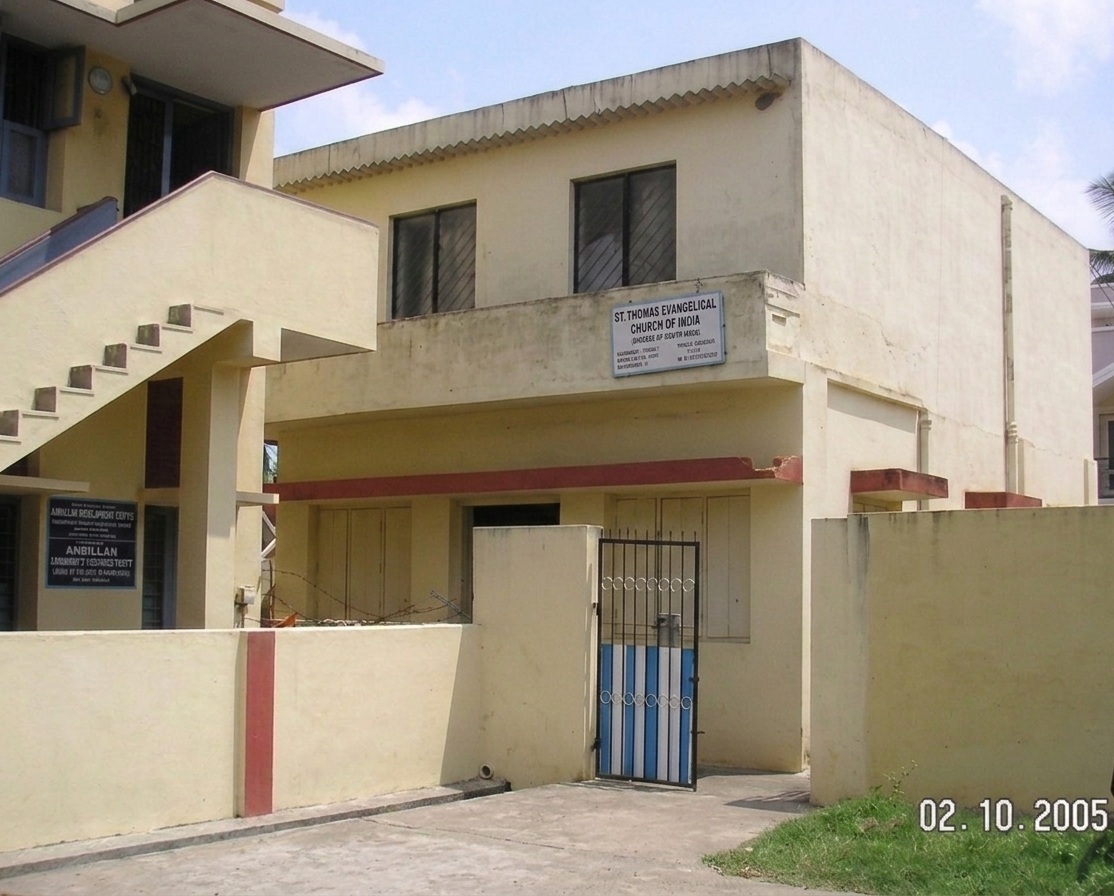
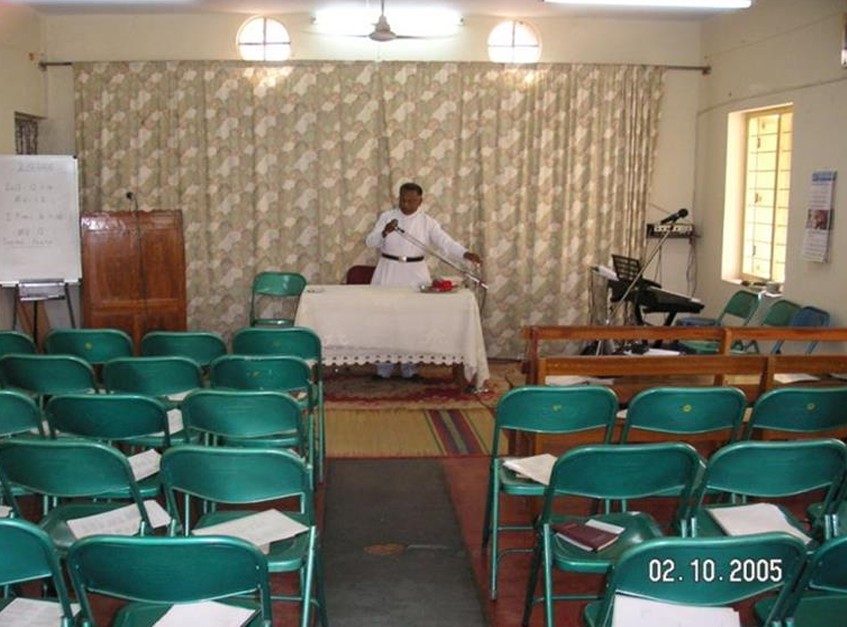
The parish matured into a hub of faith: in 1981, under Rev. T. C. George, it hosted the Bahya Kerala Diocese Conference for the first time. In 1984, under Rev. Thomas Abraham, it hosted the Bahya Kerala Diocese Conference for the Second time. Rev. Thomas Varghese emphasized nurturing the young, establishing the Sunday School. The parish hosted the conference again in 1992 under Rev. Thomas Varghese, and continuing the passion to bring the believers from Bahya Kerala Diocese, parish hosted the conference on fourth time in 2004 lead by Rev. K. S. James. This era cemented Bangalore Parish as a spiritual anchor for diaspora believers
Expansion and New Foundations (2005–2007)
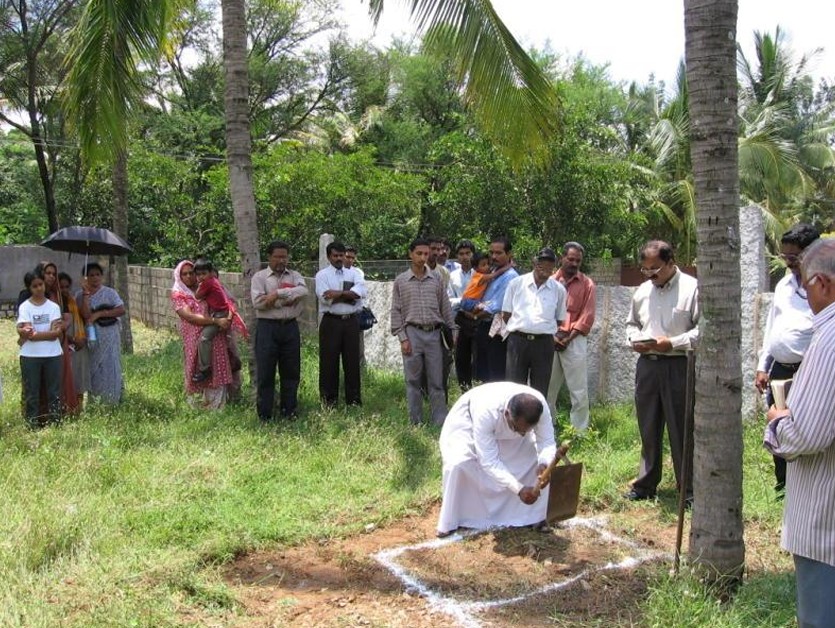
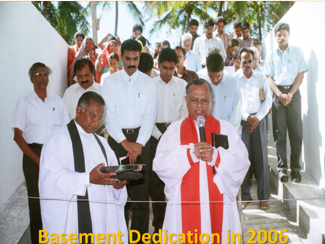
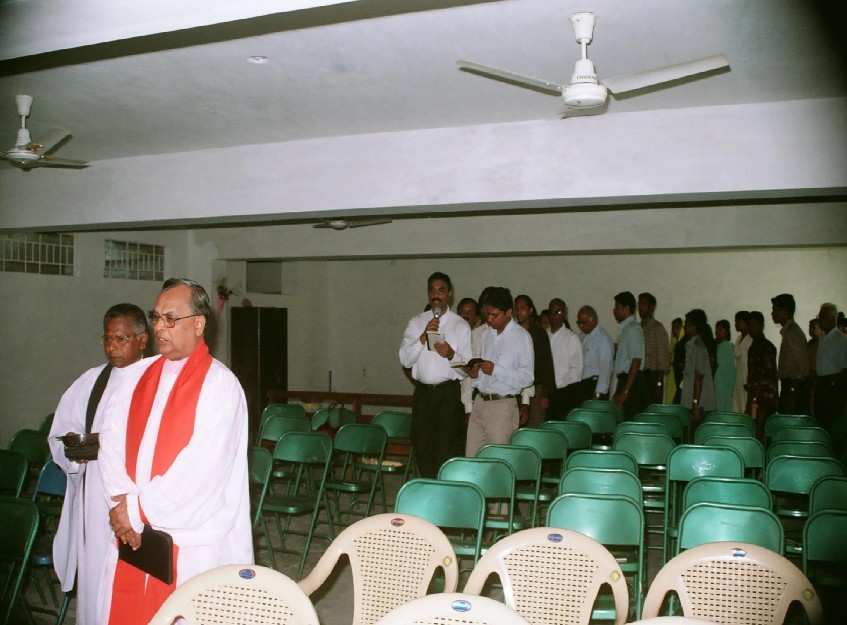
In 2006, Bishop Dr. M.K. Koshy dedicated the basement, which served as the worship space until completion of parish building. On March 24, 2007, the church building construction was completed under the supervision of Rev. Biju Thomas, and the new church was consecrated by Presiding Bishop Most Rev. T.C. Cherian. Bishop Dr. M.K. Koshy, Rev. Dr. Thomas Varghese, Rev. John V. John, Rev. Titus, Rev. David P. Varghese, and Rev. K.S. James were present on this historic day.
Mission initiatives flourished: Karnataka Jyothi (2006), initiated by Rev. Biju Thomas, expanded worship groups in Ambedkar Nagar, Adur, Pagathi Nagar, and Bannerghatta. Rev. Puttaswamy coordinated the mission, later succeeded by Br. Radhakrishnan.
In 2007, a parsonage was constructed under Rev. Thomas Tottathil, located next to the church, providing a dignified and convenient residence for the Vicar and family. This ensured pastoral care could be offered with greater stability and presence.
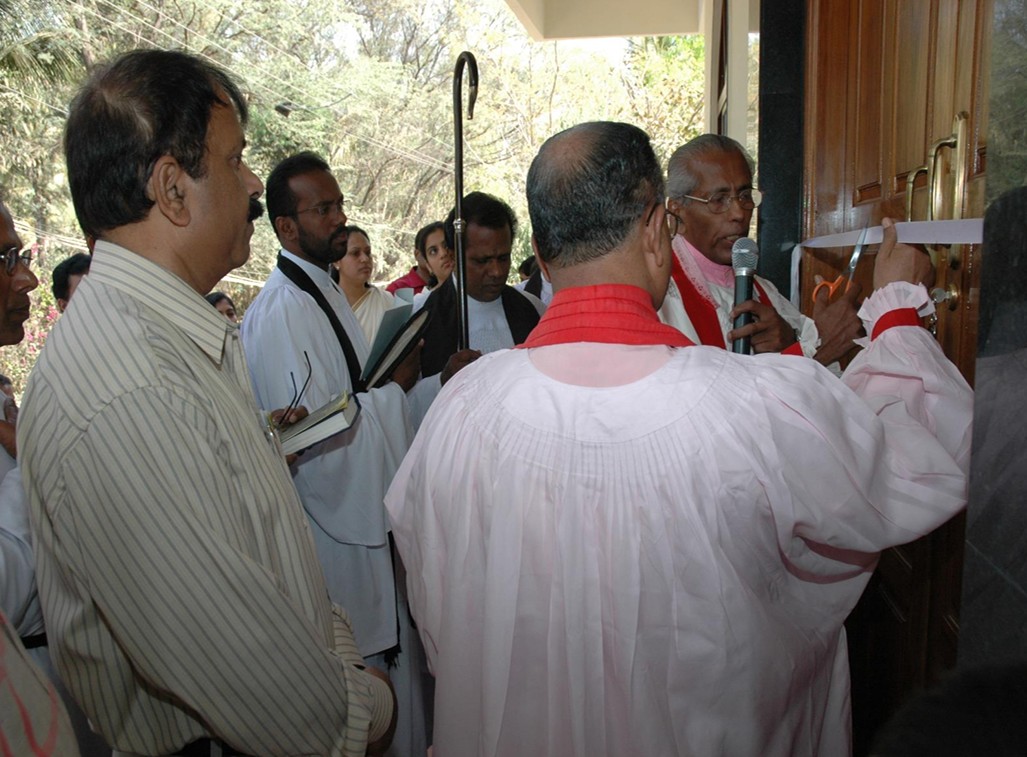
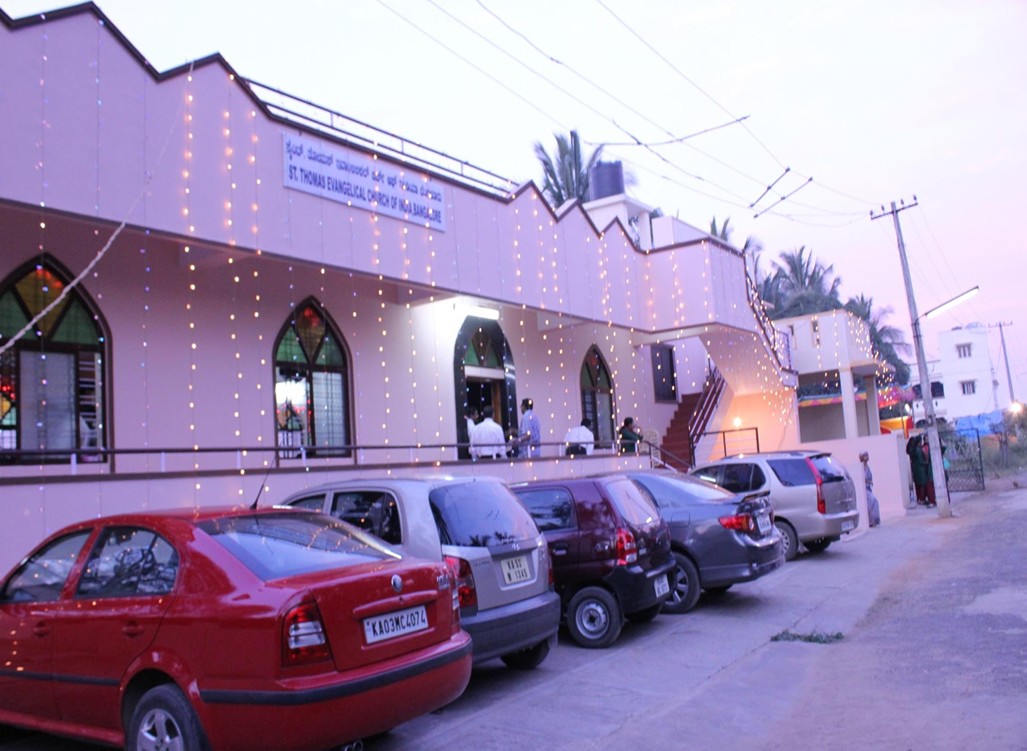
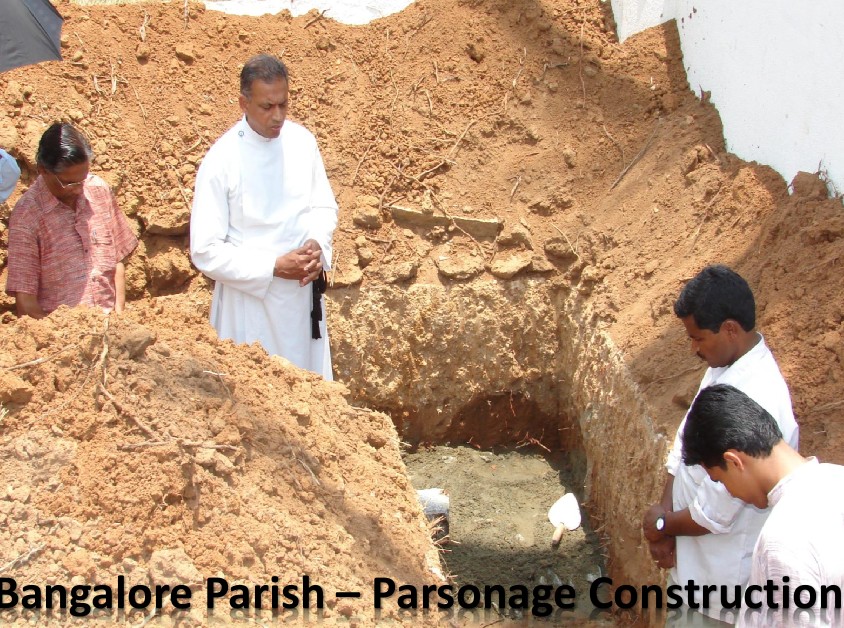
Growth and New Initiatives (2008–2025)
The parish continued to evolve with vision and compassion.
Parish members continued to attend worship services faithfully, even though many had to travel long distances. Their perseverance was driven not by convenience, but by their love for Christ and their steadfast support of the St. Thomas Evangelical Church of India. Over time, however, the parish recognized that building churches closer to the homes of families would allow for easier access to worship and greater participation. Thus, in 2008, a group of families branched out to form the Koramangala Parish, ensuring that the growing community could worship with less burden of travel while remaining united in faith.
In the initial days, worship services were attended primarily by believers who had migrated from Kerala to Bangalore. As the years passed, many of these families began to settle permanently in this beautiful city. A new generation was born and raised here, and unlike their parents, their fluency in the Malayalam language was limited. Educated in English-medium schools, English naturally became their first language.Recognizing this shift, and with a vision to serve the younger generation more effectively, the parish introduced an English worship service in 2009 under Rev. P.M. Joseph. This initiative ensured that the spiritual life of the community remained vibrant and accessible, bridging tradition with the evolving linguistic and cultural identity of its members.
The 33rd Bahya Kerala Diocese (BKD) Conference of the St. Thomas Evangelical Church of India was held from October 23–26, 2014, at Claret Nivas, Bangalore, hosted by the Bangalore Parish under the leadership of Rev. Shaji Alexander. Sabha leaders and prominent servants of God led various sessions, offering deep spiritual insights and guidance to the gathered faithful.
As the parish continued to emphasize mission-oriented work, an evangelistic Christmas Carol Service was held on 9th December 2018 under the leadership of Rev. Moncy Varghese. The special purpose of this gathering was to create a platform through which the message of salvation could be introduced into the lives of unbelievers. This event not only reflected the parish’s commitment to outreach but also demonstrated its heartfelt desire to share the hope of Christ with the wider community.
On September 3, 2021, it was officially registered as a Public Religious and Charitable Trust.
On 14 July 2024, a new prayer hall was dedicated in Bellary mission field under Rev. Laji Varughese. And on 4 August 2024, a utility complex with parking facilities was inaugurated.
Participation in the Sabha’s Urban Mission, leading to the formation of STECI City Serve Fellowship (CSF). On February 21, 2025, CSF officially recognized by the Church Council under Rev. Varghese John.
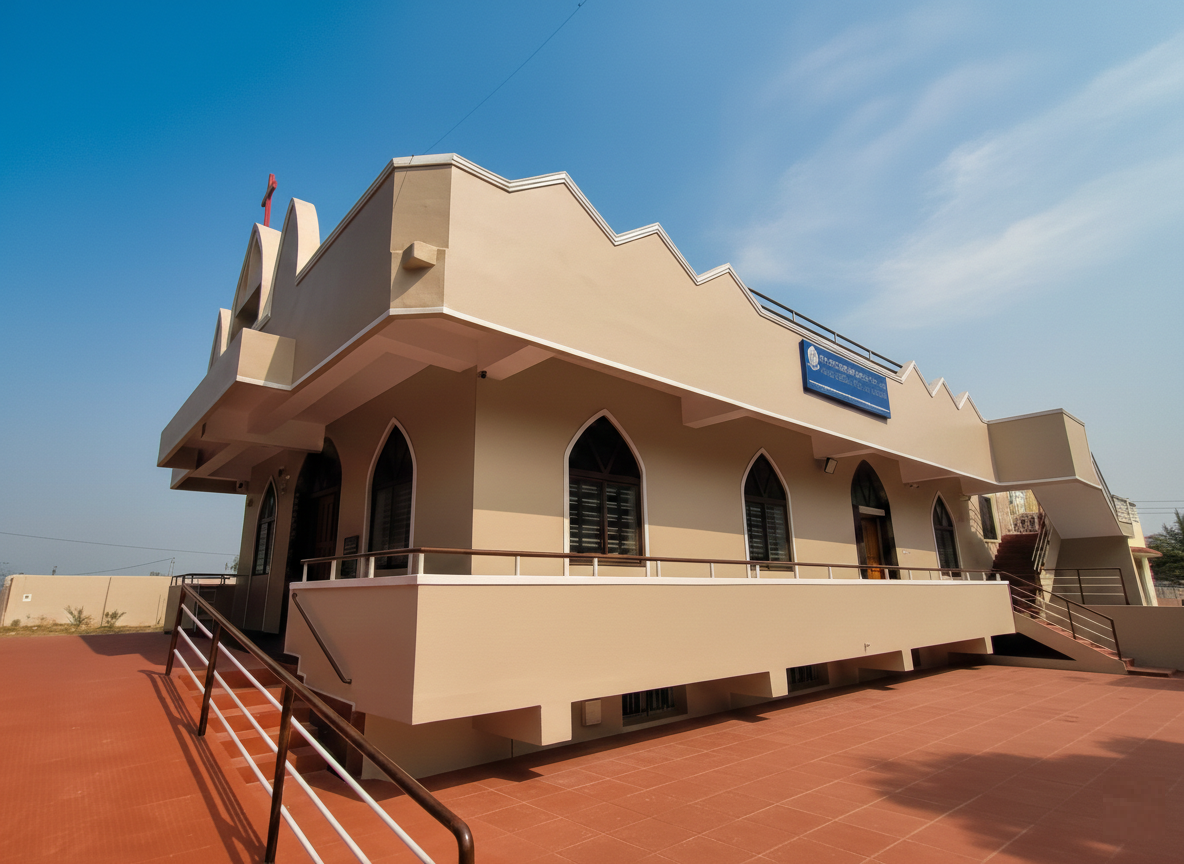
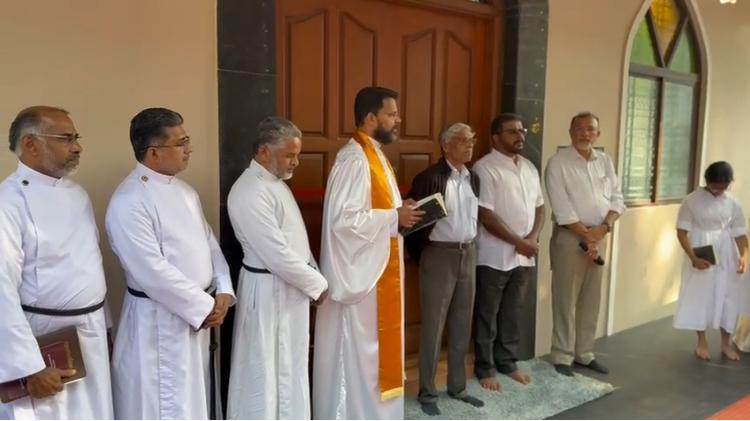
Later that year, under the leadership of Rev. Laji Varughese, the church underwent a significant renovation—the first major interior transformation since the construction of the new building in 2007. For nearly two decades, the sanctuary had remained unchanged, faithfully serving the parish. Yet, the elders discerned the need for renewal, voicing their desire to replace the plastic chairs with traditional wooden benches. This change not only honored the heritage of historic churches but also provided greater convenience and capacity for the growing congregation.
Alongside this, the pulpit and altar were carefully redesigned and beautified, reflecting both reverence and aesthetic grace. The interiors were reimagined to embody the sanctity of worship, blending heritage with modern sensibilities. On December 21, 2025, thanks giving prayer offered by Rev. Laji Varughese and resumed the worship in the renovated santury. The occasion symbolized a bridge between past and future—preserving tradition while embracing renewal—so that the church might continue to inspire generations in the beauty and presence of God.
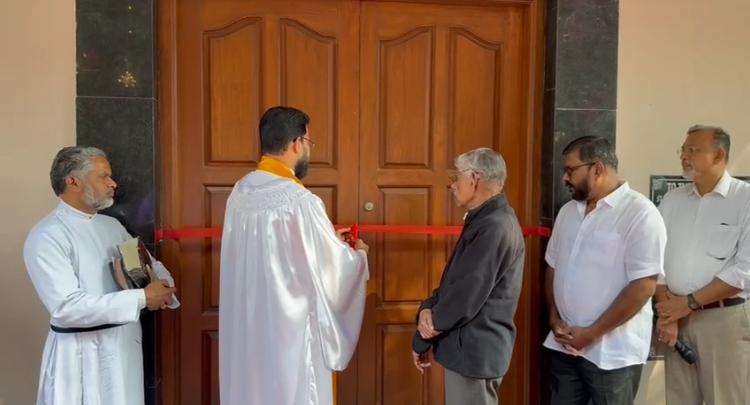
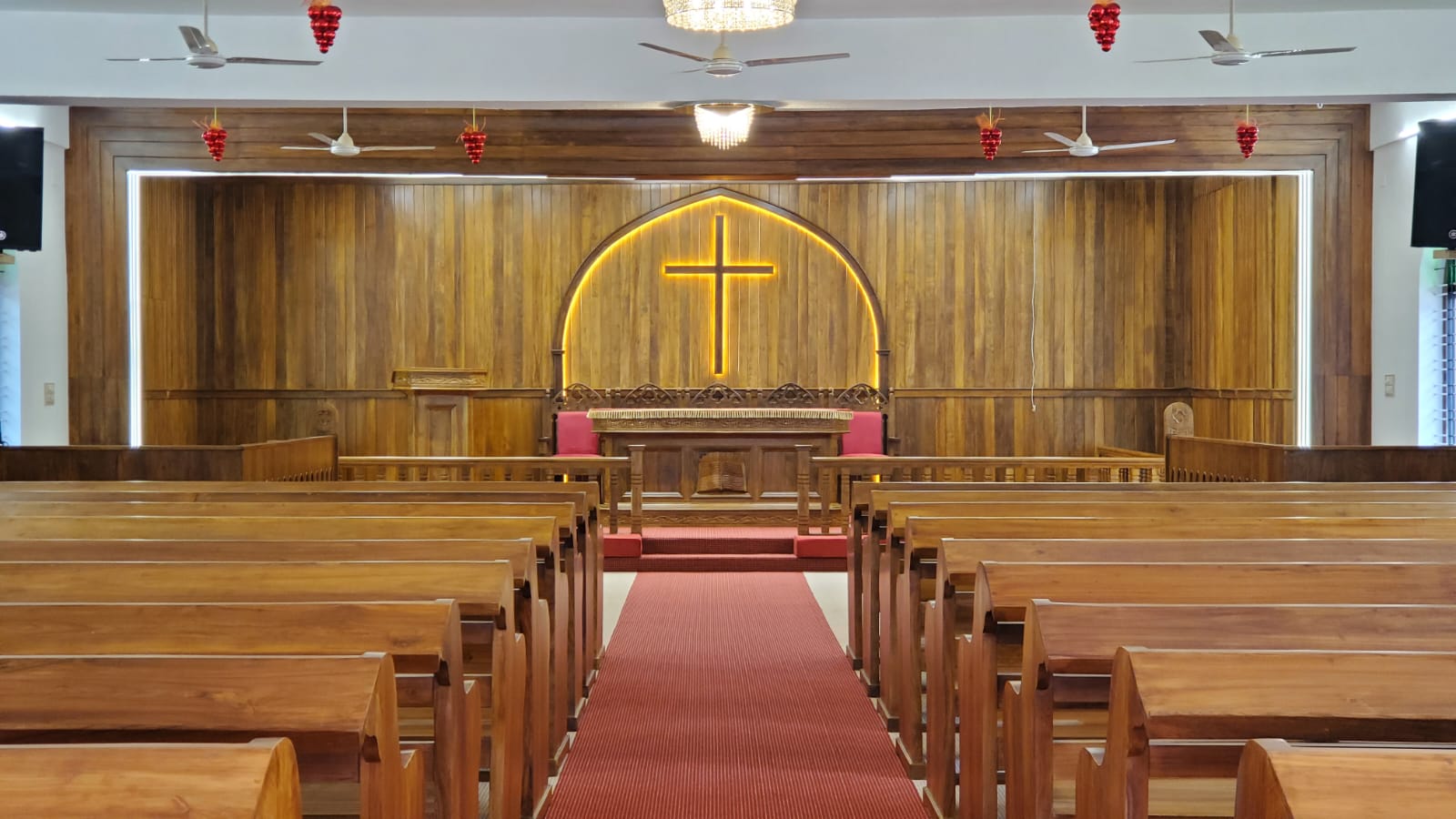
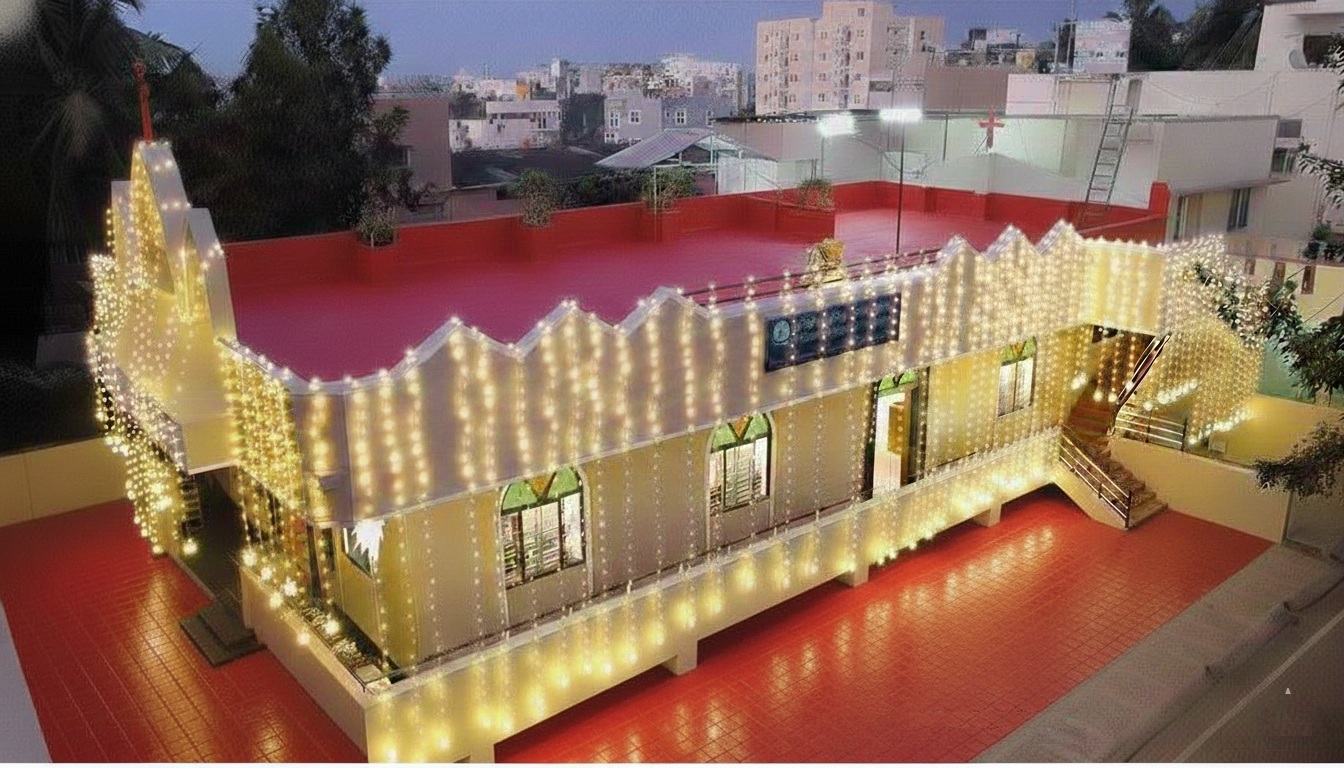
✨ Legacy and Vision
From six believers in a Bible college room to a thriving, multi-lingual parish with missions in Bellary and beyond, the Bangalore Parish stands as a living testimony to faith, fellowship, and perseverance.
It is not merely a record of land and buildings, but a spiritual epic—proof that “The Lord has done great things for us, and we are filled with joy” (Psalm 126:3). Today, the parish shines as a beacon of hope, carrying forward the legacy of its pioneers into a purposeful future.